
A poem by Alan Seeger (1888-1916)
You have the grit and the guts, I know;
You are ready to answer blow for blow
You are virile, combative, stubborn, hard,
But your honor ends with your own back-yard;
Each man intent on his private goal,
You have no feeling for the whole;
What singly none would tolerate
You let unpunished hit the state,
Unmindful that each man must share
The stain he lets his country wear,
And (what no traveller ignores)
That her good name is often yours.
You are proud in the pride that feels its might;
From your imaginary height
Men of another race or hue
Are men of a lesser breed to you:
The neighbor at your southern gate
You treat with the scorn that has bred his hate.
To lend a spice to your disrespect
You call him the “greaser”. But reflect!
The greaser has spat on you more than once;
He has handed you multiple affronts;
He has robbed you, banished you, burned and killed;
He has gone untrounced for the blood he spilled;
He has jeering used for his bootblack’s rag
The stars and stripes of the gringo’s flag;
And you, in the depths of your easy-chair —
What did you do, what did you care?
Did you find the season too cold and damp
To change the counter for the camp?
Were you frightened by fevers in Mexico?
I can’t imagine, but this I know —
You are impassioned vastly more
By the news of the daily baseball score
Than to hear that a dozen countrymen
Have perished somewhere in Darien,
That greasers have taken their innocent lives
And robbed their holdings and raped their wives.
Not by rough tongues and ready fists
Can you hope to jilt in the modern lists.
The armies of a littler folk
Shall pass you under the victor’s yoke,
Sobeit a nation that trains her sons
To ride their horses and point their guns —
Sobeit a people that comprehends
The limit where private pleasure ends
And where their public dues begin,
A people made strong by discipline
Who are willing to give — what you’ve no mind to —
And understand — what you are blind to —
The things that the individual
Must sacrifice for the good of all.
You have a leader who knows — the man
Most fit to be called American,
A prophet that once in generations
Is given to point to erring nations
Brighter ideals toward which to press
And lead them out of the wilderness.
Will you turn your back on him once again?
Will you give the tiller once more to men
Who have made your country the laughing-stock
For the older peoples to scorn and mock,
Who would make you servile, despised, and weak,
A country that turns the other cheek,
Who care not how bravely your flag may float,
Who answer an insult with a note,
Whose way is the easy way in all,
And, seeing that polished arms appal
Their marrow of milk-fed pacifist,
Would tell you menace does not exist?
Are these, in the world’s great parliament,
The men you would choose to represent
Your honor, your manhood, and your pride,
And the virtues your fathers dignified?
Oh, bury them deeper than the sea
In universal obloquy;
Forget the ground where they lie, or write
For epitaph: “Too proud to fight.”
I have been too long from my country’s shores
To reckon what state of mind is yours,
But as for myself I know right well
I would go through fire and shot and shell
And face new perils and make my bed
In new privations, if ROOSEVELT led;
But I have given my heart and hand
To serve, in serving another land,
Ideals kept bright that with you are dim;
Here men can thrill to their country’s hymn,
For the passion that wells in the Marseillaise
Is the same that fires the French these days,
And, when the flag that they love goes by,
With swelling bosom and moistened eye
They can look, for they know that it floats there still
By the might of their hands and the strength of their will,
And through perils countless and trials unknown
Its honor each man has made his own.
They wanted the war no more than you,
But they saw how the certain menace grew,
And they gave two years of their youth or three
The more to insure their liberty
When the wrath of rifles and pennoned spears
Should roll like a flood on their wrecked frontiers.
They wanted the war no more than you,
But when the dreadful summons blew
And the time to settle the quarrel came
They sprang to their guns, each man was game;
And mark if they fight not to the last
For their hearths, their altars, and their past:
Yea, fight till their veins have been bled dry
For love of the country that WILL not die.
O friends, in your fortunate present ease
(Yet faced by the self-same facts as these),
If you would see how a race can soar
That has no love, but no fear, of war,
How each can turn from his private role
That all may act as a perfect whole,
How men can live up to the place they claim
And a nation, jealous of its good name,
Be true to its proud inheritance,
Oh, look over here and learn from FRANCE!

A few random poems:
- Prelude to an Unwritten Masterpiece by Siegfried Sassoon
- create.html
- Николай Огарев – Смутные мгновенья
- Ок Мельникова – От киева до сантьяго
- Messalina poem – Alfred Austin
- Ольга Берггольц – Родине
- The Natural History of Elephants by Milton Acorn
- The Portrait — English Translation by Rabindranath Tagore
- Омар Хайям – Мне с похмелья лекарство одно принеси
- If Old Men Fought by Mac McGovern
- Harry Ploughman poem – Gerard Manley Hopkins poems
- Dedication To A Book Of Stories Selected From The Irish Novelists by William Butler Yeats
- Владимир Маяковский – Чем отличается Красная Армия от царской?.. (РОСТА №559)
- In Imitation of Chaucer poem – Alexander Pope
- Praying Drunk poem – Andrew Hudgins poems | Poems and Poetry
External links
Bat’s Poetry Page – more poetry by Fledermaus
Talking Writing Monster’s Page –
Batty Writing – the bat’s idle chatter, thoughts, ideas and observations, all original, all fresh
Poems in English
- Sonnet 48: How careful was I, when I took my way by William Shakespeare
- Sonnet 47: Betwixt mine eye and heart a league is took by William Shakespeare
- Sonnet 46: Mine eye and heart are at a mortal war by William Shakespeare
- Sonnet 45: The other two, slight air and purging fire by William Shakespeare
- Sonnet 44: If the dull substance of my flesh were thought by William Shakespeare
- Sonnet 43: When most I wink, then do mine eyes best see by William Shakespeare
- Sonnet 42: That thou hast her, it is not all my grief by William Shakespeare
- Sonnet 41: Those pretty wrongs that liberty commits by William Shakespeare
- Sonnet 40: Take all my loves, my love, yea, take them all by William Shakespeare
- Sonnet 3: Look in thy glass, and tell the face thou viewest by William Shakespeare
- Sonnet 39: O, how thy worth with manners may I sing by William Shakespeare
- Sonnet 38: How can my Muse want subject to invent by William Shakespeare
- Sonnet 37: As a decrepit father takes delight by William Shakespeare
- Sonnet 36: Let me confess that we two must be twain by William Shakespeare
- Sonnet 35: No more be grieved at that which thou hast done by William Shakespeare
- Sonnet 34: Why didst thou promise such a beauteous day by William Shakespeare
- Sonnet 33: Full many a glorious morning have I seen by William Shakespeare
- Sonnet 74: But be contented when that fell arrest by William Shakespeare
- Sonnet 73: That time of year thou mayst in me behold by William Shakespeare
- Sonnet 72: O, lest the world should task you to recite by William Shakespeare
More external links (open in a new tab):
Doska or the Board – write anything
Search engines:
Yandex – the best search engine for searches in Russian (and the best overall image search engine, in any language, anywhere)
Qwant – the best search engine for searches in French, German as well as Romance and Germanic languages.
Ecosia – a search engine that supposedly… plants trees
Duckduckgo – the real alternative and a search engine that actually works. Without much censorship or partisan politics.
Yahoo– yes, it’s still around, amazingly, miraculously, incredibly, but now it seems to be powered by Bing.
Parallel Translations of Poetry
The Poetry Repository – an online library of poems, poetry, verse and poetic works
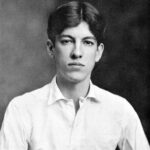
Alan Seeger (1888-1916) was an American war poet who fought and died in World War I during the Battle of the Somme, serving in the French Foreign Legion. Seeger was the brother of Charles Seeger, a noted American pacifist and musicologist and the uncle of folk musician, Pete Seeger.