
A poem by Alec Derwent-Hope (1907–2000)
by Alec Derwent Hope
This was the gods’ god,
The leashed divinity,
Divine divining rod
And Me within the me.
By mindlight tower and tree
Its shadow on the ground
Throw, and in darkness she
Whose weapon is her wound
Fends off the knife, the sword,
The Tiger and the Snake;
It stalks the virgin’s bed
And bites her wide awake.
Her Bab-el-Mandeb waits
Her Red Sea gate of tears:
The blood-sponge god dilates,
His rigid pomp appears;
Sets in the toothless mouth
A tongue of prophecy.
It speaks in naked Truth
Indifference for me
Love, a romantic slime
That lubricates his way
Against the stream of Time.
And though I win the day
His garrisons deep down
Ignore my victory,
Abandon this doomed town,
Crawl through a sewer and flee.
A certain triumph, of course,
Bribes me with brief joy:
Stiffly my Wooden Horse
Receive into your Troy.

A few random poems:
- Magic Markers by Rose Mary Boehm
- Absence by Walter Savage Landor
- The Coming Of Wisdom With Time by William Butler Yeats
- Олег Бундур – Глухарь
- Easter Communion poem – Gerard Manley Hopkins poems
- The Further Bank by Rabindranath Tagore
- Владимир Луговской – Капитанский штиль
- A Conjuration To Electra by Robert Herrick
- a_single_man.html
- The face wanted by Vinko Kalinić
- Владимир Бенедиктов – Ревность
- Creative Branding Solutions – So Why Do I Need a Logo?
- The First Sam Hazo at the Last by Samuel Hazo
- In The Early Pearly Morning
- Валерий Брюсов – Петербург (Здесь снов не ваял Сансовино)
External links
Bat’s Poetry Page – more poetry by Fledermaus
Talking Writing Monster’s Page –
Batty Writing – the bat’s idle chatter, thoughts, ideas and observations, all original, all fresh
Poems in English
- Sonnet 71: No longer mourn for me when I am dead by William Shakespeare
- Sonnet 70: That thou art blamed shall not be thy defect by William Shakespeare
- Sonnet 6: Then let not winter’s ragged hand deface by William Shakespeare
- Sonnet 69: Those parts of thee that the world’s eye doth view by William Shakespeare
- Sonnet 68: Thus is his cheek the map of days outworn by William Shakespeare
- Sonnet 67: Ah, wherefore with infection should he live by William Shakespeare
- Sonnet 66: Tired with all these, for restful death I cry by William Shakespeare
- Sonnet 65: Since brass, nor stone, nor earth, nor boundless sea by William Shakespeare
- Sonnet 64: When I have seen by Time’s fell hand defaced by William Shakespeare
- Sonnet 63: Against my love shall be, as I am now by William Shakespeare
- Sonnet 62: Sin of self-love possesseth all mine eye by William Shakespeare
- Sonnet 61: Is it thy will thy image should keep open by William Shakespeare
- Sonnet 60: Like as the waves make towards the pebbled shore by William Shakespeare
- Sonnet 5: Those hours, that with gentle work did frame by William Shakespeare
- Sonnet 59: If there be nothing new, but that which is by William Shakespeare
- Sonnet 58: That god forbid, that made me first your slave by William Shakespeare
- Sonnet 57: Being your slave, what should I do but tend by William Shakespeare
- Sonnet 56: Sweet love, renew thy force, be it not said by William Shakespeare
- Sonnet 55: Not marble, nor the gilded monuments by William Shakespeare
- Sonnet 95: How sweet and lovely dost thou make the shame by William Shakespeare
More external links (open in a new tab):
Doska or the Board – write anything
Search engines:
Yandex – the best search engine for searches in Russian (and the best overall image search engine, in any language, anywhere)
Qwant – the best search engine for searches in French, German as well as Romance and Germanic languages.
Ecosia – a search engine that supposedly… plants trees
Duckduckgo – the real alternative and a search engine that actually works. Without much censorship or partisan politics.
Yahoo– yes, it’s still around, amazingly, miraculously, incredibly, but now it seems to be powered by Bing.
Parallel Translations of Poetry
The Poetry Repository – an online library of poems, poetry, verse and poetic works
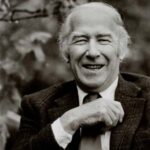
Alec Derwent-Hope (1907–2000) was an Australian poet and essayist known for his satirical slant. He was also a critic, teacher and academic.