
A poem by Alan Seeger (1888-1916)
Like as a dryad, from her native bole
Coming at dusk, when the dim stars emerge,
To a slow river at whose silent verge
Tall poplars tremble and deep grasses roll,
Come thou no less and, kneeling in a shoal
Of the freaked flag and meadow buttercup,
Bend till thine image from the pool beam up
Arched with blue heaven like an aureole.
See how adorable in fancy then
Lives the fair face it mirrors even so,
O thou whose beauty moving among men
Is like the wind’s way on the woods below,
Filling all nature where its pathway lies
With arms that supplicate and trembling sighs.

A few random poems:
- To My Brother George poem – John Keats poems
- The Rolling Mills by Michael McGovern
- Who Is This? by Rabindranath Tagore
- Afterwards by Thomas Hardy
- Владимир Бенедиктов – Чувство
- Night A-Zetten In by William Barnes
- Epistle to the Rev. John M’Math by Robert Burns
- On The Wedding Of The Aeronaut poem – Ambrose Bierce poems | Poems and Poetry
- Totem by Sylvia Plath
- Harvest Hymn by Sarojini Naidu
- Suggested by the Cover of a Volume of Keats’s poem – Amy Lowell poems | Poems and Poetry
- Carpe Diem by William Shakespeare
- Fairy Land iii by William Shakespeare
- Михаил Ломоносов – Надпись 5 к статуе Петра Великого
- My Own Heart Let Me Have More Have Pity On; Let poem – Gerard Manley Hopkins poems
External links
Bat’s Poetry Page – more poetry by Fledermaus
Talking Writing Monster’s Page –
Batty Writing – the bat’s idle chatter, thoughts, ideas and observations, all original, all fresh
Poems in English
- Sonnet 94: They that have power to hurt and will do none by William Shakespeare
- Sonnet 93: So shall I live, supposing thou art true by William Shakespeare
- Sonnet 92: But do thy worst to steal thy self away by William Shakespeare
- Sonnet 91: Some glory in their birth, some in their skill by William Shakespeare
- Sonnet 90: Then hate me when thou wilt; if ever, now by William Shakespeare
- Sonnet 8: Music to hear, why hear’st thou music sadly? by William Shakespeare
- Sonnet 89: Say that thou didst forsake me for some fault by William Shakespeare
- Sonnet 88: When thou shalt be disposed to set me light by William Shakespeare
- Sonnet 87: Farewell! Thou art too dear for my possessing by William Shakespeare
- Sonnet 86: Was it the proud full sail of his great verse by William Shakespeare
- Sonnet 85: My tongue-tied Muse in manners holds her still by William Shakespeare
- Sonnet 84: Who is it that says most, which can say more by William Shakespeare
- Sonnet 83: I never saw that you did painting need by William Shakespeare
- Sonnet 82: I grant thou wert not married to my Muse by William Shakespeare
- Sonnet 81: Or I shall live your epitaph to make by William Shakespeare
- Sonnet 80: O, how I faint when I of you do write by William Shakespeare
- Sonnet 7: Lo, in the orient when the gracious light by William Shakespeare
- Sonnet 79: Whilst I alone did call upon thy aid by William Shakespeare
- Sonnet 78: So oft have I invoked thee for my Muse by William Shakespeare
- Sonnet 77: Thy glass will show thee how thy beauties wear by William Shakespeare
More external links (open in a new tab):
Doska or the Board – write anything
Search engines:
Yandex – the best search engine for searches in Russian (and the best overall image search engine, in any language, anywhere)
Qwant – the best search engine for searches in French, German as well as Romance and Germanic languages.
Ecosia – a search engine that supposedly… plants trees
Duckduckgo – the real alternative and a search engine that actually works. Without much censorship or partisan politics.
Yahoo– yes, it’s still around, amazingly, miraculously, incredibly, but now it seems to be powered by Bing.
Parallel Translations of Poetry
The Poetry Repository – an online library of poems, poetry, verse and poetic works
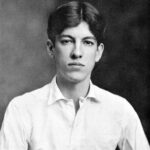
Alan Seeger (1888-1916) was an American war poet who fought and died in World War I during the Battle of the Somme, serving in the French Foreign Legion. Seeger was the brother of Charles Seeger, a noted American pacifist and musicologist and the uncle of folk musician, Pete Seeger.