
A poem by Alan Seeger (1888-1916)
Who shall invoke her, who shall be her priest,
With single rites the common debt to pay?
On some green headland fronting to the East
Our fairest boy shall kneel at break of day.
Naked, uplifting in a laden tray
New milk and honey and sweet-tinctured wine,
Not without twigs of clustering apple-spray
To wreath a garland for Our Lady’s shrine.
The morning planet poised above the sea
Shall drop sweet influence through her drowsing lid;
Dew-drenched, his delicate virginity
Shall scarce disturb the flowers he kneels amid,
That, waked so lightly, shall lift up their eyes,
Cushion his knees, and nod between his thighs.

A few random poems:
- Bermudas poem – Andrew Marvell poems
- Bertie the Goldfish by Ross D Tyler
- The Golden Year! poem – Alfred Austin
- Quest for Thee by Vanessa Perkins
- Ballade Of The Southern Cross poem – Andrew Lang poems
- Often I Am Permitted to Return to a Meadow by Robert Duncan
- Now Sleeps the Crimson Petal poem – Lord Alfred Tennyson poems
- Stones
- A Riddle Song. by Walt Whitman
- Владимир Британишский – Баня Быстрицкого
- Robert Burns: Forlorn, My Love, No Comfort Near:
- A Grammarian’s Funeral by Robert Browning
- A Lover poem – Amy Lowell poems | Poems and Poetry
- Robert Burns: The Lass That Made The Bed To Me :
- Interior Design Institutes in Dehradun
External links
Bat’s Poetry Page – more poetry by Fledermaus
Talking Writing Monster’s Page –
Batty Writing – the bat’s idle chatter, thoughts, ideas and observations, all original, all fresh
Poems in English
- Sonnet 94: They that have power to hurt and will do none by William Shakespeare
- Sonnet 93: So shall I live, supposing thou art true by William Shakespeare
- Sonnet 92: But do thy worst to steal thy self away by William Shakespeare
- Sonnet 91: Some glory in their birth, some in their skill by William Shakespeare
- Sonnet 90: Then hate me when thou wilt; if ever, now by William Shakespeare
- Sonnet 8: Music to hear, why hear’st thou music sadly? by William Shakespeare
- Sonnet 89: Say that thou didst forsake me for some fault by William Shakespeare
- Sonnet 88: When thou shalt be disposed to set me light by William Shakespeare
- Sonnet 87: Farewell! Thou art too dear for my possessing by William Shakespeare
- Sonnet 86: Was it the proud full sail of his great verse by William Shakespeare
- Sonnet 85: My tongue-tied Muse in manners holds her still by William Shakespeare
- Sonnet 84: Who is it that says most, which can say more by William Shakespeare
- Sonnet 83: I never saw that you did painting need by William Shakespeare
- Sonnet 82: I grant thou wert not married to my Muse by William Shakespeare
- Sonnet 81: Or I shall live your epitaph to make by William Shakespeare
- Sonnet 80: O, how I faint when I of you do write by William Shakespeare
- Sonnet 7: Lo, in the orient when the gracious light by William Shakespeare
- Sonnet 79: Whilst I alone did call upon thy aid by William Shakespeare
- Sonnet 78: So oft have I invoked thee for my Muse by William Shakespeare
- Sonnet 77: Thy glass will show thee how thy beauties wear by William Shakespeare
More external links (open in a new tab):
Doska or the Board – write anything
Search engines:
Yandex – the best search engine for searches in Russian (and the best overall image search engine, in any language, anywhere)
Qwant – the best search engine for searches in French, German as well as Romance and Germanic languages.
Ecosia – a search engine that supposedly… plants trees
Duckduckgo – the real alternative and a search engine that actually works. Without much censorship or partisan politics.
Yahoo– yes, it’s still around, amazingly, miraculously, incredibly, but now it seems to be powered by Bing.
Parallel Translations of Poetry
The Poetry Repository – an online library of poems, poetry, verse and poetic works
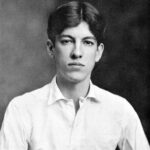
Alan Seeger (1888-1916) was an American war poet who fought and died in World War I during the Battle of the Somme, serving in the French Foreign Legion. Seeger was the brother of Charles Seeger, a noted American pacifist and musicologist and the uncle of folk musician, Pete Seeger.