
A poem by Aeschylus (c. 525 – c. 456 Before Christ )
STROPHE IV
Though Zeus plan all things right,
Yet is his heart’s desire full hard to trace;
Nathless in every place
Brightly it gleameth, e’en in darkest night,
Fraught with black fate to man’s speech-gifted race.
ANTISTROPHE IV
Steadfast, ne’er thrown in fight,
The deed in brow of Zeus to ripeness brought;
For wrapt in shadowy night,
Tangled, unscanned by mortal sight,
Extend the pathways of his secret thought.
STROPHE V
From towering hopes mortals he hurleth prone
To utter doom; but for their fall
No force arrayeth he; for all
That gods devise is without effort wrought.
A mindful Spirit aloft on holy throne
By inborn energy achieves his thought.
ANTISTROPHE V
But let him mortal insolence behold:–
How with proud contumacy rife,
Wantons the stem in lusty life
My marriage craving;–frenzy over-bold,
Spur ever-pricking, goads them on to fate,
By ruin taught their folly all too late.
STROPHE VI
Thus I complain, in piteous strain,
Grief-laden, tear-evoking, shrill;
Ah woe is me! woe! woe!
Dirge-like it sounds; mine own death-trill
I pour, yet breathing vital air.
Hear, hill-crowned Apia, hear my prayer!
Full well, O land,
My voice barbaric thou canst understand;
While oft with rendings I assail
My byssine vesture and Sidonian veil.
ANTISTROPHE VI
My nuptial right in Heaven’s pure sight
Pollution were, death-laden, rude;
Ah woe is me! woe! woe!
Alas for sorrow’s murky brood!
Where will this billow hurl me? Where?
Hear, hill-crowned Apia, hear my prayer;
Full well, O land,
My voice barbaric thou canst understand,
While oft with rendings I assail
My byssine vesture and Sidonian veil.
STROPHE VII
The oar indeed and home with sails
Flax-tissued, swelled with favoring gales,
Staunch to the wave, from spear-storm free,
Have to this shore escorted me,
Nor so far blame I destiny.
But may the all-seeing Father send
In fitting time propitious end;
So our dread Mother’s mighty brood,
The lordly couch may ‘scape, ah me,
Unwedded, unsubdued!
ANTISTROPHE VII
Meeting my will with will divine,
Daughter of Zeus, who here dost hold
Steadfast thy sacred shrine,–
Me, Artemis unstained, behold,
Do thou, who sovereign might dost wield,
Virgin thyself, a virgin shield;
So our dread Mother’s mighty brood
The lordly couch may ‘scape, ah me,
Unwedded, unsubdued!

A few random poems:
- Robert Burns: Address Of Beelzebub: To the Right Honourable the Earl of Breadalbane, President of the Right Honourable and Honourable the Highland Society, which met on the 23rd of May last at the Shakespeare, Covent Garden, to concert ways and means to frustrate the designs of five hundred Highlanders, who, as the Society were informed by Mr. M’Kenzie of Applecross, were so audacious as to attempt an escape from their lawful lords and masters whose property they were, by emigrating from the lands of Mr. Macdonald of Glengary to the wilds of Canada, in search of that fantastic thing-Liberty.
- The Gate by Marie Howe
- The Frantic by Mark Miller
- Dilton Marsh Halt poem – John Betjeman poems | Poems and Poetry
- never.html
- Ballade Of Sleep poem – Andrew Lang poems
- Ольга Седакова – Как упавшую руку
- So Long. by Walt Whitman
- Behold the hour by Robert Burns
- O Star of France. by Walt Whitman
- Our Father’s Works by William Barnes
- Алексей Николаевич Толстой – Золото
- Robert Burns: Wandering Willie: First Version
- Алексей Плещеев – Дети века все больные
- Ephemera by William Butler Yeats
External links
Bat’s Poetry Page – more poetry by Fledermaus
Talking Writing Monster’s Page –
Batty Writing – the bat’s idle chatter, thoughts, ideas and observations, all original, all fresh
Poems in English
- Memorials of A Tour In Scotland, 1803 I. Departure From The Vale Of Grasmere, August 1803 by William Wordsworth
- Matthew by William Wordsworth
- Maternal Grief by William Wordsworth
- Mark The Concentrated Hazels That Enclose by William Wordsworth
- Lucy by William Wordsworth
- Lucy Gray [or Solitude] by William Wordsworth
- Louisa: After Accompanying Her On A Mountain Excursion by William Wordsworth
- Look Now On That Adventurer Who Hath Paid by William Wordsworth
- London, 1802 by William Wordsworth
- Lines Written On A Blank Leaf In A Copy Of The Author’s Poem “The Excursion,” by William Wordsworth
- Lines Written In Early Spring by William Wordsworth
- Lines Written As A School Exercise At Hawkshead, Anno Aetatis 14 by William Wordsworth
- Lines On The Expected Invasion, 1803 by William Wordsworth
- Lines Left Upon The Seat Of A Yew-Tree, by William Wordsworth
- Lines Composed a Few Miles above Tintern Abbey by William Wordsworth
- Laodamia by William Wordsworth
- Lament Of Mary Queen Of Scots by William Wordsworth
- It was an April morning: fresh and clear by William Wordsworth
- It Is No Spirit Who From Heaven Hath Flown by William Wordsworth
- It Is a Beauteous Evening by William Wordsworth
More external links (open in a new tab):
Doska or the Board – write anything
Search engines:
Yandex – the best search engine for searches in Russian (and the best overall image search engine, in any language, anywhere)
Qwant – the best search engine for searches in French, German as well as Romance and Germanic languages.
Ecosia – a search engine that supposedly… plants trees
Duckduckgo – the real alternative and a search engine that actually works. Without much censorship or partisan politics.
Yahoo– yes, it’s still around, amazingly, miraculously, incredibly, but now it seems to be powered by Bing.
Parallel Translations of Poetry
The Poetry Repository – an online library of poems, poetry, verse and poetic works
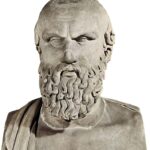
Aeschylus (525 Before Christ to 456 B.C.) was an ancient Greek author of Greek tragedy, and is often described as the father of tragedy. Academics’ knowledge of the genre begins with his work, and understanding of earlier Greek tragedy is largely based on inferences made from reading his surviving plays. According to Aristotle, he expanded the number of characters in the theatre and allowed conflict among them.