
Low on her little stool she sits
To make a nursing lap,
And cares for nothing but the form
Her little arms enwrap.
With hairless skull that gapes apart,
A broken plaster ball,
One chipped glass eye that squints askew,
And ne’er a nose at all-
No raddle left on grimy cheek,
No mouth that one can see-
It scarce discloses, at a glance,
What it was meant to be.
But something in the simple scheme
As it extends below
(It is the “tidy” from my chair
That she is rumpling so)-
A certain folding of the stuff
That winds the thing about
(But still permits the sawdust gore
To trickle down and out)-
The way it curves around her waist,
On little knees outspread-
Implies a body frail and dear,
Whence one infers a head.
She rocks the scarecrow to and fro,
With croonings soft and deep,
A lullaby designed to hush
The bunch of rags to sleep.
I ask what rubbish has she there.
“My dolly,” she replies,
But tone and smile and gesture say,
“My angel from the skies.”
Ineffable the look of love
Cast on the hideous blur
That somehow means a precious face,
Most beautiful, to her.
The deftness and the tenderness
Of her caressing hands . . . . . .
How can she possibly divine
For what the creature stands?
Herself a nurseling, that has seen
The summers and the snows
Of scarce five years of baby life.
And yet she knows-she knows.
Just as a puppy of the pack
Knows unheard huntsman’s call,
And knows it is a running hound
Before it learns to crawl.
Just as she knew, when hardly born,
The breast unseen before,
And knew-how well!-before they touched,
What milk and mouth were for.
So, by some mystic extra-sense
Denied to eyes and ears,
Her spirit communes with its own
Beyond the veil of years.
She hears unechoing footsteps run
On floors she never trod,
Sees lineaments invisible
As is the face of God-
Forms she can recognise and greet,
Though wholly hid from me.
Alas! a treasure that is not,
And that may never be.
The majesty of motherhood
Sits on her baby brow;
Before her little three-legged throne
My grizzled head must bow.
That dingy bundle in her arms
Symbols immortal things-
A heritage, by right divine,
Beyond the claims of kings.

A few random poems:
- Олег Григорьев – Я сам себя в пальто одел
- Sonnet I
- The Banyan Tree by Rabindranath Tagore
- Arion poem – Alexander Pushkin
- On Friendship by Phillis Wheatley
- Владимир Маяковский – Вопль кустаря
- Home Burial by Robert Frost
- Centenarian’s Story, The. by Walt Whitman
- The Rao Of Ilore
- Enigmatic by Satish Verma
- 19-19 by Michelle Bonczek Evory
- The lords above by Michael Nikoletseas
- The Columbian Exchange Beginning With Spanish Colonization
- Robert Burns: Braving Angry Winter’s Storms:
- At Algeciras; A Meditaton Upon Death by William Butler Yeats
External links
Bat’s Poetry Page – more poetry by Fledermaus
Talking Writing Monster’s Page –
Batty Writing – the bat’s idle chatter, thoughts, ideas and observations, all original, all fresh
Poems in English
- Leto and Niobe by Sappho
- It’s no use by Sappho
- It was you, Atthis, who said by Sappho
- It is the Muses by Sappho
- It is the Muses by Sappho
- I took my lyre and said by Sappho
- I have no complaint by Sappho
- Hymn To Aphrodite by Sappho
- Hesperus The Bringer by Sappho
- He is more than a hero by Sappho
- He is more than a hero by Sappho
- Grace by Sappho
- Like the gods. . . by Sappho
- To A Girl In A Garden by Sappho
- Evening by Sappho
- Drapple-thorned Aphrodite, by Sappho
- Dica by Sappho
- Cyprian, in my dream by Sappho
- Claïs by Sappho
- Blame Aphrodite by Sappho
More external links (open in a new tab):
Doska or the Board – write anything
Search engines:
Yandex – the best search engine for searches in Russian (and the best overall image search engine, in any language, anywhere)
Qwant – the best search engine for searches in French, German as well as Romance and Germanic languages.
Ecosia – a search engine that supposedly… plants trees
Duckduckgo – the real alternative and a search engine that actually works. Without much censorship or partisan politics.
Yahoo– yes, it’s still around, amazingly, miraculously, incredibly, but now it seems to be powered by Bing.
Parallel Translations of Poetry
The Poetry Repository – an online library of poems, poetry, verse and poetic works
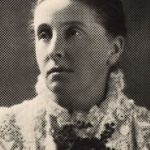
Ada Cambridge (1844 – 1926), also known as Ada Cross, was an English-born Australian author and poetess. She wrote more than 25 works of fiction, three volumes of poetry and two autobiographical works.