
A poem by Alcaeus of Mytilene (c. 625/620 – c. 580 BC)
Why wait we for the torches’ lights?
Now let us drink while day invites.
In mighty flagons hither bring
The deep-red blood of many a vine,
That we may largely quaff, and sing
The praises of the god of wine,
The son of Jove and Semele,
Who gave the jocund grape to be
A sweet oblivion to our woes.
Fill, fill the goblet–one and two:
Let every brimmer, as it flows,
In sportive chase, the last pursue.

A few random poems:
- Here, Sailor. by Walt Whitman
- The Dying Christian to His Soul poem – Alexander Pope poems | Poetry Monster
- Владимир Корнилов – 26 апреля
- Epistle from Mr. Somerville, An by William Somervile
- I Have a Fire for You in my Mouth by Jalal ad-Din Muhammad Rumi
- Ольга Седакова – Сказка
- Advent by Patrick Kavanagh
- Жан де Лафонтен – Лес и Дровосек
- An Anniversary
- A Do’set Sale by William Barnes
- A Grave by Marianne Moore
- Алексей Николаевич Толстой – Лесная дева
- I closed my eyes to creation by Jalal ad-Din Muhammad Rumi
- Phantom by Samuel Coleridge
- September by Ted Hughes
External links
Bat’s Poetry Page – more poetry by Fledermaus
Talking Writing Monster’s Page –
Batty Writing – the bat’s idle chatter, thoughts, ideas and observations, all original, all fresh
Poems in English
- Sonnet 94: They that have power to hurt and will do none by William Shakespeare
- Sonnet 93: So shall I live, supposing thou art true by William Shakespeare
- Sonnet 92: But do thy worst to steal thy self away by William Shakespeare
- Sonnet 91: Some glory in their birth, some in their skill by William Shakespeare
- Sonnet 90: Then hate me when thou wilt; if ever, now by William Shakespeare
- Sonnet 8: Music to hear, why hear’st thou music sadly? by William Shakespeare
- Sonnet 89: Say that thou didst forsake me for some fault by William Shakespeare
- Sonnet 88: When thou shalt be disposed to set me light by William Shakespeare
- Sonnet 87: Farewell! Thou art too dear for my possessing by William Shakespeare
- Sonnet 86: Was it the proud full sail of his great verse by William Shakespeare
- Sonnet 85: My tongue-tied Muse in manners holds her still by William Shakespeare
- Sonnet 84: Who is it that says most, which can say more by William Shakespeare
- Sonnet 83: I never saw that you did painting need by William Shakespeare
- Sonnet 82: I grant thou wert not married to my Muse by William Shakespeare
- Sonnet 81: Or I shall live your epitaph to make by William Shakespeare
- Sonnet 80: O, how I faint when I of you do write by William Shakespeare
- Sonnet 7: Lo, in the orient when the gracious light by William Shakespeare
- Sonnet 79: Whilst I alone did call upon thy aid by William Shakespeare
- Sonnet 78: So oft have I invoked thee for my Muse by William Shakespeare
- Sonnet 77: Thy glass will show thee how thy beauties wear by William Shakespeare
More external links (open in a new tab):
Doska or the Board – write anything
Search engines:
Yandex – the best search engine for searches in Russian (and the best overall image search engine, in any language, anywhere)
Qwant – the best search engine for searches in French, German as well as Romance and Germanic languages.
Ecosia – a search engine that supposedly… plants trees
Duckduckgo – the real alternative and a search engine that actually works. Without much censorship or partisan politics.
Yahoo– yes, it’s still around, amazingly, miraculously, incredibly, but now it seems to be powered by Bing.
Parallel Translations of Poetry
The Poetry Repository – an online library of poems, poetry, verse and poetic works
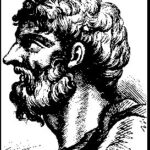
Alcaeus of Mytilene ( c. 625/620 – c. 580 Before Christ) ] was a lyric poet from the Greek island of Lesbos who is credited with inventing the Alcaic stanza. He was included in the canonical list of nine lyric poets by the scholars of Hellenistic Alexandria.