
A poem by Aeschylus (c. 525 – c. 456 Before Christ )
Up and lead the dance of Fate!
Lift the song that mortals hate!
Tell what rights are ours on earth,
Over all of human birth.
Swift of foot to avenge are we!
He whose hands are clean and pure,
Naught our wrath to dread hath he;
Calm his cloudless days endure.
But the man that seeks to hide
Like him (1), his gore-bedewèd hands,
Witnesses to them that died,
The blood avengers at his side,
The Furies’ troop forever stands.
O’er our victim come begin!
Come, the incantation sing,
Frantic all and maddening,
To the heart a brand of fire,
The Furies’ hymn,
That which claims the senses dim,
Tuneless to the gentle lyre,
Withering the soul within.
The pride of all of human birth,
All glorious in the eye of day,
Dishonored slowly melts away,
Trod down and trampled to the earth,
Whene’er our dark-stoled troop advances,
Whene’er our feet lead on the dismal dances.
For light our footsteps are,
And perfect is our might,
Awful remembrances of guilt and crime,
Implacable to mortal prayer,
Far from the gods, unhonored, and heaven’s light,
We hold our voiceless dwellings dread,
All unapproached by living or by dead.
What mortal feels not awe,
Nor trembles at our name,
Hearing our fate-appointed power sublime,
Fixed by the eternal law.
For old our office, and our fame,
Might never yet of its due honors fail,
Though ‘neath the earth our realm in unsunned regions pale.

A few random poems:
- The Gateway
- A Gift poem – Amy Lowell poems | Poems and Poetry
- Epistle to William Simson by Robert Burns
- Николай Карамзин – К соловью
- Robert Burns: Raving Winds Around Her Blowing: I composed these verses on Miss Isabella M’Leod of Raza, alluding to her feelings on the death of her sister, and the still more melancholy death of her sister’s husband, the late Earl of Loudoun, who shot himself out of sheer heart-break at some mortifications he suffered, owing to the deranged state of his finances.-R.B., 1971.
- Юлия Друнина – Забытая тетрадь, Истертые листы
- Гавриил Державин – Ключ
- On the Departure of Sir Walter Scott from Abbotsford by William Wordsworth
- Илья Зданевич – Экспромт
- Magnolia Shoals by Sylvia Plath
- Eveleen’s Bower by Thomas Moore
- Orlando Furioso Canto 7 by Ludovico Ariosto
- Kosmos. by Walt Whitman
- At the Kitslano Beach by Mike Yuan
- Elizabeth by Michael Ondaatje
External links
Bat’s Poetry Page – more poetry by Fledermaus
Talking Writing Monster’s Page –
Batty Writing – the bat’s idle chatter, thoughts, ideas and observations, all original, all fresh
Poems in English
- Post coitum omne animal triste est sive gallus et mulier by T. Wignesan.
- Plaidoirie for a “Prince” of Jaffna by T. Wignesan
- Petrarchan Sonnet: If no one else breathed in this wide, wide world by T. Wignesan
- Paris, Translation of Paul Verlaine’s poem: Paris by T. Wignesan.
- Nevermore, Translation of Paul Verlaine’s sonnet: Nevermore by T. Wignesan
- Master Valluvan, the long-misunderstood Tamil Mentor by T. Wignesan
- Limerick: Once a Great Leader with empty pockets by T. Wignesan
- Criss-Cross Acrostic*: Ai My Eye ! by T. Wignesan
- Copla Suelta: The One and the Same Dream by T. Wignesan
- Ballade: In favour of those called Decadents and Symbolists, Translation of Paul Verlaine’s Ballade: En faveur des dénommés Déca by T Wignesan
- Am I the Assassin or the Undertaker by T. Wignesan
- Whispers of Immortality by T. S. Eliot
- The Song Of The Jellicles by T. S. Eliot
- The Rum Tum Tugger by T. S. Eliot
- The Old Gumbie Cat by T. S. Eliot
- The Naming Of Cats by T. S. Eliot
- The Hollow Men by T. S. Eliot
- The Boston Evening Transcript by T. S. Eliot
- The Ad-Dressing Of Cats by T. S. Eliot
- Sweeney Erect by T. S. Eliot
More external links (open in a new tab):
Doska or the Board – write anything
Search engines:
Yandex – the best search engine for searches in Russian (and the best overall image search engine, in any language, anywhere)
Qwant – the best search engine for searches in French, German as well as Romance and Germanic languages.
Ecosia – a search engine that supposedly… plants trees
Duckduckgo – the real alternative and a search engine that actually works. Without much censorship or partisan politics.
Yahoo– yes, it’s still around, amazingly, miraculously, incredibly, but now it seems to be powered by Bing.
Parallel Translations of Poetry
The Poetry Repository – an online library of poems, poetry, verse and poetic works
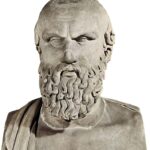
Aeschylus (525 Before Christ to 456 B.C.) was an ancient Greek author of Greek tragedy, and is often described as the father of tragedy. Academics’ knowledge of the genre begins with his work, and understanding of earlier Greek tragedy is largely based on inferences made from reading his surviving plays. According to Aristotle, he expanded the number of characters in the theatre and allowed conflict among them.