
A poem by Alan Seeger (1888-1916)
Oh, love of woman, you are known to be
A passion sent to plague the hearts of men;
For every one you bring felicity
Bringing rebuffs and wretchedness to ten.
I have been oft where human life sold cheap
And seen men’s brains spilled out about their ears
And yet that never cost me any sleep;
I lived untroubled and I shed no tears.
Fools prate how war is an atrocious thing;
I always knew that nothing it implied
Equalled the agony of suffering
Of him who loves and loves unsatisfied.
War is a refuge to a heart like this;
Love only tells it what true torture is.

A few random poems:
- Psalm 04 poem – John Milton poems
- Владимир Британишский – Единственный шаман, которого я видел
- Иван Барков – Стихи с матом без цензуры: читать матерные нецензурные стихотворения Баркова – Poetry Monster
- In a Disused Graveyard by Robert Frost
- Василий Казин – Гармонист
- I Would Live In Your Love by Sara Teasdale
- Cradle Song by Sarojini Naidu
- How a Little Girl Sang by Vachel Lindsay
- Last News About The Little Box by Vasko Popa
- Morris Island by William Gilmore Simms
- Epistles to Several Persons: Epistle IV, To Richard Boyle, poem – Alexander Pope poems | Poetry Monster
- At Long Last
- As I Watch’d the Ploughman Ploughing. by Walt Whitman
- Ode On A Grecian Urn poem – John Keats poems
- Владимир Корнилов – Эпоха
External links
Bat’s Poetry Page – more poetry by Fledermaus
Talking Writing Monster’s Page –
Batty Writing – the bat’s idle chatter, thoughts, ideas and observations, all original, all fresh
Poems in English
- Sonnet 94: They that have power to hurt and will do none by William Shakespeare
- Sonnet 93: So shall I live, supposing thou art true by William Shakespeare
- Sonnet 92: But do thy worst to steal thy self away by William Shakespeare
- Sonnet 91: Some glory in their birth, some in their skill by William Shakespeare
- Sonnet 90: Then hate me when thou wilt; if ever, now by William Shakespeare
- Sonnet 8: Music to hear, why hear’st thou music sadly? by William Shakespeare
- Sonnet 89: Say that thou didst forsake me for some fault by William Shakespeare
- Sonnet 88: When thou shalt be disposed to set me light by William Shakespeare
- Sonnet 87: Farewell! Thou art too dear for my possessing by William Shakespeare
- Sonnet 86: Was it the proud full sail of his great verse by William Shakespeare
- Sonnet 85: My tongue-tied Muse in manners holds her still by William Shakespeare
- Sonnet 84: Who is it that says most, which can say more by William Shakespeare
- Sonnet 83: I never saw that you did painting need by William Shakespeare
- Sonnet 82: I grant thou wert not married to my Muse by William Shakespeare
- Sonnet 81: Or I shall live your epitaph to make by William Shakespeare
- Sonnet 80: O, how I faint when I of you do write by William Shakespeare
- Sonnet 7: Lo, in the orient when the gracious light by William Shakespeare
- Sonnet 79: Whilst I alone did call upon thy aid by William Shakespeare
- Sonnet 78: So oft have I invoked thee for my Muse by William Shakespeare
- Sonnet 77: Thy glass will show thee how thy beauties wear by William Shakespeare
More external links (open in a new tab):
Doska or the Board – write anything
Search engines:
Yandex – the best search engine for searches in Russian (and the best overall image search engine, in any language, anywhere)
Qwant – the best search engine for searches in French, German as well as Romance and Germanic languages.
Ecosia – a search engine that supposedly… plants trees
Duckduckgo – the real alternative and a search engine that actually works. Without much censorship or partisan politics.
Yahoo– yes, it’s still around, amazingly, miraculously, incredibly, but now it seems to be powered by Bing.
Parallel Translations of Poetry
The Poetry Repository – an online library of poems, poetry, verse and poetic works
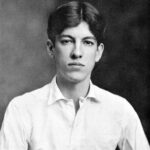
Alan Seeger (1888-1916) was an American war poet who fought and died in World War I during the Battle of the Somme, serving in the French Foreign Legion. Seeger was the brother of Charles Seeger, a noted American pacifist and musicologist and the uncle of folk musician, Pete Seeger.