
A poem by Aeschylus (c. 525 – c. 456 Before Christ )
A GLEAM – a gleam – from Ida’s height,
By the Fire-god sent, it came;
From watch to watch it leapt, that light,
As a rider rode the flame!
It shot through the startled sky,
And the torch of that blazing glory
Old Lemnos caught on high,
On its holy promontory,
And sent it on, the jocund sign,
To Athos, Mount of Jove divine.
Wildly the while, it rose from the isle,
So that the might of the journeying Light
Skimmed over the back of the gleaming brine!
Farther and faster speeds it on,
Till the watch that keeps Macistus steep
See it burst like a blazing Sun!
Doth Macistus sleep
On his tower-clad steep?
No! rapid and red doth the wild fire sweep;
It flashes afar on the wayward stream
Of the wild Euripus, the rushing beam!
It rouses the light on Messapion’s height,
And they feed its breath with the withered heath.
But it may not stay!
And away – away –
It bounds in its freshening might.
Silent and soon,
Like a broadened moon,
It passes in sheen, Asopus green,
And bursts on Cithaeron gray!
The warder wakes to the Signal-rays,
And it swoops from the hill with a broader blaze.
On, on the fiery Glory rode;
Thy lonely lake, Gorgopis, glowed!
To Megara’s Mount it came;
They feed it again
And it streams amain-
A giant beard of Flame!
The headland cliffs that darkly down
O’er the Saronic waters frown,
Are passed with the Swift One’s lurid stride,
And the huge rock glares on the glaring tide.
With mightier march and fiercer power
It gained Arachne’s neighboring tower;
Thence on our Argive roof its rest it won,
Of Ida’s fire the long-descended Son!
Bright Harbinger of glory and of joy!
So first and last with equal honor crowned,
In solemn feasts the race-torch circles round. –
And these my heralds! – this my SIGN OF PEACE;
Lo! while we breathe, the victor lords of Greece
Stalk, in stern tumult, through the halls of Troy!

A few random poems:
- Валерий Брюсов – Грядущие гунны
- A Leaf for Hand in Hand. by Walt Whitman
- The Heart That Is Pining by Timothy Thomas Fortune
- Let Me Tide Over by Vattacharja Chandan
- Riden Hwome At Night by William Barnes
- The Cyclists poem – Amy Lowell poems | Poems and Poetry
- Epigram on the said Occasion by Robert Burns
- Meditation by Radames Antonio Cruz
- The Gyres by William Butler Yeats
- Elegy I. To Charles Deodati (Translated From Milton) by William Cowper
- Irony poem – Amy Lowell poems | Poems and Poetry
- don_juan.html
- Иван Мятлев – Бывало
- Гавриил Державин – Похвала за правосудие
- Invocation by Siegfried Sassoon
External links
Bat’s Poetry Page – more poetry by Fledermaus
Talking Writing Monster’s Page –
Batty Writing – the bat’s idle chatter, thoughts, ideas and observations, all original, all fresh
Poems in English
- Sacrifice And Love
- Rule I By Eric Mottram Stop Writing Literature You Garrulous Indian
- Poetry And Politics
- Poem Stories
- Plato
- Peace Universal Good
- Paralipomemnon
- Our Refuge
- One Sweet White Light
- New Land
- Motionless Body
- Mother
- Minimalism And The Elm Choka
- Mark
- Love Flower
- Love
- Lord God Have Mercy On Me
- Libation
- Least In A List
- Interpret The Light
More external links (open in a new tab):
Doska or the Board – write anything
Search engines:
Yandex – the best search engine for searches in Russian (and the best overall image search engine, in any language, anywhere)
Qwant – the best search engine for searches in French, German as well as Romance and Germanic languages.
Ecosia – a search engine that supposedly… plants trees
Duckduckgo – the real alternative and a search engine that actually works. Without much censorship or partisan politics.
Yahoo– yes, it’s still around, amazingly, miraculously, incredibly, but now it seems to be powered by Bing.
Parallel Translations of Poetry
The Poetry Repository – an online library of poems, poetry, verse and poetic works
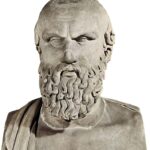
Aeschylus (525 Before Christ to 456 B.C.) was an ancient Greek author of Greek tragedy, and is often described as the father of tragedy. Academics’ knowledge of the genre begins with his work, and understanding of earlier Greek tragedy is largely based on inferences made from reading his surviving plays. According to Aristotle, he expanded the number of characters in the theatre and allowed conflict among them.