
A poem by Aeschylus (c. 525 – c. 456 Before Christ )
Hear ye my statute, men of Attica–
Ye who of bloodshed judge this primal cause;
Yea, and in future age shall Aegeus’s host
Revere this court of jurors. This the hill
Of Ares, seat of Amazons, their tent,
What time ‘gainst Theseus, breathing hate, they came,
Waging fierce battle, and their towers upreared,
A counter-fortress to Acropolis;–
To Ares they did sacrifice, and hence
This rock is titled Areopagus.
Here then shall sacred Awe, to Fear allied,
By day and night my lieges hold from wrong,
Save if themselves do innovate my laws,
If thou with mud, or influx base, bedim
The sparkling water, nought thou’lt find to drink.
Nor Anarchy, nor Tyrant’s lawless rule
Commend I to my people’s reverence;–
Nor let them banish from their city Fear;
For who ‘mong men, uncurbed by fear, is just?
Thus holding Awe in seemly reverence,
A bulwark for your State shall ye possess,
A safeguard to protect your city walls,
Such as no mortals otherwhere can boast,
Neither in Scythia, nor in Pelops’s realm.
Behold! This Court august, untouched by bribes,
Sharp to avenge, wakeful for those who sleep,
Establish I, a bulwark to this land.
This charge, extending to all future time,
I give my lieges. Meet it as ye rise,
Assume the pebbles, and decide the cause,
Your oath revering. All hath now been said.

A few random poems:
- Innocence
- Vocation by Rabindranath Tagore
- STRIPED NOTHINGS by Satish Verma
- In Snow by William Allingham
- Teignmouth: “Some Doggerel,” Sent In A Letter To B. R. Haydon poem – John Keats poems
- Зинаида Александрова – Чай в саду
- The Lime-tree Bower my Prison by Samuel Coleridge
- Владимир Маяковский – Тучкины штучки
- I don’t want to have you by Vinko Kalinic
- The French Army In Russia, 1812-13 by William Wordsworth
- Lines Written On Visiting The Chateaux On The Loire poem – Alfred Austin
- Федор Тютчев – Князю Горчакову
- The Haughty Snail-King by Vachel Lindsay
- Юнна Мориц – Зейдер-Зее
- One Night, The Fukien Robbers poem – Yang Wan-Li poems | Poetry Monster
External links
Bat’s Poetry Page – more poetry by Fledermaus
Talking Writing Monster’s Page –
Batty Writing – the bat’s idle chatter, thoughts, ideas and observations, all original, all fresh
Poems in English
- You are coming! by Preeth Nambiar
- Wish If You…! by Praveen Parasar
- When the universe speaks by Preeth Nambiar
- WATER LILLIES AND ADVICE by PEGGY AYLSWORTH
- Waking up on a rainy morning by Preeth Nambiar
- Wake Oslo up again by Philo Ikonya
- Towards The sky by Pushpendra Singh Baghel
- To Double Lock by Pierre Reverdy
- The way aboard by Preeth Nambiar
- The Theatre of Illusion by Pierre Corneille
- The Survivor by Primo Levi
- The Search by Pornika Ganguly
- The Magic by Preeth Nambiar
- The Love! by Praveen Parasar
- The Last Letter by Priyanka Tungana
- The Fragrance of life by Preeth Nambiar
- The Deeper Shadow by Pierre Reverdy
- The Actor by Preeth Nambiar
- That Light by Paul Hostovsky
- Termites by Piera Chen
More external links (open in a new tab):
Doska or the Board – write anything
Search engines:
Yandex – the best search engine for searches in Russian (and the best overall image search engine, in any language, anywhere)
Qwant – the best search engine for searches in French, German as well as Romance and Germanic languages.
Ecosia – a search engine that supposedly… plants trees
Duckduckgo – the real alternative and a search engine that actually works. Without much censorship or partisan politics.
Yahoo– yes, it’s still around, amazingly, miraculously, incredibly, but now it seems to be powered by Bing.
Parallel Translations of Poetry
The Poetry Repository – an online library of poems, poetry, verse and poetic works
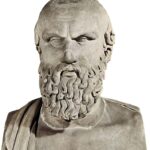
Aeschylus (525 Before Christ to 456 B.C.) was an ancient Greek author of Greek tragedy, and is often described as the father of tragedy. Academics’ knowledge of the genre begins with his work, and understanding of earlier Greek tragedy is largely based on inferences made from reading his surviving plays. According to Aristotle, he expanded the number of characters in the theatre and allowed conflict among them.