
A poem by Aeschylus (c. 525 – c. 456 Before Christ )
Hear ye my statute, men of Attica–
Ye who of bloodshed judge this primal cause;
Yea, and in future age shall Aegeus’s host
Revere this court of jurors. This the hill
Of Ares, seat of Amazons, their tent,
What time ‘gainst Theseus, breathing hate, they came,
Waging fierce battle, and their towers upreared,
A counter-fortress to Acropolis;–
To Ares they did sacrifice, and hence
This rock is titled Areopagus.
Here then shall sacred Awe, to Fear allied,
By day and night my lieges hold from wrong,
Save if themselves do innovate my laws,
If thou with mud, or influx base, bedim
The sparkling water, nought thou’lt find to drink.
Nor Anarchy, nor Tyrant’s lawless rule
Commend I to my people’s reverence;–
Nor let them banish from their city Fear;
For who ‘mong men, uncurbed by fear, is just?
Thus holding Awe in seemly reverence,
A bulwark for your State shall ye possess,
A safeguard to protect your city walls,
Such as no mortals otherwhere can boast,
Neither in Scythia, nor in Pelops’s realm.
Behold! This Court august, untouched by bribes,
Sharp to avenge, wakeful for those who sleep,
Establish I, a bulwark to this land.
This charge, extending to all future time,
I give my lieges. Meet it as ye rise,
Assume the pebbles, and decide the cause,
Your oath revering. All hath now been said.

A few random poems:
- Спиридон Дрожжин – Свети мне, солнышко
- The Linden On The Lawn by William Barnes
- Manhattan Streets I Saunter’d, Pondering. by Walt Whitman
- Огюст Барбье – Джин
- She
- A Garden-Seat At Home by William Lisle Bowles
- Владимир Корнилов – Место
- A Man Young And Old: IV. The Death Of The Hare by William Butler Yeats
- This Aloneness by Jalal ad-Din Muhammad Rumi
- Song For The Severed Head In `The King Of The Great Clock Tower’ by William Butler Yeats
- A Sleepless Night by Philip Levine
- Dedication To The Edition Of 1876 To H.J.A. poem – Alfred Austin
- I Just Wanna Make You Mine Girl by Miraj Patel
- So I Said I Am Ezra poem – A. R. Ammons poems | Poetry Monster
- Омар Хайям – Что жизнь
External links
Bat’s Poetry Page – more poetry by Fledermaus
Talking Writing Monster’s Page –
Batty Writing – the bat’s idle chatter, thoughts, ideas and observations, all original, all fresh
Poems in English
- Little Abigail and the Beautiful Pony by Shel Silverstein
- Listen To The Mustn’ts by Shel Silverstein
- Lemmebesomethin’ by Shel Silverstein
- I’ve Been Working So Hard by Shel Silverstein
- In The Hills Of Shiloh by Shel Silverstein
- In Search Of Cinderella by Shel Silverstein
- I’m So Good That I Don’t Have To Brag by Shel Silverstein
- I’m My Own Grandpa by Shel Silverstein
- If The World Was Crazy by Shel Silverstein
- If I Had A Brontosaurus by Shel Silverstein
- I Once Knew A Woman by Shel Silverstein
- I Can’t Touch The Sun by Shel Silverstein
- I Call That True Love by Shel Silverstein
- Hug O’War by Shel Silverstein
- Hippo’s Hope by Shel Silverstein
- Hector The Collector by Shel Silverstein
- Hard To Please by Shel Silverstein
- Handy Man by Shel Silverstein
- Hamlet As Told On The Street by Shel Silverstein
- For What She Had Done by Shel Silverstein
More external links (open in a new tab):
Doska or the Board – write anything
Search engines:
Yandex – the best search engine for searches in Russian (and the best overall image search engine, in any language, anywhere)
Qwant – the best search engine for searches in French, German as well as Romance and Germanic languages.
Ecosia – a search engine that supposedly… plants trees
Duckduckgo – the real alternative and a search engine that actually works. Without much censorship or partisan politics.
Yahoo– yes, it’s still around, amazingly, miraculously, incredibly, but now it seems to be powered by Bing.
Parallel Translations of Poetry
The Poetry Repository – an online library of poems, poetry, verse and poetic works
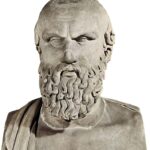
Aeschylus (525 Before Christ to 456 B.C.) was an ancient Greek author of Greek tragedy, and is often described as the father of tragedy. Academics’ knowledge of the genre begins with his work, and understanding of earlier Greek tragedy is largely based on inferences made from reading his surviving plays. According to Aristotle, he expanded the number of characters in the theatre and allowed conflict among them.