
A poem by Aeschylus (c. 525 – c. 456 Before Christ )
Hear ye my statute, men of Attica–
Ye who of bloodshed judge this primal cause;
Yea, and in future age shall Aegeus’s host
Revere this court of jurors. This the hill
Of Ares, seat of Amazons, their tent,
What time ‘gainst Theseus, breathing hate, they came,
Waging fierce battle, and their towers upreared,
A counter-fortress to Acropolis;–
To Ares they did sacrifice, and hence
This rock is titled Areopagus.
Here then shall sacred Awe, to Fear allied,
By day and night my lieges hold from wrong,
Save if themselves do innovate my laws,
If thou with mud, or influx base, bedim
The sparkling water, nought thou’lt find to drink.
Nor Anarchy, nor Tyrant’s lawless rule
Commend I to my people’s reverence;–
Nor let them banish from their city Fear;
For who ‘mong men, uncurbed by fear, is just?
Thus holding Awe in seemly reverence,
A bulwark for your State shall ye possess,
A safeguard to protect your city walls,
Such as no mortals otherwhere can boast,
Neither in Scythia, nor in Pelops’s realm.
Behold! This Court august, untouched by bribes,
Sharp to avenge, wakeful for those who sleep,
Establish I, a bulwark to this land.
This charge, extending to all future time,
I give my lieges. Meet it as ye rise,
Assume the pebbles, and decide the cause,
Your oath revering. All hath now been said.

A few random poems:
- Fiesta Melons by Sylvia Plath
- Hurrahing In Harvest poem – Gerard Manley Hopkins poems
- Thatchen O’ The Rick by William Barnes
- At Delphi poem – Alfred Austin
- Sonnet CXXIV by William Shakespeare
- Easter Communion poem – Gerard Manley Hopkins poems
- Clinic by Rob Leatherman Sr.
- Иван Бунин – Норд-ост
- An Immorality poem – Ezra Pound poems
- Prayers by Rainbow Reed
- Валерий Брюсов – Годы в былом
- Peace by William Butler Yeats
- Death Stands Above Me, Whispering Low by Walter Savage Landor
- Lines Written As A School Exercise At Hawkshead, Anno Aetatis 14 by William Wordsworth
- Medallion poem – Ezra Pound poems
External links
Bat’s Poetry Page – more poetry by Fledermaus
Talking Writing Monster’s Page –
Batty Writing – the bat’s idle chatter, thoughts, ideas and observations, all original, all fresh
Poems in English
- Moonlight On The Door by William Barnes
- Me’th Below The Tree by William Barnes
- Meary-Ann’s Child by William Barnes
- Meaken Up A Miff by William Barnes
- Meäry’s Smile by William Barnes
- Meäry Wedded by William Barnes
- Martin’s Tide by William Barnes
- Married Peäir’s Love Walk by William Barnes
- Looks A-Know’d Avore by William Barnes
- Linda Deäne by William Barnes
- Light Or Sheäde by William Barnes
- Leaves A-Vallèn by William Barnes
- Leady-Day, An’ Ridden House by William Barnes
- Keepen Up O’ Chris’mas by William Barnes
- John Bloom In Lon’on by William Barnes
- John Bleäke At Hwome At Night by William Barnes
- Jeane’s Wedden Day In Mornen by William Barnes
- In The Stilness O’ The Night by William Barnes
- I’m Out O’ Door by William Barnes
- Hope In Spring by William Barnes
More external links (open in a new tab):
Doska or the Board – write anything
Search engines:
Yandex – the best search engine for searches in Russian (and the best overall image search engine, in any language, anywhere)
Qwant – the best search engine for searches in French, German as well as Romance and Germanic languages.
Ecosia – a search engine that supposedly… plants trees
Duckduckgo – the real alternative and a search engine that actually works. Without much censorship or partisan politics.
Yahoo– yes, it’s still around, amazingly, miraculously, incredibly, but now it seems to be powered by Bing.
Parallel Translations of Poetry
The Poetry Repository – an online library of poems, poetry, verse and poetic works
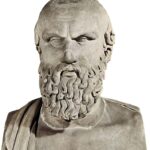
Aeschylus (525 Before Christ to 456 B.C.) was an ancient Greek author of Greek tragedy, and is often described as the father of tragedy. Academics’ knowledge of the genre begins with his work, and understanding of earlier Greek tragedy is largely based on inferences made from reading his surviving plays. According to Aristotle, he expanded the number of characters in the theatre and allowed conflict among them.