
A poem by Aeschylus (c. 525 – c. 456 Before Christ )
MESSENGER
Now at the Seventh Gate the seventh chief,
Thy proper mother’s son, I will announce,
What fortune for this city, for himself,
With curses he invoketh:–on the walls
Ascending, heralded as king, to stand,
With paeans for their capture; then with thee
To fight, and either slaying near thee die,
Or thee, who wronged him, chasing forth alive,
Requite in kind his proper banishment.
Such words he shouts, and calls upon the gods
Who o’er his race preside and Fatherland,
With gracious eye to look upon his prayers.
A well-wrought buckler, newly forged, he bears,
With twofold blazon riveted thereon,
For there a woman leads, with sober mien,
A mailed warrior, enchased in gold;
Justice her style, and thus the legend speaks:–
“This man I will restore, and he shall hold
The city and his father’s palace homes.”
Such the devices of the hostile chiefs.
‘Tis for thyself to choose whom thou wilt send;
But never shalt thou blame my herald-words.
To guide the rudder of the State be thine!
ETEOCLES
O heaven-demented race of Oedipus,
My race, tear-fraught, detested of the gods!
Alas, our father’s curses now bear fruit.
But it beseems not to lament or weep,
Lest lamentations sadder still be born.
For him, too truly Polyneikes named,–
What his device will work we soon shall know;
Whether his braggart words, with madness fraught,
Gold-blazoned on his shield, shall lead him back.
Hath Justice communed with, or claimed him hers,
Guided his deeds and thoughts, this might have been;
But neither when he fled the darksome womb,
Or in his childhood, or in youth’s fair prime,
Or when the hair thick gathered on his chin,
Hath Justice communed with, or claimed him hers,
Nor in this outrage on his Fatherland
Deem I she now beside him deigns to stand.
For Justice would in sooth belie her name,
Did she with this all-daring man consort.
In these regards confiding will I go,
Myself will meet him. Who with better right?
Brother to brother, chieftain against chief,
Foeman to foe, I’ll stand. Quick, bring my spear,
My greaves, and armor, bulwark against stones.

A few random poems:
- A Conversation At Dawn by Thomas Hardy
- Civilian and Soldier by Wole Soyinka
- John Bloom In Lon’on by William Barnes
- Sonnet Xi
- Аля Кудряшева – Снова current
- October by Robert Frost
- Зинаида Александрова – Таня и волчок
- A Summary History of Lord Clive by William Topaz McGonagall
- LET Go.. by Renu Ayyar
- On The Same Occasion by William Wordsworth
- Blue flower by Tanisha Avarsekar
- In Memoriam A. HIn Memoriam A. H. H.: 56. So careful of the type? but no.: 55. The wish, that of the living whol poem – Lord Alfred Tennyson poems
- Георгий Иванов – Балтийское море дымилось
- Владимир Маяковский – Типографы книги делают… (РОСТА №241)
- Владимир Вишневский – Незаконная гордость
External links
Bat’s Poetry Page – more poetry by Fledermaus
Talking Writing Monster’s Page –
Batty Writing – the bat’s idle chatter, thoughts, ideas and observations, all original, all fresh
Poems in English
- Arrival by William Carlos Williams
- April Is The Saddest Month by William Carlos Williams
- Après le Bain by William Carlos Williams
- Approach Of Winter by William Carlos Williams
- A Sort Of A Song by William Carlos Williams
- A Goodnight by William Carlos Williams
- A Celebration by William Carlos Williams
- Women And Roses by Robert Browning
- Venus, on a fur by Witty Fay
- Ultima Thule by William Ellery Leonard
- To the Victor by William Ellery Leonard
- The Image Of Delight by William Ellery Leonard
- The First Part: Sonnet 5 – How that vast heaven intitled First is roll’d, by William Drummond
- The First Part: Sonnet 4 – Fair is my yoke, though grievous be my pains, by William Drummond
- The First Part: Sonnet 3 – Ye who so curiously do paint your thoughts, by William Drummond
- The First Part: Sonnet 2 – I know that all beneath the moon decays by William Drummond
- The First Part: Sonnet 14 – Nor Arne, nor Mincius, nor stately Tiber, by William Drummond
- The First Part: Sonnet 13 – O sacred blush, impurpling cheeks’ pure skies by William Drummond
- The First Part: Sonnet 12 – Ah! burning thoughts, now let me take some rest, by William Drummond
- The First Part: Sonnet 11 – Lamp of heaven’s crystal hall that brings the hours, by William Drummond
More external links (open in a new tab):
Doska or the Board – write anything
Search engines:
Yandex – the best search engine for searches in Russian (and the best overall image search engine, in any language, anywhere)
Qwant – the best search engine for searches in French, German as well as Romance and Germanic languages.
Ecosia – a search engine that supposedly… plants trees
Duckduckgo – the real alternative and a search engine that actually works. Without much censorship or partisan politics.
Yahoo– yes, it’s still around, amazingly, miraculously, incredibly, but now it seems to be powered by Bing.
Parallel Translations of Poetry
The Poetry Repository – an online library of poems, poetry, verse and poetic works
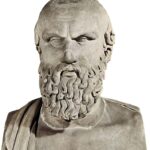
Aeschylus (525 Before Christ to 456 B.C.) was an ancient Greek author of Greek tragedy, and is often described as the father of tragedy. Academics’ knowledge of the genre begins with his work, and understanding of earlier Greek tragedy is largely based on inferences made from reading his surviving plays. According to Aristotle, he expanded the number of characters in the theatre and allowed conflict among them.