
A poem by Aeschylus (c. 525 – c. 456 Before Christ )
MESSENGER
Now at the Seventh Gate the seventh chief,
Thy proper mother’s son, I will announce,
What fortune for this city, for himself,
With curses he invoketh:–on the walls
Ascending, heralded as king, to stand,
With paeans for their capture; then with thee
To fight, and either slaying near thee die,
Or thee, who wronged him, chasing forth alive,
Requite in kind his proper banishment.
Such words he shouts, and calls upon the gods
Who o’er his race preside and Fatherland,
With gracious eye to look upon his prayers.
A well-wrought buckler, newly forged, he bears,
With twofold blazon riveted thereon,
For there a woman leads, with sober mien,
A mailed warrior, enchased in gold;
Justice her style, and thus the legend speaks:–
“This man I will restore, and he shall hold
The city and his father’s palace homes.”
Such the devices of the hostile chiefs.
‘Tis for thyself to choose whom thou wilt send;
But never shalt thou blame my herald-words.
To guide the rudder of the State be thine!
ETEOCLES
O heaven-demented race of Oedipus,
My race, tear-fraught, detested of the gods!
Alas, our father’s curses now bear fruit.
But it beseems not to lament or weep,
Lest lamentations sadder still be born.
For him, too truly Polyneikes named,–
What his device will work we soon shall know;
Whether his braggart words, with madness fraught,
Gold-blazoned on his shield, shall lead him back.
Hath Justice communed with, or claimed him hers,
Guided his deeds and thoughts, this might have been;
But neither when he fled the darksome womb,
Or in his childhood, or in youth’s fair prime,
Or when the hair thick gathered on his chin,
Hath Justice communed with, or claimed him hers,
Nor in this outrage on his Fatherland
Deem I she now beside him deigns to stand.
For Justice would in sooth belie her name,
Did she with this all-daring man consort.
In these regards confiding will I go,
Myself will meet him. Who with better right?
Brother to brother, chieftain against chief,
Foeman to foe, I’ll stand. Quick, bring my spear,
My greaves, and armor, bulwark against stones.

A few random poems:
- Consolation by William Butler Yeats
- Christian poem – Ambrose Bierce poems | Poems and Poetry
- Your Poems on My Patio by Martina Reisz Newberry
- Sonnet 70: That thou art blamed shall not be thy defect by William Shakespeare
- The Brave and the Love Flute by Tomás Ó Cárthaigh
- Олег Григорьев – Яма
- A Tale, Founded On A Fact, Which Happened In January, 1779 by William Cowper
- Картошка
- Вера Звягинцева – Околдовано сердце моё
- Владимир Бенедиктов – Калиф и раб
- Mingus At The Showplace by William Matthews
- Владимир Бенедиктов – Тайна
- Yonder pomp of costly fashion (Song) by Robert Burns
- Fire’s Reflection by Rainer Maria Rilke
- Федор Сологуб – Я дорогой невинной и смелою
External links
Bat’s Poetry Page – more poetry by Fledermaus
Talking Writing Monster’s Page –
Batty Writing – the bat’s idle chatter, thoughts, ideas and observations, all original, all fresh
Poems in English
- Hail, Zaragoza! If With Unwet eye by William Wordsworth
- Hail, Twilight, Sovereign Of One Peaceful Hour by William Wordsworth
- Guilt And Sorrow, Or, Incidents Upon Salisbury Plain by William Wordsworth
- Great Men Have Been Among Us by William Wordsworth
- Goody Blake And Harry Gill by William Wordsworth
- Gipsies by William Wordsworth
- George and Sarah Green by William Wordsworth
- From The Italian Of Michael Angelo by William Wordsworth
- From The Dark Chambers Of Dejection Freed by William Wordsworth
- From The Cuckoo And The Nightingale by William Wordsworth
- Foresight by William Wordsworth
- Fidelity by William Wordsworth
- Feelings Of The Tyrolese by William Wordsworth
- Feelings Of A Noble Biscayan At One Of Those Funerals by William Wordsworth
- Feelings of A French Royalist, On The Disinterment Of The Remains Of The Duke D’Enghien by William Wordsworth
- Extract From The Conclusion Of A Poem Composed In Anticipation Of Leaving School by William Wordsworth
- Extempore Effusion upon the Death of James Hogg by William Wordsworth
- Expostulation and Reply by William Wordsworth
- Even As A Dragon’s Eye That Feels The Stress by William Wordsworth
- Epitaphs Translated From Chiabrera by William Wordsworth
More external links (open in a new tab):
Doska or the Board – write anything
Search engines:
Yandex – the best search engine for searches in Russian (and the best overall image search engine, in any language, anywhere)
Qwant – the best search engine for searches in French, German as well as Romance and Germanic languages.
Ecosia – a search engine that supposedly… plants trees
Duckduckgo – the real alternative and a search engine that actually works. Without much censorship or partisan politics.
Yahoo– yes, it’s still around, amazingly, miraculously, incredibly, but now it seems to be powered by Bing.
Parallel Translations of Poetry
The Poetry Repository – an online library of poems, poetry, verse and poetic works
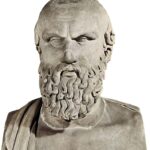
Aeschylus (525 Before Christ to 456 B.C.) was an ancient Greek author of Greek tragedy, and is often described as the father of tragedy. Academics’ knowledge of the genre begins with his work, and understanding of earlier Greek tragedy is largely based on inferences made from reading his surviving plays. According to Aristotle, he expanded the number of characters in the theatre and allowed conflict among them.