
“Because I live, ye shall live also.”
Calmly the Paschal moonlight now is sleeping
On mossy hillock and on headstone grey,
Where still our Mother holds in faithful keeping
Such as, while living, in her dear arms lay.
Ah! loving and beloved, we know ye rest,
E’en in the grave, upon her hallow’d breast.
Where is the cumbrous robe-the flesh-the matter
Which held the spirit in such painful thrall?
A little dust that scarce a breath would scatter,
Darkness, and void, and silence-this seems all.
Yet somewhere, safe, the waiting body lies,
While the freed spirit is in Paradise.
Ah! in that day, when earth is all refinèd
From death and sin, the darkness and the stain;
When Eden’s perfect beauty is enshrinèd
In unmarred purity and light again;
Transfigured, and “exceeding white as snow”-
But still that body-it will rise, we know.
The self-same lips that hymn’d the Easter story
With heart of Easter gladness, here, may sing
The song of angels, in the angels’ glory,
Around the throne of our Almighty King.
The same feet, which this ancient pavement trod,
May walk for aye the temple-courts of God.
O blessed day, which saw the Saviour risen!
Which told to trembling man that wondrous news-
“The grave is not thy body’s endless prison,
Thy soul no more in vain for pardon sues.
From Adam’s curse, by Christ’s death, thou art free-
The Lord accepts this sacrifice for thee.”
“Peace be with you”-by Him those words were spoken
After the glorious victory was won-
After the angel gave that blessed token
To her whose favour’d lips had called him “Son.”
Ah! where were peace, if every trembling breath
Strengthen’d the fetters of an endless death?
Where were the peace, if that dark cloud of mourning
From Calvary’s hill had never pass’d away?
If our deep night had never known the dawning
Of that mysterious Resurrection-day?
O Christ our Lord! Thou didst indeed release
Thy sinful children, and didst give them peace.
And now we know that Thou art throned for ever,
True God, and yet true man, in heaven above;
That now no power our life from Thine can sever,
That naught shall rob us of Thy gift of love;
That Thou, within the veil, dost intercede
For all who suffer and for all in need.
That Thou art with us here, too, in our sorrow-
With us to help in every time of strife,
Dost give to each dark day its joyous morrow,
Dost make us strong with Thine own love and life.
And we may love, and we may come to Thee
In heaven, and share Thy great felicity!
Ay, when the grass upon our grave is sighing
In the cool wind and Easter moonlight fair,
The mortal dust, beneath the violets lying,
Shall rest in hope and rest in safety there,
Till Thou shalt come with Thy celestial train,
And our bright spirit take its own again.
“After Thy likeness,” in its sweet perfection,
Shall we awake in that eternal day;
All-save the sin-shall have its resurrection,
Clothed in Thy glorious immortality.
And we shall stand Thy radiant throne beside,
Blessed for evermore, and-satisfied!

A few random poems:
- Владимир Высоцкий – Песня Сашки Червня
- The Torture Of Cuauhtemoc
- Ольга Седакова – Последний читатель
- I Wake And Feel The Fell Of Dark, Not Day poem – Gerard Manley Hopkins poems
- Владимир Британишский – Другу
- Eclogue:–Come And Zee Us In The Zummer by William Barnes
- Loves Blindness
- Human Instrument by Victoria Bukofske
- Михаил Ломоносов – Надпись 5 к статуе Петра Великого
- To Fanny poem – John Keats poems
- Вера Павлова – Вот и пришли времена
- Владимир Бенедиктов – Монастыркам
- Ольга Берггольц – Встреча
- Daybreak In A Garden by Siegfried Sassoon
- The Folly Of Being Comforted by William Butler Yeats
External links
Bat’s Poetry Page – more poetry by Fledermaus
Talking Writing Monster’s Page –
Batty Writing – the bat’s idle chatter, thoughts, ideas and observations, all original, all fresh
Poems in English
- Sonnet 133: Beshrew that heart that makes my heart to groan by William Shakespeare
- Sonnet 132: Thine eyes I love, and they, as pitying me by William Shakespeare
- Sonnet 131: Thou art as tyrannous, so as thou art by William Shakespeare
- Sonnet 130: My mistress’ eyes are nothing like the sun by William Shakespeare
- Sonnet 12: When I do count the clock that tells the time by William Shakespeare
- Sonnet 129: Th’ expense of spirit in a waste of shame by William Shakespeare
- The Eolian Harp by Samuel Taylor Coleridge
- Sonnet 32: If thou survive my well-contented day by William Shakespeare
- Sonnet 31: Thy bosom is endearèd with all hearts by William Shakespeare
- Sonnet 30: When to the sessions of sweet silent thought by William Shakespeare
- Sonnet 2: When forty winters shall besiege thy brow by William Shakespeare
- Sonnet 29: When in disgrace with Fortune and men’s eyes by William Shakespeare
- Sonnet 28: How can I then return in happy plight by William Shakespeare
- Sonnet 27: Weary with toil, I haste me to my bed by William Shakespeare
- Sonnet 26: Lord of my love, to whom in vassalage by William Shakespeare
- Sonnet 25: Let those who are in favour with their stars by William Shakespeare
- Sonnet 24: Mine eye hath played the painter and hath stelled by William Shakespeare
- Sonnet 23: As an unperfect actor on the stage by William Shakespeare
- Sonnet 22: My glass shall not persuade me I am old by William Shakespeare
- Sonnet 21: So is it not with me as with that muse by William Shakespeare
More external links (open in a new tab):
Doska or the Board – write anything
Search engines:
Yandex – the best search engine for searches in Russian (and the best overall image search engine, in any language, anywhere)
Qwant – the best search engine for searches in French, German as well as Romance and Germanic languages.
Ecosia – a search engine that supposedly… plants trees
Duckduckgo – the real alternative and a search engine that actually works. Without much censorship or partisan politics.
Yahoo– yes, it’s still around, amazingly, miraculously, incredibly, but now it seems to be powered by Bing.
Parallel Translations of Poetry
The Poetry Repository – an online library of poems, poetry, verse and poetic works
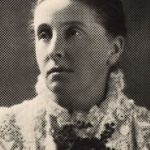
Ada Cambridge (1844 – 1926), also known as Ada Cross, was an English-born Australian author and poetess. She wrote more than 25 works of fiction, three volumes of poetry and two autobiographical works.