
A poem by Alan Seeger (1888-1916)
We first saw fire on the tragic slopes
Where the flood-tide of France’s early gain,
Big with wrecked promise and abandoned hopes,
Broke in a surf of blood along the Aisne.
The charge her heroes left us, we assumed,
What, dying, they reconquered, we preserved,
In the chill trenches, harried, shelled, entombed,
Winter came down on us, but no man swerved.
Winter came down on us. The low clouds, torn
In the stark branches of the riven pines,
Blurred the white rockets that from dusk till morn
Traced the wide curve of the close-grappling lines.
In rain, and fog that on the withered hill
Froze before dawn, the lurking foe drew down;
Or light snows fell that made forlorner still
The ravaged country and the ruined town;
Or the long clouds would end. Intensely fair,
The winter constellations blazing forth —
Perseus, the Twins, Orion, the Great Bear —
Gleamed on our bayonets pointing to the north.
And the lone sentinel would start and soar
On wings of strong emotion as he knew
That kinship with the stars that only War
Is great enough to lift man’s spirit to.
And ever down the curving front, aglow
With the pale rockets’ intermittent light,
He heard, like distant thunder, growl and grow
The rumble of far battles in the night, —
Rumors, reverberant, indistinct, remote,
Borne from red fields whose martial names have won
The power to thrill like a far trumpet-note, —
Vic, Vailly, Soupir, Hurtelise, Craonne . . .
Craonne, before thy cannon-swept plateau,
Where like sere leaves lay strewn September’s dead,
I found for all dear things I forfeited
A recompense I would not now forego.
For that high fellowship was ours then
With those who, championing another’s good,
More than dull Peace or its poor votaries could,
Taught us the dignity of being men.
There we drained deeper the deep cup of life,
And on sublimer summits came to learn,
After soft things, the terrible and stern,
After sweet Love, the majesty of Strife;
There where we faced under those frowning heights
The blast that maims, the hurricane that kills;
There where the watchlights on the winter hills
Flickered like balefire through inclement nights;
There where, firm links in the unyielding chain,
Where fell the long-planned blow and fell in vain —
Hearts worthy of the honor and the trial,
We helped to hold the lines along the Aisne.

A few random poems:
- krishna039s_advice_to_arjuna.html
- May Magnificat poem – Gerard Manley Hopkins poems
- Владимир Маяковский – Эй, товарищи! От сбора продналога… (Главполитпросвет №284)
- Come down, O Maid poem – Lord Alfred Tennyson poems
- Sonnet 127: In the old age black was not counted fair by William Shakespeare
- Song by William Browne
- To a Lady on Her Remarkable Preservation by Phillis Wheatley
- On Flatteries (From The Greek) by William Cowper
- Mortal Limit by Robert Penn Warren
- Константин Бальмонт – Над морем
- Slumber-Song by Siegfried Sassoon
- Oh Day Of Fire And Sun by Sara Teasdale
- Николай Глазков – Эпилог
- A sense’s addiction to chocolate by SAAJIDA GORA
- The Spring passing away by Shailendra Chauhan
External links
Bat’s Poetry Page – more poetry by Fledermaus
Talking Writing Monster’s Page –
Batty Writing – the bat’s idle chatter, thoughts, ideas and observations, all original, all fresh
Poems in English
- Sonnet 20: A woman’s face with Nature’s own hand painted by William Shakespeare
- Sonnet 1: From fairest creatures we desire increase by William Shakespeare
- Sonnet 19: Devouring Time blunt thou the lion’s paws by William Shakespeare
- Sonnet 18: Shall I compare thee to a summer’s day? by William Shakespeare
- Sonnet 17: Who will believe my verse in time to come by William Shakespeare
- Sonnet 16: But wherefore do not you a mightier way by William Shakespeare
- Sonnet 15: When I consider every thing that grows by William Shakespeare
- Sonnet 154: The little Love-god lying once asleep by William Shakespeare
- Sonnet 153: Cupid laid by his brand and fell asleep by William Shakespeare
- Sonnet 152: In loving thee thou know’st I am forsworn by William Shakespeare
- Sonnet 151: Love is too young to know what conscience is by William Shakespeare
- Sonnet 150: O from what power hast thou this powerful might by William Shakespeare
- Sonnet 14: Not from the stars do I my judgement pluck by William Shakespeare
- Sonnet 54: O, how much more doth beauty beauteous seem by William Shakespeare
- Sonnet 53: What is your substance, whereof are you made by William Shakespeare
- Sonnet 52: So am I as the rich whose blessèd key by William Shakespeare
- Sonnet 51: Thus can my love excuse the slow offence by William Shakespeare
- Sonnet 50: How heavy do I journey on the way by William Shakespeare
- Sonnet 4: Unthrifty loveliness, why dost thou spend by William Shakespeare
- Sonnet 49: Against that time, if ever that time come by William Shakespeare
More external links (open in a new tab):
Doska or the Board – write anything
Search engines:
Yandex – the best search engine for searches in Russian (and the best overall image search engine, in any language, anywhere)
Qwant – the best search engine for searches in French, German as well as Romance and Germanic languages.
Ecosia – a search engine that supposedly… plants trees
Duckduckgo – the real alternative and a search engine that actually works. Without much censorship or partisan politics.
Yahoo– yes, it’s still around, amazingly, miraculously, incredibly, but now it seems to be powered by Bing.
Parallel Translations of Poetry
The Poetry Repository – an online library of poems, poetry, verse and poetic works
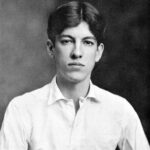
Alan Seeger (1888-1916) was an American war poet who fought and died in World War I during the Battle of the Somme, serving in the French Foreign Legion. Seeger was the brother of Charles Seeger, a noted American pacifist and musicologist and the uncle of folk musician, Pete Seeger.