
A poem by Alan Seeger (1888-1916)
We first saw fire on the tragic slopes
Where the flood-tide of France’s early gain,
Big with wrecked promise and abandoned hopes,
Broke in a surf of blood along the Aisne.
The charge her heroes left us, we assumed,
What, dying, they reconquered, we preserved,
In the chill trenches, harried, shelled, entombed,
Winter came down on us, but no man swerved.
Winter came down on us. The low clouds, torn
In the stark branches of the riven pines,
Blurred the white rockets that from dusk till morn
Traced the wide curve of the close-grappling lines.
In rain, and fog that on the withered hill
Froze before dawn, the lurking foe drew down;
Or light snows fell that made forlorner still
The ravaged country and the ruined town;
Or the long clouds would end. Intensely fair,
The winter constellations blazing forth —
Perseus, the Twins, Orion, the Great Bear —
Gleamed on our bayonets pointing to the north.
And the lone sentinel would start and soar
On wings of strong emotion as he knew
That kinship with the stars that only War
Is great enough to lift man’s spirit to.
And ever down the curving front, aglow
With the pale rockets’ intermittent light,
He heard, like distant thunder, growl and grow
The rumble of far battles in the night, —
Rumors, reverberant, indistinct, remote,
Borne from red fields whose martial names have won
The power to thrill like a far trumpet-note, —
Vic, Vailly, Soupir, Hurtelise, Craonne . . .
Craonne, before thy cannon-swept plateau,
Where like sere leaves lay strewn September’s dead,
I found for all dear things I forfeited
A recompense I would not now forego.
For that high fellowship was ours then
With those who, championing another’s good,
More than dull Peace or its poor votaries could,
Taught us the dignity of being men.
There we drained deeper the deep cup of life,
And on sublimer summits came to learn,
After soft things, the terrible and stern,
After sweet Love, the majesty of Strife;
There where we faced under those frowning heights
The blast that maims, the hurricane that kills;
There where the watchlights on the winter hills
Flickered like balefire through inclement nights;
There where, firm links in the unyielding chain,
Where fell the long-planned blow and fell in vain —
Hearts worthy of the honor and the trial,
We helped to hold the lines along the Aisne.

A few random poems:
- J–K. Huysmans poem – Amy Lowell poems | Poems and Poetry
- The Rose by Sara Teasdale
- Георгий Иванов – Альбомный сонет
- Robert Burns: Inscribed On A Work Of Hannah More’s: Presented to the Author by a Lady.
- one_almost_might.html
- Homosexuality by Spencer Reece
- See, how I love you by Vinko Kalinić
- A Farewell To Youth poem – Alfred Austin
- Crazy Jane On The Day Of Judgment by William Butler Yeats
- Astigmatism poem – Amy Lowell poems | Poems and Poetry
- Song. I Had A Dove poem – John Keats poems
- An Essay on Man: Epistle II poem – Alexander Pope poems | Poetry Monster
- A Death Song by William Morris
- Алишер Навои – Пустословя на минбаре
- Николай Заболоцкий – Поход
External links
Bat’s Poetry Page – more poetry by Fledermaus
Talking Writing Monster’s Page –
Batty Writing – the bat’s idle chatter, thoughts, ideas and observations, all original, all fresh
Poems in English
- Sonnet 133: Beshrew that heart that makes my heart to groan by William Shakespeare
- Sonnet 132: Thine eyes I love, and they, as pitying me by William Shakespeare
- Sonnet 131: Thou art as tyrannous, so as thou art by William Shakespeare
- Sonnet 130: My mistress’ eyes are nothing like the sun by William Shakespeare
- Sonnet 12: When I do count the clock that tells the time by William Shakespeare
- Sonnet 129: Th’ expense of spirit in a waste of shame by William Shakespeare
- The Eolian Harp by Samuel Taylor Coleridge
- Sonnet 32: If thou survive my well-contented day by William Shakespeare
- Sonnet 31: Thy bosom is endearèd with all hearts by William Shakespeare
- Sonnet 30: When to the sessions of sweet silent thought by William Shakespeare
- Sonnet 2: When forty winters shall besiege thy brow by William Shakespeare
- Sonnet 29: When in disgrace with Fortune and men’s eyes by William Shakespeare
- Sonnet 28: How can I then return in happy plight by William Shakespeare
- Sonnet 27: Weary with toil, I haste me to my bed by William Shakespeare
- Sonnet 26: Lord of my love, to whom in vassalage by William Shakespeare
- Sonnet 25: Let those who are in favour with their stars by William Shakespeare
- Sonnet 24: Mine eye hath played the painter and hath stelled by William Shakespeare
- Sonnet 23: As an unperfect actor on the stage by William Shakespeare
- Sonnet 22: My glass shall not persuade me I am old by William Shakespeare
- Sonnet 21: So is it not with me as with that muse by William Shakespeare
More external links (open in a new tab):
Doska or the Board – write anything
Search engines:
Yandex – the best search engine for searches in Russian (and the best overall image search engine, in any language, anywhere)
Qwant – the best search engine for searches in French, German as well as Romance and Germanic languages.
Ecosia – a search engine that supposedly… plants trees
Duckduckgo – the real alternative and a search engine that actually works. Without much censorship or partisan politics.
Yahoo– yes, it’s still around, amazingly, miraculously, incredibly, but now it seems to be powered by Bing.
Parallel Translations of Poetry
The Poetry Repository – an online library of poems, poetry, verse and poetic works
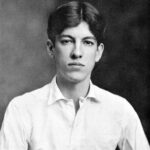
Alan Seeger (1888-1916) was an American war poet who fought and died in World War I during the Battle of the Somme, serving in the French Foreign Legion. Seeger was the brother of Charles Seeger, a noted American pacifist and musicologist and the uncle of folk musician, Pete Seeger.