
A poem by Alan Seeger (1888-1916)
To see the clouds his spirit yearned toward so
Over new mountains piled and unploughed waves,
Back of old-storied spires and architraves
To watch Arcturus rise or Fomalhaut,
And roused by street-cries in strange tongues when day
Flooded with gold some domed metropolis,
Between new towers to waken and new bliss
Spread on his pillow in a wondrous way:
These were his joys. Oft under bulging crates,
Coming to market with his morning load,
The peasant found him early on his road
To greet the sunrise at the city-gates,—
There where the meadows waken in its rays,
Golden with mist, and the great roads commence,
And backward, where the chimney-tops are dense,
Cathedral-arches glimmer through the haze.
White dunes that breaking show a strip of sea,
A plowman and his team against the blue
Swiss pastures musical with cowbells, too,
And poplar-lined canals in Picardie,
And coast-towns where the vultures back and forth
Sail in the clear depths of the tropic sky,
And swallows in the sunset where they fly
Over gray Gothic cities in the north,
And the wine-cellar and the chorus there,
The dance-hall and a face among the crowd,—
Were all delights that made him sing aloud
For joy to sojourn in a world so fair.
Back of his footsteps as he journeyed fell
Range after range; ahead blue hills emerged.
Before him tireless to applaud it surged
The sweet interminable spectacle.
And like the west behind a sundown sea
Shone the past joys his memory retraced,
And bright as the blue east he always faced
Beckoned the loves and joys that were to be.
From every branch a blossom for his brow
He gathered, singing down Life’s flower-lined road,
And youth impelled his spirit as he strode
Like winged Victory on the galley’s prow.
That Loveliness whose being sun and star,
Green Earth and dawn and amber evening robe,
That lamp whereof the opalescent globe
The season’s emulative splendors are,
That veiled divinity whose beams transpire
From every pore of universal space,
As the fair soul illumes the lovely face—
That was his guest, his passion, his desire.
His heart the love of Beauty held as hides
One gem most pure a casket of pure gold.
It was too rich a lesser thing to bold;
It was not large enough for aught besides.

A few random poems:
- Sonnet Viii
- Владимир Британишский – Архитектор Юрий Фельтен
- The Wise Builder by William Somervile
- Владимир Корнилов – Прежнее слово
- Владимир Высоцкий – Маски
- Divided Destinies by Rudyard Kipling
- Astrophel and Stella: XCII by Sir Philip Sidney
- Виктор Гончаров – Дождь
- The Rolling Mills by Michael McGovern
- Inscription at Friars’ Carse Hermitage by Robert Burns
- On a certain Lady at Court poem – Alexander Pope poems | Poetry Monster
- Teaching Children to Write by Free Writing
- Robert Burns: She’s Fair And Fause:
- Robert Burns: Willie Chalmers: Mr. Chalmers, a gentleman in Ayrshire, a particular friend of mine, asked me to write a poetic epistle to a young lady, his Dulcinea. I had seen her, but was scarcely acquainted with her, and wrote as follows:-
- Владимир Бенедиктов – Н. Ф. Щербине
External links
Bat’s Poetry Page – more poetry by Fledermaus
Talking Writing Monster’s Page –
Batty Writing – the bat’s idle chatter, thoughts, ideas and observations, all original, all fresh
Poems in English
- Sonnet 71: No longer mourn for me when I am dead by William Shakespeare
- Sonnet 70: That thou art blamed shall not be thy defect by William Shakespeare
- Sonnet 6: Then let not winter’s ragged hand deface by William Shakespeare
- Sonnet 69: Those parts of thee that the world’s eye doth view by William Shakespeare
- Sonnet 68: Thus is his cheek the map of days outworn by William Shakespeare
- Sonnet 67: Ah, wherefore with infection should he live by William Shakespeare
- Sonnet 66: Tired with all these, for restful death I cry by William Shakespeare
- Sonnet 65: Since brass, nor stone, nor earth, nor boundless sea by William Shakespeare
- Sonnet 64: When I have seen by Time’s fell hand defaced by William Shakespeare
- Sonnet 63: Against my love shall be, as I am now by William Shakespeare
- Sonnet 62: Sin of self-love possesseth all mine eye by William Shakespeare
- Sonnet 61: Is it thy will thy image should keep open by William Shakespeare
- Sonnet 60: Like as the waves make towards the pebbled shore by William Shakespeare
- Sonnet 5: Those hours, that with gentle work did frame by William Shakespeare
- Sonnet 59: If there be nothing new, but that which is by William Shakespeare
- Sonnet 58: That god forbid, that made me first your slave by William Shakespeare
- Sonnet 57: Being your slave, what should I do but tend by William Shakespeare
- Sonnet 56: Sweet love, renew thy force, be it not said by William Shakespeare
- Sonnet 55: Not marble, nor the gilded monuments by William Shakespeare
- Sonnet 95: How sweet and lovely dost thou make the shame by William Shakespeare
More external links (open in a new tab):
Doska or the Board – write anything
Search engines:
Yandex – the best search engine for searches in Russian (and the best overall image search engine, in any language, anywhere)
Qwant – the best search engine for searches in French, German as well as Romance and Germanic languages.
Ecosia – a search engine that supposedly… plants trees
Duckduckgo – the real alternative and a search engine that actually works. Without much censorship or partisan politics.
Yahoo– yes, it’s still around, amazingly, miraculously, incredibly, but now it seems to be powered by Bing.
Parallel Translations of Poetry
The Poetry Repository – an online library of poems, poetry, verse and poetic works
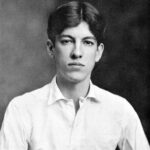
Alan Seeger (1888-1916) was an American war poet who fought and died in World War I during the Battle of the Somme, serving in the French Foreign Legion. Seeger was the brother of Charles Seeger, a noted American pacifist and musicologist and the uncle of folk musician, Pete Seeger.