
A poem by Alan Seeger (1888-1916)
To see the clouds his spirit yearned toward so
Over new mountains piled and unploughed waves,
Back of old-storied spires and architraves
To watch Arcturus rise or Fomalhaut,
And roused by street-cries in strange tongues when day
Flooded with gold some domed metropolis,
Between new towers to waken and new bliss
Spread on his pillow in a wondrous way:
These were his joys. Oft under bulging crates,
Coming to market with his morning load,
The peasant found him early on his road
To greet the sunrise at the city-gates,—
There where the meadows waken in its rays,
Golden with mist, and the great roads commence,
And backward, where the chimney-tops are dense,
Cathedral-arches glimmer through the haze.
White dunes that breaking show a strip of sea,
A plowman and his team against the blue
Swiss pastures musical with cowbells, too,
And poplar-lined canals in Picardie,
And coast-towns where the vultures back and forth
Sail in the clear depths of the tropic sky,
And swallows in the sunset where they fly
Over gray Gothic cities in the north,
And the wine-cellar and the chorus there,
The dance-hall and a face among the crowd,—
Were all delights that made him sing aloud
For joy to sojourn in a world so fair.
Back of his footsteps as he journeyed fell
Range after range; ahead blue hills emerged.
Before him tireless to applaud it surged
The sweet interminable spectacle.
And like the west behind a sundown sea
Shone the past joys his memory retraced,
And bright as the blue east he always faced
Beckoned the loves and joys that were to be.
From every branch a blossom for his brow
He gathered, singing down Life’s flower-lined road,
And youth impelled his spirit as he strode
Like winged Victory on the galley’s prow.
That Loveliness whose being sun and star,
Green Earth and dawn and amber evening robe,
That lamp whereof the opalescent globe
The season’s emulative splendors are,
That veiled divinity whose beams transpire
From every pore of universal space,
As the fair soul illumes the lovely face—
That was his guest, his passion, his desire.
His heart the love of Beauty held as hides
One gem most pure a casket of pure gold.
It was too rich a lesser thing to bold;
It was not large enough for aught besides.

A few random poems:
- Robert Burns: Here’s To Thy Health:
- Thomas Gray – Thomas Gray
- Astrophel And Stella-Sonnet XXXI by Sir Philip Sidney
- Kashmiri Song
- Olney Hymn 61: The Narrow Way by William Cowper
- Валерий Брюсов – Италия
- To Sr Henry Vane The Younger poem – John Milton poems
- In Praise of Laziness by William Wycherley
- Gathering Leaves by Robert Frost
- Robert Burns: Versified Note To Dr. Mackenzie, Mauchline:
- Create
- Virtual Impressions by Renu Ayyar
- Honour
- Desertion by Rupert Brooke
- Battalion-Relief by Siegfried Sassoon
External links
Bat’s Poetry Page – more poetry by Fledermaus
Talking Writing Monster’s Page –
Batty Writing – the bat’s idle chatter, thoughts, ideas and observations, all original, all fresh
Poems in English
- Sonnet 48: How careful was I, when I took my way by William Shakespeare
- Sonnet 47: Betwixt mine eye and heart a league is took by William Shakespeare
- Sonnet 46: Mine eye and heart are at a mortal war by William Shakespeare
- Sonnet 45: The other two, slight air and purging fire by William Shakespeare
- Sonnet 44: If the dull substance of my flesh were thought by William Shakespeare
- Sonnet 43: When most I wink, then do mine eyes best see by William Shakespeare
- Sonnet 42: That thou hast her, it is not all my grief by William Shakespeare
- Sonnet 41: Those pretty wrongs that liberty commits by William Shakespeare
- Sonnet 40: Take all my loves, my love, yea, take them all by William Shakespeare
- Sonnet 3: Look in thy glass, and tell the face thou viewest by William Shakespeare
- Sonnet 39: O, how thy worth with manners may I sing by William Shakespeare
- Sonnet 38: How can my Muse want subject to invent by William Shakespeare
- Sonnet 37: As a decrepit father takes delight by William Shakespeare
- Sonnet 36: Let me confess that we two must be twain by William Shakespeare
- Sonnet 35: No more be grieved at that which thou hast done by William Shakespeare
- Sonnet 34: Why didst thou promise such a beauteous day by William Shakespeare
- Sonnet 33: Full many a glorious morning have I seen by William Shakespeare
- Sonnet 74: But be contented when that fell arrest by William Shakespeare
- Sonnet 73: That time of year thou mayst in me behold by William Shakespeare
- Sonnet 72: O, lest the world should task you to recite by William Shakespeare
More external links (open in a new tab):
Doska or the Board – write anything
Search engines:
Yandex – the best search engine for searches in Russian (and the best overall image search engine, in any language, anywhere)
Qwant – the best search engine for searches in French, German as well as Romance and Germanic languages.
Ecosia – a search engine that supposedly… plants trees
Duckduckgo – the real alternative and a search engine that actually works. Without much censorship or partisan politics.
Yahoo– yes, it’s still around, amazingly, miraculously, incredibly, but now it seems to be powered by Bing.
Parallel Translations of Poetry
The Poetry Repository – an online library of poems, poetry, verse and poetic works
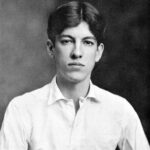
Alan Seeger (1888-1916) was an American war poet who fought and died in World War I during the Battle of the Somme, serving in the French Foreign Legion. Seeger was the brother of Charles Seeger, a noted American pacifist and musicologist and the uncle of folk musician, Pete Seeger.