
It was thy noble soul and high desert
That caus’d these breathings of my grateful heart
You sav’d a soul from Pluto’s dreary shore
You sav’d his body and he asks no more
This generous act Immortal wreaths shall bring
To thee for meritorious was the Spring
From whence from whence, [sic] this candid ardor flow’d
To grace thy name, and Glorify thy God
The Eatherial spirits in the realms above
Rejoice to see thee exercise thy Love
Hail: Commodore may heaven delighted pour
Its blessings plentious in a silent shower
The voice of pardon did resound on high
While heaven consented, and he must not die
On thee, fair victor be the Blessing shed
And rest for ever on thy matchless Head
End of the poem
15 random poems
- Sonnet. The Day Is Gone poem – John Keats poems
- Robert Burns: A Bottle And Friend:
- Worry by Mridula Makkuni
- Fairyland by Rabindranath Tagore
- Игорь Северянин – Памяти В. Башкина
- Justification by William Strode
- To the Duke of Marlborough, upon His Removal From All His Places by William Somervile
- At His Grave
- Наум Коржавин – О Господи! Как я хочу умереть
- Elegy on Willie Nicol’s Mare by Robert Burns
- Pigeon Haiku by Violet Uram
- A youth in apparel that glittered by Stephen Crane
- Олег Григорьев – Вкусно от меда во рте
- Idylls of the King: The Last Tournament (excerpt) poem – Lord Alfred Tennyson poems
- To a Commencement of Scoundrels by Samuel Hazo
Some external links:
Duckduckgo.com – the alternative in the US
Quant.com – a search engine from France, and also an alternative, at least for Europe
Yandex – the Russian search engine (it’s probably the best search engine for image searches).
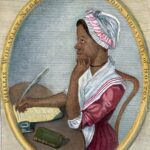
Phillis Wheatley (1753-84), a negro poetess, also an American poet or Afro-American poet, and an English Colonial poet, . She was born in Africa (in Gambia or Senegal) and was aptured by slave traders at the age of eight, she was sold to a family living in Boston, Mass., whose name she bears. While serving as a maid-servant to her proprietor’s wife, she showed an unusual facility with languages. She began writing poetry at the age of thirteen, using as models British poets of the time, especially Alexander Pope and Thomas Gray). In 1773 she accompanied a member of the Wheatley family to England, where she gained widespread attention in literary circles. She subsequently returned to Boston. Her best-known poems are “To the University of Cambridge in New England” (1767), In all honestly Phillis Wheatley should rather be considered English than an Afro-American poet but the exact classification of who she was would depend on the political and cultural views, and biases, of the “classifier.