
Awake, awake, my Lyre!
And tell thy silent master’s humble tale
In sounds that may prevail;
Sounds that gentle thoughts inspire:
Though so exalted she
And I so lowly be
Tell her, such different notes make all thy harmony.
Hark, how the strings awake!
And, though the moving hand approach not near,
Themselves with awful fear
A kind of numerous trembling make.
Now all thy forces try;
Now all thy charms apply;
Revenge upon her ear the conquests of her eye.
Weak Lyre! thy virtue sure
Is useless here, since thou art only found
To cure, but not to wound,
And she to wound, but not to cure,
Too weak too wilt thou prove
My passion to remove;
Physic to other ills, thou’rt nourishment to love.
Sleep, sleep again, my Lyre!
For thou canst never tell my humble tale
In sounds that will prevail,
Nor gentle thoughts in her inspire;
All thy vain mirth lay by,
Bid thy strings silent lie,
Sleep, sleep again, my Lyre, and let thy master die.

A few random poems:
- Anthem For Doomed Youth by Wilfred Owen
- I Do Not Love Thee For That Fair by Thomas Carew
- Владимир Британишский – Девятое января
- The Solitary Reaper by William Wordsworth
- Владимир Маяковский – Спросили раз меня: “Вы любите ли НЭП?”
- Envoi poem – Ezra Pound poems
- Bathing River
- Lesbos by Sylvia Plath
- Владимир Корнилов – Военный оркестр
- Dickinson And The Alabaster Gogyohka
- Aubade poem – Amy Lowell poems | Poems and Poetry
- Live for the moment, be in the present by Ramesh V Deshpande
- Manifesto for your smile and my songs by Vinko Kalinic
- Mine Sweepers by Rudyard Kipling
- The Dandelion by Vachel Lindsay
External links
Bat’s Poetry Page – more poetry by Fledermaus
Talking Writing Monster’s Page –
Batty Writing – the bat’s idle chatter, thoughts, ideas and observations, all original, all fresh
Poems in English
- Getting There by Sylvia Plath
- Full Fathom Five by Sylvia Plath
- Frog Autumn by Sylvia Plath
- Firesong by Sylvia Plath
- Finisterre by Sylvia Plath
- Fiesta Melons by Sylvia Plath
- Fever 103° by Sylvia Plath
- Female Author by Sylvia Plath
- Faun by Sylvia Plath
- Face Lift by Sylvia Plath
- Event by Sylvia Plath
- Elm by Sylvia Plath
- Ella Mason And Her Eleven Cats by Sylvia Plath
- Edge by Sylvia Plath
- Eavesdropper by Sylvia Plath
- Doomsday by Sylvia Plath
- Dialogue En Route by Sylvia Plath
- Dialogue Between Ghost And Priest by Sylvia Plath
- Departure by Sylvia Plath
- Denouement Villanelle by Sylvia Plath
More external links (open in a new tab):
Doska or the Board – write anything
Search engines:
Yandex – the best search engine for searches in Russian (and the best overall image search engine, in any language, anywhere)
Qwant – the best search engine for searches in French, German as well as Romance and Germanic languages.
Ecosia – a search engine that supposedly… plants trees
Duckduckgo – the real alternative and a search engine that actually works. Without much censorship or partisan politics.
Yahoo– yes, it’s still around, amazingly, miraculously, incredibly, but now it seems to be powered by Bing.
Parallel Translations of Poetry
The Poetry Repository – an online library of poems, poetry, verse and poetic works
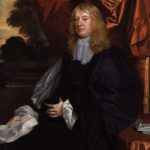
Abraham Cowley (1618 – 1667), the Royalist Poet.Poet and essayist Abraham Cowley was born in London, England, in 1618. He displayed early talent as a poet, publishing his first collection of poetry, Poetical Blossoms (1633), at the age of 15. Cowley studied at Cambridge University but was stripped of his Cambridge fellowship during the English Civil War and expelled for refusing to sign the Solemn League and Covenant of 1644. In turn, he accompanied Queen Henrietta Maria to France, where he spent 12 years in exile, serving as her secretary. During this time, Cowley completed The Mistress (1647). Arguably his most famous work, the collection exemplifies Cowley’s metaphysical style of love poetry. After the Restoration, Cowley returned to England, where he was reinstated as a Cambridge fellow and earned his MD before finally retiring to the English countryside. He is buried at Westminster Abbey alongside Geoffrey Chaucer and Edmund Spenser. Cowley is a wonderful poet and an outstanding representative of the English baroque.