
THE thirsty earth soaks up the rain,
And drinks and gapes for drink again;
The plants suck in the earth, and are
With constant drinking fresh and fair;
The sea itself (which one would think
Should have but little need of drink)
Drinks twice ten thousand rivers up,
So fill’d that they o’erflow the cup.
The busy Sun (and one would guess
By ‘s drunken fiery face no less)
Drinks up the sea, and when he ‘s done,
The Moon and Stars drink up the Sun:
They drink and dance by their own light,
They drink and revel all the night:
Nothing in Nature ‘s sober found,
But an eternal health goes round.
Fill up the bowl, then, fill it high,
Fill all the glasses there-for why
Should every creature drink but I?
Why, man of morals, tell me why?

A few random poems:
- Hey, the Dusty Miller (Song) by Robert Burns
- Владимир Британишский – Быт
- Ок Мельникова – Сохрани
- The Rape of the Lock: Canto 2 poem – Alexander Pope
- There is but there is not poem – Amy Haritha Suseel poems | Poems and Poetry
- Spring & Fall: To A Young Child poem – Gerard Manley Hopkins poems
- A Bay In Anglesey poem – John Betjeman poems | Poems and Poetry
- Огюст Барбье – Видимость
- William Henry Davies
- Hypatia by Stanley Wilkin
- Robert Burns: The Gallant Weaver:
- The Wold Vo’k Dead by William Barnes
- Long Distance II by Tony Harrison
- The Wound by Robert McNamara
- Staffa poem – John Keats poems
External links
Bat’s Poetry Page – more poetry by Fledermaus
Talking Writing Monster’s Page –
Batty Writing – the bat’s idle chatter, thoughts, ideas and observations, all original, all fresh
Poems in English
- Orlando Furioso Canto 9 by Ludovico Ariosto
- Orlando Furioso Canto 8 by Ludovico Ariosto
- Orlando Furioso Canto 7 by Ludovico Ariosto
- Orlando Furioso Canto 6 by Ludovico Ariosto
- Orlando Furioso Canto 5 by Ludovico Ariosto
- Orlando Furioso Canto 4 by Ludovico Ariosto
- Orlando Furioso Canto 3 by Ludovico Ariosto
- Orlando Furioso Canto 24 by Ludovico Ariosto
- Orlando Furioso Canto 23 by Ludovico Ariosto
- Orlando Furioso Canto 22 by Ludovico Ariosto
- Orlando Furioso Canto 21 by Ludovico Ariosto
- Orlando Furioso Canto 20 by Ludovico Ariosto
- Orlando Furioso Canto 2 by Ludovico Ariosto
- Orlando Furioso Canto 19 by Ludovico Ariosto
- Orlando Furioso Canto 18 by Ludovico Ariosto
- Orlando Furioso Canto 17 by Ludovico Ariosto
- Orlando Furioso Canto 16 by Ludovico Ariosto
- Orlando Furioso Canto 15 by Ludovico Ariosto
- Orlando Furioso Canto 14 by Ludovico Ariosto
- Orlando Furioso canto 13 by Ludovico Ariosto
More external links (open in a new tab):
Doska or the Board – write anything
Search engines:
Yandex – the best search engine for searches in Russian (and the best overall image search engine, in any language, anywhere)
Qwant – the best search engine for searches in French, German as well as Romance and Germanic languages.
Ecosia – a search engine that supposedly… plants trees
Duckduckgo – the real alternative and a search engine that actually works. Without much censorship or partisan politics.
Yahoo– yes, it’s still around, amazingly, miraculously, incredibly, but now it seems to be powered by Bing.
Parallel Translations of Poetry
The Poetry Repository – an online library of poems, poetry, verse and poetic works
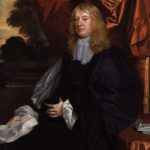
Abraham Cowley (1618 – 1667), the Royalist Poet.Poet and essayist Abraham Cowley was born in London, England, in 1618. He displayed early talent as a poet, publishing his first collection of poetry, Poetical Blossoms (1633), at the age of 15. Cowley studied at Cambridge University but was stripped of his Cambridge fellowship during the English Civil War and expelled for refusing to sign the Solemn League and Covenant of 1644. In turn, he accompanied Queen Henrietta Maria to France, where he spent 12 years in exile, serving as her secretary. During this time, Cowley completed The Mistress (1647). Arguably his most famous work, the collection exemplifies Cowley’s metaphysical style of love poetry. After the Restoration, Cowley returned to England, where he was reinstated as a Cambridge fellow and earned his MD before finally retiring to the English countryside. He is buried at Westminster Abbey alongside Geoffrey Chaucer and Edmund Spenser. Cowley is a wonderful poet and an outstanding representative of the English baroque.