
UNDERNEATH this myrtle shade,
On flowerly beds supinely laid,
With odorous oils my head o’erflowing,
And around it roses growing,
What should I do but drink away
The heat and troubles of the day?
In this more than kingly state
Love himself on me shall wait.
Fill to me, Love! nay, fill it up!
And mingled cast into the cup
Wit and mirth and noble fires,
Vigorous health and gay desires.
The wheel of life no less will stay
In a smooth than rugged way:
Since it equally doth flee,
Let the motion pleasant be.
Why do we precious ointments shower?-
Nobler wines why do we pour?-
Beauteous flowers why do we spread
Upon the monuments of the dead?
Nothing they but dust can show,
Or bones that hasten to be so.
Crown me with roses while I live,
Now your wines and ointments give:
After death I nothing crave,
Let me alive my pleasures have:
All are Stoics in the grave.

A few random poems:
- Composed In The Valley Near Dover, On The Day Of Landing by William Wordsworth
- Олег Сердобольский – Пришли цыплята в первый класс
- Олег Бундур – Добрый день
- A Farm-Picture. by Walt Whitman
- Morning Midday And Evening Sacrifice poem – Gerard Manley Hopkins poems
- Валерий Брюсов – Голубое, голубое
- Listening poem – Amy Lowell poems | Poems and Poetry
- Incendiary by Vernon Scannell
- If Truth In Hearts That Perish
- Epigram at RoslinInn by Robert Burns
- Такахама Кёси – Мох зеленый примят
- Love And Madness by Thomas Campbell
- The Gardener XXVI: What Comes From Your Willing Hands by Rabindranath Tagore
- Veronica’s Napkin by William Butler Yeats
- Николай Заболоцкий – Горийская симфония
External links
Bat’s Poetry Page – more poetry by Fledermaus
Talking Writing Monster’s Page –
Batty Writing – the bat’s idle chatter, thoughts, ideas and observations, all original, all fresh
Poems in English
- The Reformers by Rudyard Kipling
- The Recall by Rudyard Kipling
- The Rabbi’s Song by Rudyard Kipling
- The Quesion by Rudyard Kipling
- The Queen’s Men by Rudyard Kipling
- The Puzzler by Rudyard Kipling
- The Prodigal Son by Rudyard Kipling
- The Pro-Consuls by Rudyard Kipling
- The Prayer of Miriam Cohen by Rudyard Kipling
- The Law of the Jungle by Rudyard Kipling
- The Last Rhyme of True Thomas by Rudyard Kipling
- The Last of the Light Brigade by Rudyard Kipling
- The Last Department by Rudyard Kipling
- The Land by Rudyard Kipling
- The Lament of the Border Cattle Thief by Rudyard Kipling
- The Ladies by Rudyard Kipling
- The Kingdom by Rudyard Kipling
- The Jester by Rudyard Kipling
- The Jacket by Rudyard Kipling
- THE IRISH GUARDS by Rudyard Kipling
More external links (open in a new tab):
Doska or the Board – write anything
Search engines:
Yandex – the best search engine for searches in Russian (and the best overall image search engine, in any language, anywhere)
Qwant – the best search engine for searches in French, German as well as Romance and Germanic languages.
Ecosia – a search engine that supposedly… plants trees
Duckduckgo – the real alternative and a search engine that actually works. Without much censorship or partisan politics.
Yahoo– yes, it’s still around, amazingly, miraculously, incredibly, but now it seems to be powered by Bing.
Parallel Translations of Poetry
The Poetry Repository – an online library of poems, poetry, verse and poetic works
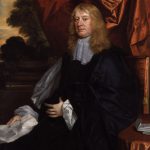
Abraham Cowley (1618 – 1667), the Royalist Poet.Poet and essayist Abraham Cowley was born in London, England, in 1618. He displayed early talent as a poet, publishing his first collection of poetry, Poetical Blossoms (1633), at the age of 15. Cowley studied at Cambridge University but was stripped of his Cambridge fellowship during the English Civil War and expelled for refusing to sign the Solemn League and Covenant of 1644. In turn, he accompanied Queen Henrietta Maria to France, where he spent 12 years in exile, serving as her secretary. During this time, Cowley completed The Mistress (1647). Arguably his most famous work, the collection exemplifies Cowley’s metaphysical style of love poetry. After the Restoration, Cowley returned to England, where he was reinstated as a Cambridge fellow and earned his MD before finally retiring to the English countryside. He is buried at Westminster Abbey alongside Geoffrey Chaucer and Edmund Spenser. Cowley is a wonderful poet and an outstanding representative of the English baroque.