
LIBERAL Nature did dispence
To all things Arms for their defence;
And some she arms with sin’ewy force,
And some with swiftness in the course;
Some with hard Hoofs, or forked claws,
And some with Horns, or tusked jaws.
And some with Scales, and some with Wings,
And some with Teeth, and some with Stings.
Wisdom to Man she did afford,
Wisdom for Shield, and Wit for Sword.
What to beauteous Woman-kind,
What Arms, what Armour has she’assigne’d?
Beauty is both; for with the Faire
What Arms, what Armour can compare?
What Steel, what Gold, or Diamond,
More Impassible is found?
And yet what Flame, what Lightning ere
So great an Active force did bear?
They are all weapon, and they dart
Like Porcupines from every part.
Who can, alas, their strength express,
Arm’d when they themselves undress,
Cap a pe* with Nakedness?

A few random poems:
- Нина Пикулева – Ой, да чья ж это девчушка
- pissed-off cow by Raj Arumugam
- Игорь Северянин – Памяти В. Башкина
- Song—A Fiddler in the North by Robert Burns
- Владимир Маяковский – Октябрьский марш
- Владимир Гиляровский – Песня Дона
- Everything by Philip Levine
- Ripening by Wendell Berry
- The Farmer Of Tilsbury Vale by William Wordsworth
- The Shadowy Waters: The Harp of Aengus by William Butler Yeats
- The Scarecrow by Ross D Tyler
- Glitches by Satish Verma
- К нам приходит в день февральский снежною тропой
- Владимир Маяковский – Последняя петербургская сказка
- The Cremona Violin poem – Amy Lowell poems | Poems and Poetry
External links
Bat’s Poetry Page – more poetry by Fledermaus
Talking Writing Monster’s Page –
Batty Writing – the bat’s idle chatter, thoughts, ideas and observations, all original, all fresh
Poems in English
- Юнна Мориц – Зейдер-Зее
- Юнна Мориц – За невлюбленными людьми
- Юнна Мориц – Ёжик резиновый
- Юнна Мориц – Хорошо быть молодым
- Юнна Мориц – Вместо сноски
- Юнна Мориц – Веселый завтрак
- Юнна Мориц – Вечерний свет
- Юнна Мориц – В серебряном столбе
- Юнна Мориц – В цирке
- Юнна Мориц – Трудно светиться и петь не легко
- Юнна Мориц – Свежий бублик
- Юнна Мориц – Страна вагонная, вагонное терпенье
- Юнна Мориц – Собственное небо
- Юнна Мориц – Снег в ноябре
- Юнна Мориц – Смелый гусь
- Юнна Мориц – Сказка про песенку
- Юнна Мориц – Ручеек
- Юнна Мориц – Разноцветные котята
- Юнна Мориц – Приход вдохновения
- Юнна Мориц – Попрыгать-поиграть
More external links (open in a new tab):
Doska or the Board – write anything
Search engines:
Yandex – the best search engine for searches in Russian (and the best overall image search engine, in any language, anywhere)
Qwant – the best search engine for searches in French, German as well as Romance and Germanic languages.
Ecosia – a search engine that supposedly… plants trees
Duckduckgo – the real alternative and a search engine that actually works. Without much censorship or partisan politics.
Yahoo– yes, it’s still around, amazingly, miraculously, incredibly, but now it seems to be powered by Bing.
Parallel Translations of Poetry
The Poetry Repository – an online library of poems, poetry, verse and poetic works
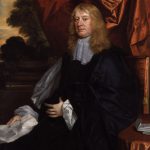
Abraham Cowley (1618 – 1667), the Royalist Poet.Poet and essayist Abraham Cowley was born in London, England, in 1618. He displayed early talent as a poet, publishing his first collection of poetry, Poetical Blossoms (1633), at the age of 15. Cowley studied at Cambridge University but was stripped of his Cambridge fellowship during the English Civil War and expelled for refusing to sign the Solemn League and Covenant of 1644. In turn, he accompanied Queen Henrietta Maria to France, where he spent 12 years in exile, serving as her secretary. During this time, Cowley completed The Mistress (1647). Arguably his most famous work, the collection exemplifies Cowley’s metaphysical style of love poetry. After the Restoration, Cowley returned to England, where he was reinstated as a Cambridge fellow and earned his MD before finally retiring to the English countryside. He is buried at Westminster Abbey alongside Geoffrey Chaucer and Edmund Spenser. Cowley is a wonderful poet and an outstanding representative of the English baroque.