
No; to what purpose should I speak?
No, wretched heart! swell till you break.
She cannot love me if she would;
And, to say truth, ’twere pity that she should.
No; to the grave thy sorrows bear;
As silent as they will be there:
Since that lov’d hand this mortal wound does give,
So handsomely the thing contrive,
That she may guiltless of it live;
So perish, that her killing thee
May a chance-medley,and no murder, be.
‘Tis nobler much for me, that I
By her beauty, not her anger, die:
This will look justly, and become
An execution; that, a martyrdom.
The censuring world will ne’er refrain
From judging men by thunder slain.
She must be angry, sure, if I should be
So bold to ask her to make me,
By being hers, happier than she!
I will not; ‘t is a milder fate
To fall by her not loving, than her hate.
And yet this death of mine, I fear,
Will ominous to her appear;
When, sound in every other part,
Her sacrifice is found without an heart;
For the last tempest of my death
Shall sigh out that too with my breath.
Then shall the world my noble ruin see,
Some pity and some envy me;
Then she herself, the mighty she,
Shall grace my funerals with this truth;
” ‘T was only Love destroy’d the gentle youth.”

A few random poems:
- A Musician’s Wife by Weldon Kees
- Sonnet 20: A woman’s face with Nature’s own hand painted by William Shakespeare
- Sonnet 84: Who is it that says most, which can say more by William Shakespeare
- Robert Burns: You’re Welcome, Willie Stewart:
- The Crown Of Thorns
- The House Of Dreams by Sara Teasdale
- Love’s Unity poem – Alfred Austin
- Young Man’s Song by William Butler Yeats
- Sunstroke
- As Vanquish’d Erin by Thomas Moore
- Why Write? by Mark Olynyk
- Олег Бундур – Школа живёт
- Rita And The Rifle by Mahmoud Darwish
- In Imitation of E. of Dorset : Artemisia poem – Alexander Pope poems | Poetry Monster
- My Garden by Thomas Edward Brown
External links
Bat’s Poetry Page – more poetry by Fledermaus
Talking Writing Monster’s Page –
Batty Writing – the bat’s idle chatter, thoughts, ideas and observations, all original, all fresh
Poems in English
- Владимир Костров – В керосиновой лампе
- Владимир Костров – Утро в Заборье
- Владимир Костров – У них в делах анархия и жуть
- Владимир Костров – То в ночи она вспыхнет, как спичка
- Владимир Костров – Сверстницам
- Владимир Костров – Старый сюжет
- Владимир Костров – Срок настал, московская богема
- Владимир Костров – Смуту и безверье не приемль
- Владимир Костров – Романс
- Владимир Костров – Просыпаюсь от сердечной боли
- Владимир Костров – Поток ушедших лет
- Владимир Костров – Поплачь, любимая, поплачь
- Владимир Костров – Полон взгляд тихой боли и страха
- Владимир Костров – Поэтессе
- Владимир Костров – Письмо в никуда
- Владимир Костров – Памяти Николая Анциферова
- Владимир Костров – Отшумели сады, отзвенела вода
- Владимир Костров – Новогодняя ночь
- Владимир Костров – Не трогайте жанр
- Владимир Костров – Не банкира, не детей Арбата
More external links (open in a new tab):
Doska or the Board – write anything
Search engines:
Yandex – the best search engine for searches in Russian (and the best overall image search engine, in any language, anywhere)
Qwant – the best search engine for searches in French, German as well as Romance and Germanic languages.
Ecosia – a search engine that supposedly… plants trees
Duckduckgo – the real alternative and a search engine that actually works. Without much censorship or partisan politics.
Yahoo– yes, it’s still around, amazingly, miraculously, incredibly, but now it seems to be powered by Bing.
Parallel Translations of Poetry
The Poetry Repository – an online library of poems, poetry, verse and poetic works
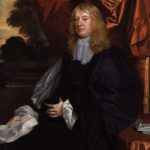
Abraham Cowley (1618 – 1667), the Royalist Poet.Poet and essayist Abraham Cowley was born in London, England, in 1618. He displayed early talent as a poet, publishing his first collection of poetry, Poetical Blossoms (1633), at the age of 15. Cowley studied at Cambridge University but was stripped of his Cambridge fellowship during the English Civil War and expelled for refusing to sign the Solemn League and Covenant of 1644. In turn, he accompanied Queen Henrietta Maria to France, where he spent 12 years in exile, serving as her secretary. During this time, Cowley completed The Mistress (1647). Arguably his most famous work, the collection exemplifies Cowley’s metaphysical style of love poetry. After the Restoration, Cowley returned to England, where he was reinstated as a Cambridge fellow and earned his MD before finally retiring to the English countryside. He is buried at Westminster Abbey alongside Geoffrey Chaucer and Edmund Spenser. Cowley is a wonderful poet and an outstanding representative of the English baroque.