
Time fly with greater speed away,
Add feathers to thy wings,
Till thy haste in flying brings
That wished-for and expected Day.
Comfort’s Son we then shall see,
Though at first it darkened be
With dangers yet, those clouds but gone,
Our Day will put his lustre on.
Then though Death’s sad night appear,
And we in lonely silence rest;
Our ravish’d Souls no more shall fear,
But with lasting day be blest.
And then no friends can part us more,
Nor no new death extend its power;
Thus there’s nothing can dissever
Hearts which Love hath joined together.

A few random poems:
- The Day Is Gone, And All Its Sweets Are Gone poem – John Keats poems
- Don039t Lose Hope
- The Bistro Styx by Rita Dove
- Sonnet 102: My love is strengthened, though more weak in seeming by William Shakespeare
- Robert Burns: My Spouse Nancy:
- A Paraphrase on an Ode in Horace’s Third Book, beginning thus:— “Inclusam Danaen turris ahenea.” by Abraham Cowley
- how did poetry begin? by Raj Arumugam
- An Empty Threat by Robert Frost
- The Cactus Thicket
- Loves Blindness
- Crystal Gazer by Sylvia Plath
- Иван Бунин – Никогда вы не воскреснете, не встанете
- Icicles round a Tree in Dumfriesshire by Ruth Padel
- Михаил Кузмин – Второй свидетель
- The Vision poem – Alexander Pushkin
External links
Bat’s Poetry Page – more poetry by Fledermaus
Talking Writing Monster’s Page –
Batty Writing – the bat’s idle chatter, thoughts, ideas and observations, all original, all fresh
Poems in English
- Epigram—The Keekin Glass by Robert Burns
- Epigram—Thanks for a National Victory by Robert Burns
- Epigram pinned to Mrs. Riddell’s carriage by Robert Burns
- Epigram on the same Laird’s Country Seat by Robert Burns
- Epigram on the said Occasion by Robert Burns
- Epigram on the Laird of Laggan by Robert Burns
- Epigram on Rough Roads by Robert Burns
- Epigram on Politics by Robert Burns
- Epigram on Parting with a kind Host in the Highlands by Robert Burns
- Epigram on Mr. James Gracie by Robert Burns
- Epigram on Miss Fontenelle by Robert Burns
- Epigram on Jessy Staig’s recovery by Robert Burns
- Epigram on Francis Grose the Antiquary by Robert Burns
- Epigram on Dr. Babington’s looks by Robert Burns
- Epigram on Andrew Turner by Robert Burns
- Epigram on an Innkeeper (“The Marquis”) by Robert Burns
- Epigram on a Swearing Coxcomb by Robert Burns
- Epigram on a Suicide by Robert Burns
- Epigram on a Country Laird (Cardoness) by Robert Burns
- Epigram—Kirk and State Excisemen by Robert Burns
More external links (open in a new tab):
Doska or the Board – write anything
Search engines:
Yandex – the best search engine for searches in Russian (and the best overall image search engine, in any language, anywhere)
Qwant – the best search engine for searches in French, German as well as Romance and Germanic languages.
Ecosia – a search engine that supposedly… plants trees
Duckduckgo – the real alternative and a search engine that actually works. Without much censorship or partisan politics.
Yahoo– yes, it’s still around, amazingly, miraculously, incredibly, but now it seems to be powered by Bing.
Parallel Translations of Poetry
The Poetry Repository – an online library of poems, poetry, verse and poetic works
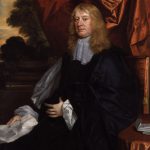
Abraham Cowley (1618 – 1667), the Royalist Poet.Poet and essayist Abraham Cowley was born in London, England, in 1618. He displayed early talent as a poet, publishing his first collection of poetry, Poetical Blossoms (1633), at the age of 15. Cowley studied at Cambridge University but was stripped of his Cambridge fellowship during the English Civil War and expelled for refusing to sign the Solemn League and Covenant of 1644. In turn, he accompanied Queen Henrietta Maria to France, where he spent 12 years in exile, serving as her secretary. During this time, Cowley completed The Mistress (1647). Arguably his most famous work, the collection exemplifies Cowley’s metaphysical style of love poetry. After the Restoration, Cowley returned to England, where he was reinstated as a Cambridge fellow and earned his MD before finally retiring to the English countryside. He is buried at Westminster Abbey alongside Geoffrey Chaucer and Edmund Spenser. Cowley is a wonderful poet and an outstanding representative of the English baroque.