
Underneath this marble stone,
Lie two beauties joyn’d in one.
Two whose loves, death could not sever,
For both liv’d, both dy’d together.
Two whose soules, being too divine
For earth, in their own spheare now shine,
Who have left their loves to Fame,
And their earth to earth againe.

A few random poems:
- The Ugly Little Bird
- Blame by Raj Napal
- Robert Burns: To A Louse: On Seeing One On A Lady’s Bonnet, At Church
- The Grandmother poem – Lord Alfred Tennyson poems
- Night Song At Amalfi by Sara Teasdale
- Sometimes by Vinko Kalinić
- Many Inventions by Rudyard Kipling
- How to Become an Inspiration
- Female Author by Sylvia Plath
- Memorials of A Tour In Scotland, 1803 I. Departure From The Vale Of Grasmere, August 1803 by William Wordsworth
- Николай Языков – Элегии (Свободен я: уже не трачу)
- Вероника Тушнова – Тень
- Михаил Кузмин – В ранний утра час покидал Милет я
- What Being in Rank-Old Nature poem – Gerard Manley Hopkins poems
- Владимир Маяковский – Небылицы в лицах
External links
Bat’s Poetry Page – more poetry by Fledermaus
Talking Writing Monster’s Page –
Batty Writing – the bat’s idle chatter, thoughts, ideas and observations, all original, all fresh
Poems in English
- The Wind In Woone’s Feäce by William Barnes
- The Wind At The Door by William Barnes
- The Widow’s House by William Barnes
- The White Road Up Athirt The Hill by William Barnes
- The Wheel Routs by William Barnes
- The Welshnut Tree by William Barnes
- The Weepen Leady by William Barnes
- The Weather-Beaten Tree by William Barnes
- The Water-Spring In The Leäne by William Barnes
- The Water Crowvoot by William Barnes
- The Waggon A-Stooded by William Barnes
- The Vrost by William Barnes
- The Vier-Zide by William Barnes
- The Veairy Veet That I Do Meet by William Barnes
- The Vaïces That Be Gone by William Barnes
- The Two Churches by William Barnes
- The Turnstile by William Barnes
- The Turn O’ The Days by William Barnes
- The Thorns In The Geäte by William Barnes
- The Stwonen Bwoy Upon The Pillar by William Barnes
More external links (open in a new tab):
Doska or the Board – write anything
Search engines:
Yandex – the best search engine for searches in Russian (and the best overall image search engine, in any language, anywhere)
Qwant – the best search engine for searches in French, German as well as Romance and Germanic languages.
Ecosia – a search engine that supposedly… plants trees
Duckduckgo – the real alternative and a search engine that actually works. Without much censorship or partisan politics.
Yahoo– yes, it’s still around, amazingly, miraculously, incredibly, but now it seems to be powered by Bing.
Parallel Translations of Poetry
The Poetry Repository – an online library of poems, poetry, verse and poetic works
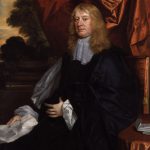
Abraham Cowley (1618 – 1667), the Royalist Poet.Poet and essayist Abraham Cowley was born in London, England, in 1618. He displayed early talent as a poet, publishing his first collection of poetry, Poetical Blossoms (1633), at the age of 15. Cowley studied at Cambridge University but was stripped of his Cambridge fellowship during the English Civil War and expelled for refusing to sign the Solemn League and Covenant of 1644. In turn, he accompanied Queen Henrietta Maria to France, where he spent 12 years in exile, serving as her secretary. During this time, Cowley completed The Mistress (1647). Arguably his most famous work, the collection exemplifies Cowley’s metaphysical style of love poetry. After the Restoration, Cowley returned to England, where he was reinstated as a Cambridge fellow and earned his MD before finally retiring to the English countryside. He is buried at Westminster Abbey alongside Geoffrey Chaucer and Edmund Spenser. Cowley is a wonderful poet and an outstanding representative of the English baroque.