
Underneath this marble stone,
Lie two beauties joyn’d in one.
Two whose loves, death could not sever,
For both liv’d, both dy’d together.
Two whose soules, being too divine
For earth, in their own spheare now shine,
Who have left their loves to Fame,
And their earth to earth againe.

A few random poems:
- Love Sonnet XXVIII poem – Zora Bernice May Cross poems
- Written In A Blank Leaf Of Macpherson’s Ossian by William Wordsworth
- Sonnet. On The Sea poem – John Keats poems
- Damon The Mower poem – Andrew Marvell poems
- Sonnet Viii
- The Dying Christian to His Soul poem – Alexander Pope
- Song At Capri by Sara Teasdale
- Publishing Poetry – How To Locate The Best Markets Where You Can See Your Poems In Print
- nonsense verse by Raj Arumugam
- pissed-off cow by Raj Arumugam
- The First Part: Sonnet 5 – How that vast heaven intitled First is roll’d, by William Drummond
- Poem Stories
- Ольга Седакова – Хильдегарда
- Иван Киуру – Медовый аптекарь
- Concerning Emperors by Vachel Lindsay
External links
Bat’s Poetry Page – more poetry by Fledermaus
Talking Writing Monster’s Page –
Batty Writing – the bat’s idle chatter, thoughts, ideas and observations, all original, all fresh
Poems in English
- Владимир Маяковский – Не юбилейте
- Владимир Маяковский – Не вразброд, не случайно (Главполитпросвет)
- Владимир Маяковский – Не увлекайтесь нами
- Владимир Маяковский – Не только для того, чтоб тебя накормить… (Главполитпросвет №2)
- Владимир Маяковский – Не предаваясь “большевистским бредням” (Красный перец)
- Владимир Маяковский – Не пей сырой воды! (Главполитпросвет №230)
- Владимир Маяковский – Не эти правильно революцию празднуют… (РОСТА №399)
- Владимир Маяковский – Не эти правильно Октябрь празднуют… (РОСТА №398)
- Владимир Маяковский – Наврут полный короб… (Главполитпросвет №68)
- Владимир Маяковский – Наши поправки в англо-советский договор (Красный перец)
- Владимир Маяковский – Наше воскресенье
- Владимир Маяковский – Наш паровоз, стрелой лети
- Владимир Маяковский – Нас шахтер углем поздравит… (РОСТА)
- Владимир Маяковский – Нас потеснили… (РОСТА №337)
- Владимир Маяковский – Нападали белогвардейцы на Донецкий бассейн… (РОСТА №611)
- Владимир Маяковский – Нам бы только вот это воскресити… (РОСТА)
- Владимир Маяковский – Головотяпам
- Владимир Маяковский – Голос Красной площади
- Владимир Маяковский – Голодные! Пан Украину грабит… (РОСТА №106)
- Владимир Маяковский – Глупая история
More external links (open in a new tab):
Doska or the Board – write anything
Search engines:
Yandex – the best search engine for searches in Russian (and the best overall image search engine, in any language, anywhere)
Qwant – the best search engine for searches in French, German as well as Romance and Germanic languages.
Ecosia – a search engine that supposedly… plants trees
Duckduckgo – the real alternative and a search engine that actually works. Without much censorship or partisan politics.
Yahoo– yes, it’s still around, amazingly, miraculously, incredibly, but now it seems to be powered by Bing.
Parallel Translations of Poetry
The Poetry Repository – an online library of poems, poetry, verse and poetic works
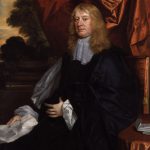
Abraham Cowley (1618 – 1667), the Royalist Poet.Poet and essayist Abraham Cowley was born in London, England, in 1618. He displayed early talent as a poet, publishing his first collection of poetry, Poetical Blossoms (1633), at the age of 15. Cowley studied at Cambridge University but was stripped of his Cambridge fellowship during the English Civil War and expelled for refusing to sign the Solemn League and Covenant of 1644. In turn, he accompanied Queen Henrietta Maria to France, where he spent 12 years in exile, serving as her secretary. During this time, Cowley completed The Mistress (1647). Arguably his most famous work, the collection exemplifies Cowley’s metaphysical style of love poetry. After the Restoration, Cowley returned to England, where he was reinstated as a Cambridge fellow and earned his MD before finally retiring to the English countryside. He is buried at Westminster Abbey alongside Geoffrey Chaucer and Edmund Spenser. Cowley is a wonderful poet and an outstanding representative of the English baroque.