
“Where’er there’s a life to be kindled by love,
Wherever a soul to inspire,
Strike this key-note of God that trembles above
Night’s silver-tongued voices of fire.”
Genius is power.
The power that grasps in the universe, that dives out beyond space, and grapples with the starry worlds of heaven.
If genius achieves nothing, shows us no results, it is so much the less genius.
The man who is constantly fearing a lion in his path is a coward.
The man or woman whom excessive caution holds back from striking the anvil with earnest endeavor, is poor and cowardly of purpose.
The required step must be taken to reach the goal, though a precipice be the result.
Work must be done, and the result left to God.
The soul that is in earnest, will not stop to count the cost.
Circumstances cannot control genius: it will nestle with them: its power will bend and break them to its path.
This very audacity is divine.
Jesus of Nazareth did not ask the consent of the high priests in the temple when he drove out the “money-changers;” but, impelled by inspiration, he knotted the cords and drove them hence.
Genius will find room for itself, or it is none.
Men and women, in all grades of life, do their utmost.
If they do little, it is because they have no capacity to do more.
I hear people speak of “unfortunate genius,” of “poets who never penned their inspirations;” that “Some mute inglorious Milton here may rest;” of “unappreciated talent,” and “malignant stars,” and other contradictory things.
It is all nonsense.
Where power exists, it cannot be suppressed any more than the earthquake can be smothered.
As well attempt to seal up the crater of Vesuvius as to hide God’s given power of the soul.
“You may as well forbid the mountain pines To wag their high tops, and to make no noise When they are fretten with the gusts of heaven,” as to hush the voice of genius.
There is no such thing as unfortunate genius.
If a man or woman is fit for work, God appoints the field.
He does more; He points to the earth with her mountains, oceans, and cataracts, and says to man, ” Be great!”
He points to the eternal dome of heaven and its blazing worlds, and says: “Bound out thy life with beauty.”
He points to the myriads of down-trodden, suffering men and women, and says: “Work with me for the redemption of these, my children.”
He lures, and incites, and thrusts greatness upon men, and they will not take the gift.
Genius, on the contrary, loves toil, impediment, and poverty; for from these it gains its strength, throws off the shadows, and lifts its proud head to immortality.
Neglect is but the flat to an undying future.
To be popular is to be endorsed in the To-day and forgotten in the To-morrow.
It is the mess of pottage that alienates the birth-right.
Genius that succumbs to misfortune, that allows itself to be blotted by the slime of slander-and other serpents that infest society-is so much the less genius.
The weak man or woman who stoops to whine over neglect, and poverty, and the snarls of the world, gives the sign of his or her own littleness.
Genius is power.
The eternal power that can silence worlds with its voice, and battle to the death ten thousand arméd Hercules.
Then make way for this God-crowned Spirit of Night, that was born in that Continuing City, but lives in lowly and down-trodden souls!
Fling out the banner!
Its broad folds of sunshine will wave over turret and dome, and over the thunder of oceans on to eternity.
“Fling it out, fling it out o’er the din of the world!
Make way for this banner of flame,
That streams from the mast-head of ages unfurled,
And inscribed by the deathless in name.
And thus through the years of eternity’s flight,
This insignia of soul shall prevail,
The centre of glory, the focus of light;
O Genius! proud Genius, all hail!”

A few random poems:
- Sonnet Iv
- The Fruit Garden Path poem – Amy Lowell poems | Poems and Poetry
- A Necklace by William Strode
- In A Garden by Sara Teasdale
- Нина Пикулева – Читайте, дети
- Out of Town poem – Amy Levy poems | Poems and Poetry
- Kitchener’s School by Rudyard Kipling
- Verse By Taj Mahomed
- Told by Philip Levine
- Child’s Park Stones by Sylvia Plath
- Sunshine by Vachel Lindsay
- She and Drugs by Mark R Slaughter
- Lyric written in 1830 poem – Alexander Pushkin
- In Imitation of Dr. Swift : The Happy Life of a Country Parson poem – Alexander Pope
- What the Gray-Winged Fairy Said by Vachel Lindsay
External links
Bat’s Poetry Page – more poetry by Fledermaus
Talking Writing Monster’s Page –
Batty Writing – the bat’s idle chatter, thoughts, ideas and observations, all original, all fresh
Poems in English
- When Lilacs Last in the Door-yard Bloom’d. by Walt Whitman
- When I read the Book. by Walt Whitman
- When I peruse the Conquer’d Fame. by Walt Whitman
- When I heard the Learn’d Astronomer. by Walt Whitman
- When I heard at the Close of the Day. by Walt Whitman
- What think You I take my Pen in Hand? by Walt Whitman
- What Place is Besieged? by Walt Whitman
- What General has a Good Army. by Walt Whitman
- What Best I See In Thee. by Walt Whitman
- What am I, After All? by Walt Whitman
- We Two—How Long We were Fool’d. by Walt Whitman
- We Two Boys Together Clinging. by Walt Whitman
- Visor’d. by Walt Whitman
- Vigil Strange I Kept on the Field. by Walt Whitman
- Turn, O Libertad. by Walt Whitman
- To You. by Walt Whitman
- To Thee, Old Cause! by Walt Whitman
- To the Garden the World. by Walt Whitman
- To One Shortly to Die. by Walt Whitman
- To Him that was Crucified. by Walt Whitman
More external links (open in a new tab):
Doska or the Board – write anything
Search engines:
Yandex – the best search engine for searches in Russian (and the best overall image search engine, in any language, anywhere)
Qwant – the best search engine for searches in French, German as well as Romance and Germanic languages.
Ecosia – a search engine that supposedly… plants trees
Duckduckgo – the real alternative and a search engine that actually works. Without much censorship or partisan politics.
Yahoo– yes, it’s still around, amazingly, miraculously, incredibly, but now it seems to be powered by Bing.
Parallel Translations of Poetry
The Poetry Repository – an online library of poems, poetry, verse and poetic works
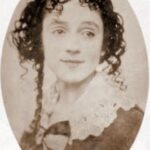
Adah Isaacs Menken (1835 – 1868) was an American actress and a performer, who painted painter and wrote a number of poems (31 published so far). She was supposedly the highest earning actress of her time. She was best known for her performance in the hippodrama Mazeppa (with libretto based on Pushkin’s work), it is said that the climax of the spectacle featured her apparently nude and riding a horse on stage. After great success for a few years with the play in New York and San Francisco, she appeared in a production in London and Paris, from 1864 to 1866. She was a friend of Alexander Dumas. Adah Menken died in Paris at the age of 33