
A poem by Alexander Pope (1688-1744) , the greatest English poet of “Augustan” or Georgian period
In vain you boast Poetic Names of yore,
And cite those Sapho’s we admire no more:
Fate doom’d the Fall of ev’ry Female Wit,
But doom’d it then when first Ardelia writ.
Of all Examples by the World confest,
I knew Ardelia could not quote the best;
Who, like her Mistress on Britannia’s Throne;
Fights, and subdues in Quarrels not her own.
To write their Praise you but in vain essay;
Ev’n while you write, you take that Praise away:
Light to the Stars the Sun does thus restore,
But shines himself till they are seen no more.

A few random poems:
- Raindrops by Michael Mulcahy
- The Lovely Maïd Ov Elwell Meäd by William Barnes
- Gubbinal by Wallace Stevens
- The Widow’s House by William Barnes
- Sonnet 06 poem – John Milton poems
- Robert Burns: On A Suicide:
- La Regina Avrillouse poem – Ezra Pound poems
- A Death Song by William Morris
- My Child Wafts Peace by Yehuda Amichai
- Владимир Высоцкий – Все ушли на фронт
- The Faery Forest by Sara Teasdale
- The Snowman on the Moor by Sylvia Plath
- Robert Burns: Elegy On “Stella”: The following poem is the work of some hapless son of the Muses who deserved a better fate. There is a great deal of “The voice of Cona” in his solitary, mournful notes; and had the sentiments been clothed in Shenstone’s language, they would have been no discredit even to that elegant poet.-R.B.
- The Ruins Of Time by Robert Lowell
- Elegy Written In A Country Churchyard by Thomas Gray
External links
Bat’s Poetry Page – more poetry by Fledermaus
Talking Writing Monster’s Page –
Batty Writing – the bat’s idle chatter, thoughts, ideas and observations, all original, all fresh
Poems in English
- Sonnet 20: A woman’s face with Nature’s own hand painted by William Shakespeare
- Sonnet 1: From fairest creatures we desire increase by William Shakespeare
- Sonnet 19: Devouring Time blunt thou the lion’s paws by William Shakespeare
- Sonnet 18: Shall I compare thee to a summer’s day? by William Shakespeare
- Sonnet 17: Who will believe my verse in time to come by William Shakespeare
- Sonnet 16: But wherefore do not you a mightier way by William Shakespeare
- Sonnet 15: When I consider every thing that grows by William Shakespeare
- Sonnet 154: The little Love-god lying once asleep by William Shakespeare
- Sonnet 153: Cupid laid by his brand and fell asleep by William Shakespeare
- Sonnet 152: In loving thee thou know’st I am forsworn by William Shakespeare
- Sonnet 151: Love is too young to know what conscience is by William Shakespeare
- Sonnet 150: O from what power hast thou this powerful might by William Shakespeare
- Sonnet 14: Not from the stars do I my judgement pluck by William Shakespeare
- Sonnet 54: O, how much more doth beauty beauteous seem by William Shakespeare
- Sonnet 53: What is your substance, whereof are you made by William Shakespeare
- Sonnet 52: So am I as the rich whose blessèd key by William Shakespeare
- Sonnet 51: Thus can my love excuse the slow offence by William Shakespeare
- Sonnet 50: How heavy do I journey on the way by William Shakespeare
- Sonnet 4: Unthrifty loveliness, why dost thou spend by William Shakespeare
- Sonnet 49: Against that time, if ever that time come by William Shakespeare
More external links (open in a new tab):
Doska or the Board – write anything
Search engines:
Yandex – the best search engine for searches in Russian (and the best overall image search engine, in any language, anywhere)
Qwant – the best search engine for searches in French, German as well as Romance and Germanic languages.
Ecosia – a search engine that supposedly… plants trees
Duckduckgo – the real alternative and a search engine that actually works. Without much censorship or partisan politics.
Yahoo– yes, it’s still around, amazingly, miraculously, incredibly, but now it seems to be powered by Bing.
Parallel Translations of Poetry
The Poetry Repository – an online library of poems, poetry, verse and poetic works
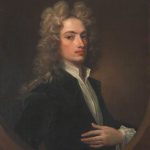
Alexander Pope (1688 – 1744) was a a post-Restoration English poet and satirist. He is a poet of the (British) Augustan period and one of its greatest artistic exponents.