
A poem by Aldous Huxley (1894 – 1963)
(From the French of Stéphane Mallarmé.)
I would immortalize these nymphs: so bright
Their sunlit colouring, so airy light,
It floats like drowsing down. Loved I a dream?
My doubts, born of oblivious darkness, seem
A subtle tracery of branches grown
The tree’s true self–proving that I have known
No triumph, but the shadow of a rose.
But think. These nymphs, their loveliness … suppose
They bodied forth your senses’ fabulous thirst?
Illusion! which the blue eyes of the first,
As cold and chaste as is the weeping spring,
Beget: the other, sighing, passioning,
Is she the wind, warm in your fleece at noon?
No, through this quiet, when a weary swoon
Crushes and chokes the latest faint essay
Of morning, cool against the encroaching day,
There is no murmuring water, save the gush
Of my clear fluted notes; and in the hush
Blows never a wind, save that which through my reed
Puffs out before the rain of notes can speed
Upon the air, with that calm breath of art
That mounts the unwrinkled zenith visibly,
Where inspiration seeks its native sky.
You fringes of a calm Sicilian lake,
The sun’s own mirror which I love to take,
Silent beneath your starry flowers, tell
_How here I cut the hollow rushes, well
Tamed by my skill, when on the glaucous gold
Of distant lawns about their fountain cold
A living whiteness stirs like a lazy wave;
And at the first slow notes my panpipes gave
These flocking swans, these naiads, rather, fly
Or dive._ Noon burns inert and tawny dry,
Nor marks how clean that Hymen slipped away
From me who seek in song the real A.
Wake, then, to the first ardour and the sight,
O lonely faun, of the old fierce white light,
With, lilies, one of you for innocence.
Other than their lips’ delicate pretence,
The light caress that quiets treacherous lovers,
My breast, I know not how to tell, discovers
The bitten print of some immortal’s kiss.
But hush! a mystery so great as this
I dare not tell, save to my double reed,
Which, sharer of my every joy and need,
Dreams down its cadenced monologues that we
Falsely confuse the beauties that we see
With the bright palpable shapes our song creates:
My flute, as loud as passion modulates,
Purges the common dream of flank and breast,
Seen through closed eyes and inwardly caressed,
Of every empty and monotonous line.
Bloom then, O Syrinx, in thy flight malign,
A reed once more beside our trysting-lake.
Proud of my music, let me often make
A song of goddesses and see their rape
Profanely done on many a painted shape.
So when the grape’s transparent juice I drain,
I quell regret for pleasures past and feign
A new real grape. For holding towards the sky
The empty skin, I blow it tight and lie
Dream-drunk till evening, eyeing it.
Tell o’er
Remembered joys and plump the grape once more.
_Between the reeds I saw their bodies gleam
Who cool no mortal fever in the stream
Crying to the woods the rage of their desire:
And their bright hair went down in jewelled fire
Where crystal broke and dazzled shudderingly.
I check my swift pursuit: for see where lie,
Bruised, being twins in love, by languor sweet,
Two sleeping girls, clasped at my very feet.
I seize and run with them, nor part the pair,
Breaking this covert of frail petals, where
Roses drink scent of the sun and our light play
‘Mid tumbled flowers shall match the death of day._
I love that virginal fury–ah, the wild
Thrill when a maiden body shrinks, defiled,
Shuddering like arctic light, from lips that sear
Its nakedness … the flesh in secret fear!
Contagiously through my linked pair it flies
Where innocence in either, struggling, dies,
Wet with fond tears or some less piteous dew.
_Gay in the conquest of these fears, I grew
So rash that I must needs the sheaf divide
Of ruffled kisses heaven itself had tied.
For as I leaned to stifle in the hair
Of one my passionate laughter (taking care
With a stretched finger, that her innocence
Might stain with her companion’s kindling sense
To touch the younger little one, who lay
Child-like unblushing) my ungrateful prey
Slips from me, freed by passion’s sudden death,
Nor heeds the frenzy of my sobbing breath._
Let it pass! others of their hair shall twist
A rope to drag me to those joys I missed.
See how the ripe pomegranates bursting red
To quench the thirst of the mumbling bees have bled;
So too our blood, kindled by some chance fire,
Flows for the swarming legions of desire.
At evening, when the woodland green turns gold
And ashen grey, ‘mid the quenched leaves, behold!
Red Etna glows, by Venus visited,
Walking the lava with her snowy tread
Whene’er the flames in thunderous slumber die.
I hold the goddess!
Ah, sure penalty!
But the unthinking soul and body swoon
At last beneath the heavy hush of noon.
Forgetful let me lie where summer’s drouth
Sifts fine the sand and then with gaping mouth
Dream planet-struck by the grape’s round wine-red star.
Nymphs, I shall see the shade that now you are.

A few random poems:
- Call It Music by Philip Levine
- And Doth Not a Meeting Like This by Thomas Moore
- Synchronicity by Marina Cecilia Kohon
- Владимир Солоухин – Все смотрю
- On The Death Of Mr Crashaw
- What the Coal-Heaver Said by Vachel Lindsay
- Константин Бальмонт – Мы прячем, душим тонкой сетью лжи
- The Innocent Ill
- My angel’s face by Vinko Kalinić
- Dark Wood, Dark Water by Sylvia Plath
- Remembrance poem – Alexander Pushkin
- The Scholars by William Butler Yeats
- Владимир Маяковский – Почему нет помощи от Румынии (Главполитпросвет №327)
- Владимир Высоцкий – Охота на кабанов
- Владимир Корнилов – Тоска
External links
Bat’s Poetry Page – more poetry by Fledermaus
Talking Writing Monster’s Page –
Batty Writing – the bat’s idle chatter, thoughts, ideas and observations, all original, all fresh
Poems in English
- Sonnet 133: Beshrew that heart that makes my heart to groan by William Shakespeare
- Sonnet 132: Thine eyes I love, and they, as pitying me by William Shakespeare
- Sonnet 131: Thou art as tyrannous, so as thou art by William Shakespeare
- Sonnet 130: My mistress’ eyes are nothing like the sun by William Shakespeare
- Sonnet 12: When I do count the clock that tells the time by William Shakespeare
- Sonnet 129: Th’ expense of spirit in a waste of shame by William Shakespeare
- The Eolian Harp by Samuel Taylor Coleridge
- Sonnet 32: If thou survive my well-contented day by William Shakespeare
- Sonnet 31: Thy bosom is endearèd with all hearts by William Shakespeare
- Sonnet 30: When to the sessions of sweet silent thought by William Shakespeare
- Sonnet 2: When forty winters shall besiege thy brow by William Shakespeare
- Sonnet 29: When in disgrace with Fortune and men’s eyes by William Shakespeare
- Sonnet 28: How can I then return in happy plight by William Shakespeare
- Sonnet 27: Weary with toil, I haste me to my bed by William Shakespeare
- Sonnet 26: Lord of my love, to whom in vassalage by William Shakespeare
- Sonnet 25: Let those who are in favour with their stars by William Shakespeare
- Sonnet 24: Mine eye hath played the painter and hath stelled by William Shakespeare
- Sonnet 23: As an unperfect actor on the stage by William Shakespeare
- Sonnet 22: My glass shall not persuade me I am old by William Shakespeare
- Sonnet 21: So is it not with me as with that muse by William Shakespeare
More external links (open in a new tab):
Doska or the Board – write anything
Search engines:
Yandex – the best search engine for searches in Russian (and the best overall image search engine, in any language, anywhere)
Qwant – the best search engine for searches in French, German as well as Romance and Germanic languages.
Ecosia – a search engine that supposedly… plants trees
Duckduckgo – the real alternative and a search engine that actually works. Without much censorship or partisan politics.
Yahoo– yes, it’s still around, amazingly, miraculously, incredibly, but now it seems to be powered by Bing.
Parallel Translations of Poetry
The Poetry Repository – an online library of poems, poetry, verse and poetic works
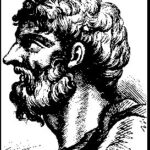
Alcaeus of Mytilene ( c. 625/620 – c. 580 Before Christ) ] was a lyric poet from the Greek island of Lesbos who is credited with inventing the Alcaic stanza. He was included in the canonical list of nine lyric poets by the scholars of Hellenistic Alexandria.