
Life’s a name
That nothing here can truly claim;
This wretched inn, where we scarce stay to bait,
We call our dwelling-place!
And mighty voyages we take,
And mighty journeys seem to make,
O’er sea and land, the little point that has no space.
Because we fight and battles gain,
Some captives call, and say, “the rest are slain”;
Because we heap up yellow earth, and so
Rich, valiant, wise, and virtuous seem to grow;
Because we draw a long nobility
From hieroglyphic proofs of heraldry-
We grow at last by Custom to believe,
That really we Live;
Whilst all these Shadows, that for Things we take,
Are but the empty Dreams which in Death’s sleep we make.

A few random poems:
- Cino poem – Ezra Pound poems
- Владимир Британишский – Но особенно снился мне вздыбленный мост
- Николай Языков – Песни (Мы любим шумные пиры)
- Aplolgia Pro Vita Sua by Samuel Coleridge
- Ashore
- Welcome
- motionless_body.html
- Love’s Unity poem – Alfred Austin
- Владимир Маяковский – Солнечный флаг
- Владимир Британишский – Округлы и оголены
- Blackmwore Maidens by William Barnes
- Владимир Бенедиктов – Тайна
- I Want To Die In My Own Bed by Yehuda Amichai
- Ballade Of Autumn poem – Andrew Lang poems
- First Poem by Peter Orlovsky
External links
Bat’s Poetry Page – more poetry by Fledermaus
Talking Writing Monster’s Page –
Batty Writing – the bat’s idle chatter, thoughts, ideas and observations, all original, all fresh
Poems in English
- Sonnet 133: Beshrew that heart that makes my heart to groan by William Shakespeare
- Sonnet 132: Thine eyes I love, and they, as pitying me by William Shakespeare
- Sonnet 131: Thou art as tyrannous, so as thou art by William Shakespeare
- Sonnet 130: My mistress’ eyes are nothing like the sun by William Shakespeare
- Sonnet 12: When I do count the clock that tells the time by William Shakespeare
- Sonnet 129: Th’ expense of spirit in a waste of shame by William Shakespeare
- The Eolian Harp by Samuel Taylor Coleridge
- Sonnet 32: If thou survive my well-contented day by William Shakespeare
- Sonnet 31: Thy bosom is endearèd with all hearts by William Shakespeare
- Sonnet 30: When to the sessions of sweet silent thought by William Shakespeare
- Sonnet 2: When forty winters shall besiege thy brow by William Shakespeare
- Sonnet 29: When in disgrace with Fortune and men’s eyes by William Shakespeare
- Sonnet 28: How can I then return in happy plight by William Shakespeare
- Sonnet 27: Weary with toil, I haste me to my bed by William Shakespeare
- Sonnet 26: Lord of my love, to whom in vassalage by William Shakespeare
- Sonnet 25: Let those who are in favour with their stars by William Shakespeare
- Sonnet 24: Mine eye hath played the painter and hath stelled by William Shakespeare
- Sonnet 23: As an unperfect actor on the stage by William Shakespeare
- Sonnet 22: My glass shall not persuade me I am old by William Shakespeare
- Sonnet 21: So is it not with me as with that muse by William Shakespeare
More external links (open in a new tab):
Doska or the Board – write anything
Search engines:
Yandex – the best search engine for searches in Russian (and the best overall image search engine, in any language, anywhere)
Qwant – the best search engine for searches in French, German as well as Romance and Germanic languages.
Ecosia – a search engine that supposedly… plants trees
Duckduckgo – the real alternative and a search engine that actually works. Without much censorship or partisan politics.
Yahoo– yes, it’s still around, amazingly, miraculously, incredibly, but now it seems to be powered by Bing.
Parallel Translations of Poetry
The Poetry Repository – an online library of poems, poetry, verse and poetic works
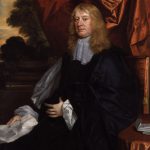
Abraham Cowley (1618 – 1667), the Royalist Poet.Poet and essayist Abraham Cowley was born in London, England, in 1618. He displayed early talent as a poet, publishing his first collection of poetry, Poetical Blossoms (1633), at the age of 15. Cowley studied at Cambridge University but was stripped of his Cambridge fellowship during the English Civil War and expelled for refusing to sign the Solemn League and Covenant of 1644. In turn, he accompanied Queen Henrietta Maria to France, where he spent 12 years in exile, serving as her secretary. During this time, Cowley completed The Mistress (1647). Arguably his most famous work, the collection exemplifies Cowley’s metaphysical style of love poetry. After the Restoration, Cowley returned to England, where he was reinstated as a Cambridge fellow and earned his MD before finally retiring to the English countryside. He is buried at Westminster Abbey alongside Geoffrey Chaucer and Edmund Spenser. Cowley is a wonderful poet and an outstanding representative of the English baroque.