
‘T IS very true, I thought you once as fair
As women in th’ idea are;*
Whatever here seems beauteous, seem’d to be
But a faint metaphor of thee:
But then, methoughts, there something shin’d within,
Which casts this lustre o’er thy skin;
Nor could I choose but count it the sun’s light,
Which made this cloud appear so bright.
But, since I knew thy falsehood and thy pride,
And all thy thousand faults beside,
A very Moor, methinks, plac’d near to thee,
White as his teeth would seem to be.
So men (they say) by hell’s delusions led,
Have ta’en a succubus to their bed;
Believe it fair, and themselves happy call,
Till the cleft foot discovers all:
Then they start from ‘t, half ghosts themselves with fear;
And devil, as ‘t is, doth appear.
So, since against my will I found thee foul,
Deform’d and crooked in thy soul,
My reason straight did to my senses shew,
That they might be mistaken too:
Nay, when the world but knows how false you are,
There’s not a man will think you fair;
Thy shape will monstrous in their fancies be,
They’ll call their eyes as false as thee.
Be what thou wilt, hate will present thee so,
As Puritans do the Pope, and Papists Luther do.

A few random poems:
- At a Dinner Party poem – Amy Levy poems | Poems and Poetry
- Sunset And Sunrise (Translated From Owen) by William Cowper
- Olney Hymn 9: The Contrite Heart by William Cowper
- Илья Эренбург – Жилье в горах, как всякое жилье
- Specula by Thomas Edward Brown
- Bucolics by Sylvia Plath
- Heart of God by Vachel Lindsay
- Don’t Hang Up The Phone by Miraj Patel
- Comments: A Life Well Lived is Always an Inspiration – My Friend Muniappan Velu of Chennai, India
- A winning lot
- Patience poem – Amy Lowell poems | Poems and Poetry
- Николай Огарев – Расстались мы
- Psalm 08 poem – John Milton poems
- Robert Burns: A Bard’s Epitaph:
- Break of Day by Siegfried Sassoon
External links
Bat’s Poetry Page – more poetry by Fledermaus
Talking Writing Monster’s Page –
Batty Writing – the bat’s idle chatter, thoughts, ideas and observations, all original, all fresh
Poems in English
- Владимир Маяковский – Пример, не достойный подражания
- Владимир Маяковский – Приказ по армии искусства
- Сергей Михалков – Приехавшей из Африки девчушке
- Владимир Маяковский – При свободной торговле… (Главполитпросвет №232)
- Владимир Маяковский – Праздновать способы разные, как мы праздник отпразднуем? (РОСТА № 383)
- Владимир Маяковский – Праздник урожая
- Владимир Маяковский – Права кооперации расширены декретом… (Главполитпросвет №154)
- Владимир Маяковский – Пожарные лозунги (1928)
- Владимир Маяковский – Повествование это о странствии эсера вокруг света (Красный перец)
- Владимир Маяковский – Потрясающие факты
- Владимир Маяковский – Постоял здесь, мотнулся туда
- Владимир Маяковский – Посмотрим сами, покажем им
- Маяковский – Послушайте: Стих Владимира Маяковского – Читать текст стихотворения на Poetry Monster
- Владимир Маяковский – Последняя петербургская сказка
- Владимир Маяковский – Последний баронишко (Главполитпросвет №324)
- Владимир Маяковский – Послание пролетарским поэтам
- Владимир Маяковский – Порядочный гражданин
- Владимир Маяковский – Порт
- Владимир Маяковский – Понедельник – субботник
- Владимир Маяковский – Помощь не придет на такой вой… (Главполитпросвет №14)
More external links (open in a new tab):
Doska or the Board – write anything
Search engines:
Yandex – the best search engine for searches in Russian (and the best overall image search engine, in any language, anywhere)
Qwant – the best search engine for searches in French, German as well as Romance and Germanic languages.
Ecosia – a search engine that supposedly… plants trees
Duckduckgo – the real alternative and a search engine that actually works. Without much censorship or partisan politics.
Yahoo– yes, it’s still around, amazingly, miraculously, incredibly, but now it seems to be powered by Bing.
Parallel Translations of Poetry
The Poetry Repository – an online library of poems, poetry, verse and poetic works
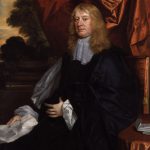
Abraham Cowley (1618 – 1667), the Royalist Poet.Poet and essayist Abraham Cowley was born in London, England, in 1618. He displayed early talent as a poet, publishing his first collection of poetry, Poetical Blossoms (1633), at the age of 15. Cowley studied at Cambridge University but was stripped of his Cambridge fellowship during the English Civil War and expelled for refusing to sign the Solemn League and Covenant of 1644. In turn, he accompanied Queen Henrietta Maria to France, where he spent 12 years in exile, serving as her secretary. During this time, Cowley completed The Mistress (1647). Arguably his most famous work, the collection exemplifies Cowley’s metaphysical style of love poetry. After the Restoration, Cowley returned to England, where he was reinstated as a Cambridge fellow and earned his MD before finally retiring to the English countryside. He is buried at Westminster Abbey alongside Geoffrey Chaucer and Edmund Spenser. Cowley is a wonderful poet and an outstanding representative of the English baroque.