
What shall we say, since silent now is he
Who when he spoke, all things would silent be?
Who had so many languages in store,
That only fame shall speak of him in more;
Whom England now no more return’d must see;
He’s gone to heaven on his fourth embassy.
On earth he travell’d often; not to say
H’ had been abroad, or pass loose time away.
In whatsoever land he chanc’d to come,
He read the men and manners, bringing home
Their wisdom, learning, and their piety,
As if he went to conquer, not to see.
So well he understood the most and best
Of tongues, that Babel sent into the West;
Spoke them so truly, that he had (you’d swear)
Not only liv’d, but been born every-where.
Justly each nation’s speech to him was known,
Who for the world was made, not us alone;
Nor ought the language of that man be less,
Who in his breast had all things to express.
We say that learning’s endless, and blame Fate
For not allowing life a longer date:
He did the utmost bounds of knowledge find,
He found them not so large as was his mind;
But, like the brave Pellæan youth, did moan
Because that art had no more worlds than one;
And, when he saw that he through all had past,
He dy’d, lest he should idle grow at last.

A few random poems:
- Domestic Peace by Samuel Taylor Coleridge
- My life – “An ambiguous journey” by Vasishta Sharma Gudi
- Николай Рубцов – Возвращение из рейса
- Владимир Высоцкий – У профессиональных игроков
- Владимир Маяковский – Для чего оттягивают паны мириться?.. (РОСТА №264)
- The One Night Stand : An Approach to the Bridge by Paul Blackburn
- Do not weep, maiden, for war is kind by Stephen Crane
- Hoppleroopleoopledook by Pornika Ganguly
- Falling Action by Ruth Madievsky
- Ок Мельникова – Заповедь номер одиннадцать
- “My northern blood exults to face” poem – Alfred Austin
- Bathing In The River
- Владимир Маяковский – Советский Союз, намотай на ус – кто Юз
- Invitation To The Redbreast by William Cowper
- Николай Огарев – Осеннее чувство
External links
Bat’s Poetry Page – more poetry by Fledermaus
Talking Writing Monster’s Page –
Batty Writing – the bat’s idle chatter, thoughts, ideas and observations, all original, all fresh
Poems in English
- Crowdie ever mair (Song) by Robert Burns
- Inscription to Chloris by Robert Burns
- Yonder pomp of costly fashion (Song) by Robert Burns
- Robert Bruce’s March to Bannockburn (Song) by Robert Burns
- My Spouse Nancy by Robert Burns
- Forlorn, my love, no comfort here (Song) by Robert Burns
- Behold the hour by Robert Burns
- Impromptu on Mrs. Riddell’s Birthday by Robert Burns
- On Chloris being ill (Song) by Robert Burns
- How cruel are the parents by Robert Burns
- Had I a cave by Robert Burns
- Craigieburn Wood by Robert Burns
- Poem on Pastoral Poetry by Robert Burns
- Lines of John M’Murdo by Robert Burns
- Inscription for an Alter of Independence by Robert Burns
- Epitaph on a Lap-dog by Robert Burns
- Epigram on Miss Davies by Robert Burns
- Out over the Forth (Song) by Robert Burns
- O aye my wife she dang me (Song) by Robert Burns
- Hey, the Dusty Miller (Song) by Robert Burns
More external links (open in a new tab):
Doska or the Board – write anything
Search engines:
Yandex – the best search engine for searches in Russian (and the best overall image search engine, in any language, anywhere)
Qwant – the best search engine for searches in French, German as well as Romance and Germanic languages.
Ecosia – a search engine that supposedly… plants trees
Duckduckgo – the real alternative and a search engine that actually works. Without much censorship or partisan politics.
Yahoo– yes, it’s still around, amazingly, miraculously, incredibly, but now it seems to be powered by Bing.
Parallel Translations of Poetry
The Poetry Repository – an online library of poems, poetry, verse and poetic works
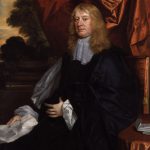
Abraham Cowley (1618 – 1667), the Royalist Poet.Poet and essayist Abraham Cowley was born in London, England, in 1618. He displayed early talent as a poet, publishing his first collection of poetry, Poetical Blossoms (1633), at the age of 15. Cowley studied at Cambridge University but was stripped of his Cambridge fellowship during the English Civil War and expelled for refusing to sign the Solemn League and Covenant of 1644. In turn, he accompanied Queen Henrietta Maria to France, where he spent 12 years in exile, serving as her secretary. During this time, Cowley completed The Mistress (1647). Arguably his most famous work, the collection exemplifies Cowley’s metaphysical style of love poetry. After the Restoration, Cowley returned to England, where he was reinstated as a Cambridge fellow and earned his MD before finally retiring to the English countryside. He is buried at Westminster Abbey alongside Geoffrey Chaucer and Edmund Spenser. Cowley is a wonderful poet and an outstanding representative of the English baroque.