
INDEED I must confess,
When souls mix ‘t is an happiness;
But not complete till bodies too do combine,
And closely as our minds together join:
But half of heaven the souls in glory taste,
Till by love in heaven, at last,
Their bodies too are plac’d.
In thy immortal part
Man, as well as I, thou art;
But something’t is that differs thee and me;
And we must one even in that difference be.
I thee, both as a man and woman, prize;
For a perfect love implies
Love in all capacities.
Can that for true love pass,
When a fair woman courts her glass?
Something unlike must in love’s likeness be;
His wonder is, one, and variety:
For he, whose soul nought but a soul can move,
Does a new Narcissus prove,
And his own image love.
That souls do beauty know,
‘T is to the bodies’ help they owe;
If, when they know ‘t, they straight abuse that trust,
And shut the body from’t, ‘t is as unjust
As if I brought my dearest friend to see
My mistress, and at th’ instant he
Should steal her quite from me.

A few random poems:
- Владимир Высоцкий – Песня солдата на часах
- Федор Сологуб – Снова саваны надели
- Омар Хайям – Ну, допустим, что будет тебе и почет
- Expectations by Pamela Griffiths
- Lover’s Gifts XIII: Last Night in the Garden by Rabindranath Tagore
- The Pond poem – Amy Lowell poems | Poems and Poetry
- Eclogue:–A Ghost by William Barnes
- Epistles to Several Persons: Epistle to Dr. Arbuthnot poem – Alexander Pope poems | Poetry Monster
- Омар Хайям – Если счастлив от счастья
- The Secrets Of Divine Love Are To Be Kept by William Cowper
- all-days-seem-same.html
- Aftermath poem – Amy Lowell poems | Poems and Poetry
- The Higher Pantheism poem – Lord Alfred Tennyson poems
- Halo by Tanisha Avarsekar
- Crusaders by William Wordsworth
External links
Bat’s Poetry Page – more poetry by Fledermaus
Talking Writing Monster’s Page –
Batty Writing – the bat’s idle chatter, thoughts, ideas and observations, all original, all fresh
Poems in English
- Dublinesque by Philip Larkin
- Dockery And Son by Philip Larkin
- Days by Philip Larkin
- Cut Grass by Philip Larkin
- Counting by Philip Larkin
- Continuing To Live by Philip Larkin
- Church Going by Philip Larkin
- Breadfruit by Philip Larkin
- Best Society by Philip Larkin
- Aubade by Philip Larkin
- At Grass by Philip Larkin
- Arrival by Philip Larkin
- Annus Mirabilis by Philip Larkin
- An Arundel Tomb by Philip Larkin
- Ambulances by Philip Larkin
- A Study Of Reading Habits by Philip Larkin
- You Can Have It by Philip Levine
- Wisteria by Philip Levine
- Where We Live Now by Philip Levine
- What Work Is by Philip Levine
More external links (open in a new tab):
Doska or the Board – write anything
Search engines:
Yandex – the best search engine for searches in Russian (and the best overall image search engine, in any language, anywhere)
Qwant – the best search engine for searches in French, German as well as Romance and Germanic languages.
Ecosia – a search engine that supposedly… plants trees
Duckduckgo – the real alternative and a search engine that actually works. Without much censorship or partisan politics.
Yahoo– yes, it’s still around, amazingly, miraculously, incredibly, but now it seems to be powered by Bing.
Parallel Translations of Poetry
The Poetry Repository – an online library of poems, poetry, verse and poetic works
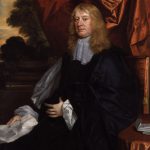
Abraham Cowley (1618 – 1667), the Royalist Poet.Poet and essayist Abraham Cowley was born in London, England, in 1618. He displayed early talent as a poet, publishing his first collection of poetry, Poetical Blossoms (1633), at the age of 15. Cowley studied at Cambridge University but was stripped of his Cambridge fellowship during the English Civil War and expelled for refusing to sign the Solemn League and Covenant of 1644. In turn, he accompanied Queen Henrietta Maria to France, where he spent 12 years in exile, serving as her secretary. During this time, Cowley completed The Mistress (1647). Arguably his most famous work, the collection exemplifies Cowley’s metaphysical style of love poetry. After the Restoration, Cowley returned to England, where he was reinstated as a Cambridge fellow and earned his MD before finally retiring to the English countryside. He is buried at Westminster Abbey alongside Geoffrey Chaucer and Edmund Spenser. Cowley is a wonderful poet and an outstanding representative of the English baroque.