
INDEED I must confess,
When souls mix ‘t is an happiness;
But not complete till bodies too do combine,
And closely as our minds together join:
But half of heaven the souls in glory taste,
Till by love in heaven, at last,
Their bodies too are plac’d.
In thy immortal part
Man, as well as I, thou art;
But something’t is that differs thee and me;
And we must one even in that difference be.
I thee, both as a man and woman, prize;
For a perfect love implies
Love in all capacities.
Can that for true love pass,
When a fair woman courts her glass?
Something unlike must in love’s likeness be;
His wonder is, one, and variety:
For he, whose soul nought but a soul can move,
Does a new Narcissus prove,
And his own image love.
That souls do beauty know,
‘T is to the bodies’ help they owe;
If, when they know ‘t, they straight abuse that trust,
And shut the body from’t, ‘t is as unjust
As if I brought my dearest friend to see
My mistress, and at th’ instant he
Should steal her quite from me.

A few random poems:
- In Token Of The Love You Gave by Timothy Thomas Fortune
- Sonnet 13: O, that you were your self! But, love, you are by William Shakespeare
- Imitated From The Japanese by William Butler Yeats
- A Tribute to Mr Murphy and the Blue Ribbon Army by William Topaz McGonagall
- Lament For The Makers By William Dunbar
- A Goddess by Tanisha Avarsekar
- The Friend by Marge Piercy
- Robert Burns: Farewell Thou Stream:
- xai_kou.html
- Natural History by Sylvia Plath
- Astigmatism poem – Amy Lowell poems | Poems and Poetry
- In the Time of War, XII by W H Auden
- Sonnet CXLII by William Shakespeare
- Ancestors by Siegfried Sassoon
- Константин Бальмонт – Мы прячем, душим тонкой сетью лжи
External links
Bat’s Poetry Page – more poetry by Fledermaus
Talking Writing Monster’s Page –
Batty Writing – the bat’s idle chatter, thoughts, ideas and observations, all original, all fresh
Poems in English
- A Mathematical Problem by Samuel Taylor Coleridge
- Fire, Famine, And Slaughter : A War Eclogue by Samuel Taylor Coleridge
- Fancy In Nubibus, Or The Poet In The Clouds by Samuel Taylor Coleridge
- Epitaph On An Infant. by Samuel Taylor Coleridge
- Elegy, Imitated From One Of Akenside’s Blank-Verse Inscriptions by Samuel Taylor Coleridge
- Domestic Peace by Samuel Taylor Coleridge
- Despair by Samuel Coleridge
- Desire by Samuel Coleridge
- A Day Dream by Samuel Taylor Coleridge
- Come, come thou bleak December wind (fragment) by Samuel Coleridge
- A Christmas Carol by Samuel Taylor Coleridge
- A Child’s Evening Prayer by Samuel Taylor Coleridge
- Aplolgia Pro Vita Sua by Samuel Coleridge
- Answer To A Child’s Question by Samuel Taylor Coleridge
- Absence: A Farewell Ode On Quitting School For Jesus College by Samuel Taylor Coleridge
- A Soliloquy Of The Full Moon, She Being In A Mad Passion by Samuel Coleridge
- With his venom by Sappho
- We put the urn aboard ship by Sappho
- We know this much by Sappho
- We know this much by Sappho
More external links (open in a new tab):
Doska or the Board – write anything
Search engines:
Yandex – the best search engine for searches in Russian (and the best overall image search engine, in any language, anywhere)
Qwant – the best search engine for searches in French, German as well as Romance and Germanic languages.
Ecosia – a search engine that supposedly… plants trees
Duckduckgo – the real alternative and a search engine that actually works. Without much censorship or partisan politics.
Yahoo– yes, it’s still around, amazingly, miraculously, incredibly, but now it seems to be powered by Bing.
Parallel Translations of Poetry
The Poetry Repository – an online library of poems, poetry, verse and poetic works
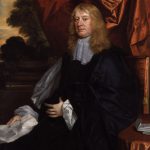
Abraham Cowley (1618 – 1667), the Royalist Poet.Poet and essayist Abraham Cowley was born in London, England, in 1618. He displayed early talent as a poet, publishing his first collection of poetry, Poetical Blossoms (1633), at the age of 15. Cowley studied at Cambridge University but was stripped of his Cambridge fellowship during the English Civil War and expelled for refusing to sign the Solemn League and Covenant of 1644. In turn, he accompanied Queen Henrietta Maria to France, where he spent 12 years in exile, serving as her secretary. During this time, Cowley completed The Mistress (1647). Arguably his most famous work, the collection exemplifies Cowley’s metaphysical style of love poetry. After the Restoration, Cowley returned to England, where he was reinstated as a Cambridge fellow and earned his MD before finally retiring to the English countryside. He is buried at Westminster Abbey alongside Geoffrey Chaucer and Edmund Spenser. Cowley is a wonderful poet and an outstanding representative of the English baroque.