
‘Tis true, I’have lov’d already three or four,
And shall three or four hundred more;
I’ll love each fair one that I see,
Till I find one at last that shall love me.
That shall my Canaan be, the fatal soil,
That ends my wandrings, and my toil.
I’ll settle there and happy grow;
The Country does with Milk and Honey flow.
The Needle trembles so, and turns about,
Till it the Northern Point find out:
But constant then and fixt does prove,
Fixt, that his dearest Pole as soon may move.
Then may my Vessel torn and shipwrackt be,
If it put forth again to Sea:
It never more abroad shall rome,
Though’t could next voyage bring the Indies home.
But I must sweat in Love, and labour yet,
Till I a Competency get.
They’re slothful fools who leave a Trade,
Till they a moderate fortune by’t have made.
Variety I ask not; give me One
To live perpetually upon.
The person Love does to us fit,
Like Manna, has the Tast of all in it.

A few random poems:
- At The Close Of The Canvass poem – Ambrose Bierce poems | Poems and Poetry
- Scots Prologue for Mr. Sutherland by Robert Burns
- Reply to a Trimming Epistle, received from a Tailor by Robert Burns
- Copla Suelta: The One and the Same Dream by T. Wignesan
- Вера Павлова – Жизнь в посудной лавке
- Uncle Sammy by Will McKendree Carleton
- Вера Полозкова – Для неровного счета
- My Garden by Thomas Edward Brown
- To The Small Celandine by William Wordsworth
- Sonnet 123: No, Time, thou shalt not boast that I do change by William Shakespeare
- So You Say by Mark Strand
- Robert Burns: Raving Winds Around Her Blowing: I composed these verses on Miss Isabella M’Leod of Raza, alluding to her feelings on the death of her sister, and the still more melancholy death of her sister’s husband, the late Earl of Loudoun, who shot himself out of sheer heart-break at some mortifications he suffered, owing to the deranged state of his finances.-R.B., 1971.
- Федор Сологуб – В норе темно и мглисто
- The Song of My Heart by Olawuyi Mutiu
- Sketch—New Year’s Day, 1790 by Robert Burns
External links
Bat’s Poetry Page – more poetry by Fledermaus
Talking Writing Monster’s Page –
Batty Writing – the bat’s idle chatter, thoughts, ideas and observations, all original, all fresh
Poems in English
- Phantasm
- Long I waited in vain
- was_then.html
- phantasm.html
- long_i_waited_in_vain.html
- Wind on the Hill by A. A. Milne
- Us Two by AA Milne
- twinkletoes.html
- The Morning Walk
- the_kings_breakfast.html
- the_dormouse_and_the_doctor.html
- the_christening.html
- Teddy Bear
- rice_pudding.html
- politeness.html
- Missing
- market_square.html
- lines_and_squares.html
- if_i_were_king.html
- hoppity.html
More external links (open in a new tab):
Doska or the Board – write anything
Search engines:
Yandex – the best search engine for searches in Russian (and the best overall image search engine, in any language, anywhere)
Qwant – the best search engine for searches in French, German as well as Romance and Germanic languages.
Ecosia – a search engine that supposedly… plants trees
Duckduckgo – the real alternative and a search engine that actually works. Without much censorship or partisan politics.
Yahoo– yes, it’s still around, amazingly, miraculously, incredibly, but now it seems to be powered by Bing.
Parallel Translations of Poetry
The Poetry Repository – an online library of poems, poetry, verse and poetic works
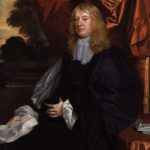
Abraham Cowley (1618 – 1667), the Royalist Poet.Poet and essayist Abraham Cowley was born in London, England, in 1618. He displayed early talent as a poet, publishing his first collection of poetry, Poetical Blossoms (1633), at the age of 15. Cowley studied at Cambridge University but was stripped of his Cambridge fellowship during the English Civil War and expelled for refusing to sign the Solemn League and Covenant of 1644. In turn, he accompanied Queen Henrietta Maria to France, where he spent 12 years in exile, serving as her secretary. During this time, Cowley completed The Mistress (1647). Arguably his most famous work, the collection exemplifies Cowley’s metaphysical style of love poetry. After the Restoration, Cowley returned to England, where he was reinstated as a Cambridge fellow and earned his MD before finally retiring to the English countryside. He is buried at Westminster Abbey alongside Geoffrey Chaucer and Edmund Spenser. Cowley is a wonderful poet and an outstanding representative of the English baroque.