
‘Tis true, I’have lov’d already three or four,
And shall three or four hundred more;
I’ll love each fair one that I see,
Till I find one at last that shall love me.
That shall my Canaan be, the fatal soil,
That ends my wandrings, and my toil.
I’ll settle there and happy grow;
The Country does with Milk and Honey flow.
The Needle trembles so, and turns about,
Till it the Northern Point find out:
But constant then and fixt does prove,
Fixt, that his dearest Pole as soon may move.
Then may my Vessel torn and shipwrackt be,
If it put forth again to Sea:
It never more abroad shall rome,
Though’t could next voyage bring the Indies home.
But I must sweat in Love, and labour yet,
Till I a Competency get.
They’re slothful fools who leave a Trade,
Till they a moderate fortune by’t have made.
Variety I ask not; give me One
To live perpetually upon.
The person Love does to us fit,
Like Manna, has the Tast of all in it.

A few random poems:
- Verses On A Young Lady (playing harpsichord, and singing) by Tobias Smollett
- Шекспир – По совести скажи – Сонет 10
- mark.html
- Madonna poem – Alfred Austin
- Яков Полонский – Письмо
- Death’s Echo by W H Auden
- In My Own Shire, If I Was Sad poem – A. E. Housman
- Eclogue:–Two Farms In Woone by William Barnes
- Sonnet 49: Against that time, if ever that time come by William Shakespeare
- Robert Burns: To Ruin:
- Как жаль, что много лет назад
- Paul’s Wife by Robert Frost
- The Worlds Greatest Smoke Off by Shel Silverstein
- Robert Burns: The Bonie Lass Of Albany:
- That Nature Is A Heraclitean Fire And Of The Comfort Of The Resurrection poem – Gerard Manley Hopkins poems
External links
Bat’s Poetry Page – more poetry by Fledermaus
Talking Writing Monster’s Page –
Batty Writing – the bat’s idle chatter, thoughts, ideas and observations, all original, all fresh
Poems in English
- Sonet 42 by William Alexander
- Sonet 41 by William Alexander
- Sonet 4 by William Alexander
- Sonet 39 by William Alexander
- Sonet 38 by William Alexander
- Sonet 36 by William Alexander
- Sonet 35 by William Alexander
- Sonet 34 by William Alexander
- Sonet 33 by William Alexander
- Sonet 32 by William Alexander
- Jonathan: The First Booke by William Alexander
- IX: Some Verses: This Day Design’d To Spoil The World of Peace by William Alexander
- IV: Some Verses: To The Author by William Alexander
- III: Some Verses: To M. Michaell Drayton by William Alexander
- Elegie IV: On The Death of Prince Henrie by William Alexander
- Doomes-Day: The Twelfth Houre by William Alexander
- Doomes-Day: The Third Houre by William Alexander
- Doomes-Day: The Tenth Houre by William Alexander
- Doomes-Day: The Sixth Houre by William Alexander
- Doomes-Day: The Ninth Houre by William Alexander
More external links (open in a new tab):
Doska or the Board – write anything
Search engines:
Yandex – the best search engine for searches in Russian (and the best overall image search engine, in any language, anywhere)
Qwant – the best search engine for searches in French, German as well as Romance and Germanic languages.
Ecosia – a search engine that supposedly… plants trees
Duckduckgo – the real alternative and a search engine that actually works. Without much censorship or partisan politics.
Yahoo– yes, it’s still around, amazingly, miraculously, incredibly, but now it seems to be powered by Bing.
Parallel Translations of Poetry
The Poetry Repository – an online library of poems, poetry, verse and poetic works
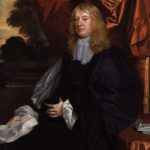
Abraham Cowley (1618 – 1667), the Royalist Poet.Poet and essayist Abraham Cowley was born in London, England, in 1618. He displayed early talent as a poet, publishing his first collection of poetry, Poetical Blossoms (1633), at the age of 15. Cowley studied at Cambridge University but was stripped of his Cambridge fellowship during the English Civil War and expelled for refusing to sign the Solemn League and Covenant of 1644. In turn, he accompanied Queen Henrietta Maria to France, where he spent 12 years in exile, serving as her secretary. During this time, Cowley completed The Mistress (1647). Arguably his most famous work, the collection exemplifies Cowley’s metaphysical style of love poetry. After the Restoration, Cowley returned to England, where he was reinstated as a Cambridge fellow and earned his MD before finally retiring to the English countryside. He is buried at Westminster Abbey alongside Geoffrey Chaucer and Edmund Spenser. Cowley is a wonderful poet and an outstanding representative of the English baroque.