
A poem by Alexander Pope (1688-1744) , the greatest English poet of “Augustan” or Georgian period
Ye Lords and Commons, Men of Wit,
And Pleasure about Town;
Read this ere you translate one Bit
Of Books of high Renown.
Beware of Latin Authors all!
Nor think your Verses Sterling,
Though with a Golden Pen you scrawl,
And scribble in a Berlin:
For not the Desk with silver Nails,
Nor Bureau of Expense,
Nor standish well japann’d avails,
To writing of good Sense.
Hear how a Ghost in dead of Night,
With saucer Eyes of Fire,
In woeful wise did sore affright
A Wit and courtly ‘Squire.
Rare Imp and Phoebus, hopeful Youth
Like Puppy tame that uses
To fetch and carry, in his Mouth,
The Works of all the Muses.
Ah! why did he write Poetry,
That hereto was so civil;
And sell his soul for vanity,
To Rhyming and the Devil?
A Desk he had of curious Work,
With glittering Studs about;
Within the same did Sandys lurk,
Though Ovid lay without.
Now as he scratch’d to fetch up Thought,
Forth popp’d the Sprite so thin;
And from the Key-hole bolted out,
All upright as a Pin.
With Whiskers, Band, and Pantaloon,
And Ruff composed most duly;
This ‘Squire he dropp’d his Pen full soon,
While as the Light burnt bluely.
“Ho! Master Sam,” quoth Sandys’ sprite,
“Write on, nor let me scare ye;
Forsooth, if Rhymes fall in not right,
To Budgell seek, or Carey.
“I hear the Beat of Jacob’s Drums,
Poor Ovid finds no Quarter!
See first the merry Pembroke comes
In Haste, without his Garter.
“Then Lords and Lordlings, ‘Squires and Knights,
Wits, Witlings, Prigs and Peers!
Garth at St. James’s, and at White’s,
Beats up for Volunteers.
“What Fenton will not do, nor Gay,
Nor Congreve, Rowe, nor Stanyan,
Tom Burnet or Tom D’Urfey may,
John Dunton, Steele, or any one.
“If Justice Philips’ costive head
Some frigid Rhymes disburses;
They shall like Persian Tales be read,
And glad both Babes and Nurses.
“Let Warwick’s Muse with Ashurst join,
And Ozell’s with Lord Hervey’s:
Tickell and Addison combine,
And P-pe translate with Jervas.
“Landsdowne himself, that lively Lord,
Who bows to every Lady,
Shall join with Frowde in one Accord,
And be like Tate and Brady.
“Ye Ladies too draw forth your pen,
I pray where can the hurt lie?
Since you have Brains as well as Men,
As witness Lady Wortley.
“Now, Tonson, list thy Forces all,
Review them, and tell Noses;
For to poor Ovid shall befal
A strange Metamorphosis.
“A Metamorphosis more strange
Than all his Books can vapour;”
‘To what’ (quoth ‘squire) ‘shall Ovid change?’
Quoth Sandys: “To waste paper.”

A few random poems:
- Владимир Маяковский – Советская азбука (Железо куй, пока горячее…)
- Вероника Тушнова – Тень
- Corn A-Turnen Yollow by William Barnes
- Sonnet Vi
- Unruffled by Satish Verma
- Иван Демьянов – Парикмахер рак-омар
- Robert Burns: O Let Me In Thes Ae Night:
- The light from an earthen lamp by Sunil Sharma
- Personal Talk by William Wordsworth
- Владимир Высоцкий – Нараспашку, при любой погоде
- Beauty Undecked by William Barnes
- Long I Thought that Knowledge. by Walt Whitman
- Константин Бальмонт – Море – вечное стремленье, горы – царственный покой
- Владимир Высоцкий – Песня Марии
- On The Cliffs Newport
External links
Bat’s Poetry Page – more poetry by Fledermaus
Talking Writing Monster’s Page –
Batty Writing – the bat’s idle chatter, thoughts, ideas and observations, all original, all fresh
Poems in English
- Sonnet 115: Those lines that I before have writ do lie by William Shakespeare
- Sonnet 114: Or whether doth my mind, being crowned with you by William Shakespeare
- Sonnet 113: Since I left you, mine eye is in my mind by William Shakespeare
- Sonnet 112: Your love and pity doth th’ impression fill by William Shakespeare
- Sonnet 111: O, for my sake do you with Fortune chide by William Shakespeare
- Sonnet 110: Alas, ’tis true, I have gone here and there by William Shakespeare
- Sonnet 10: For shame, deny that thou bear’st love to any by William Shakespeare
- Sonnet 109: O, never say that I was false of heart by William Shakespeare
- Sonnet 108: What’s in the brain that ink may character by William Shakespeare
- Sonnet 107: Not mine own fears, nor the prophetic soul by William Shakespeare
- Sonnet 106: When in the chronicle of wasted time by William Shakespeare
- Sonnet 105: Let not my love be called idolatry by William Shakespeare
- Sonnet 104: To me, fair friend, you never can be old by William Shakespeare
- Sonnet 103: Alack, what poverty my Muse brings forth by William Shakespeare
- Sonnet 102: My love is strengthened, though more weak in seeming by William Shakespeare
- Sonnet 101: O truant Muse, what shall be thy amends by William Shakespeare
- Sonnet 100: Where art thou, Muse, that thou forget’st so long by William Shakespeare
- Sonnet LIV by William Shakespeare
- Silvia by William Shakespeare
- Sigh No More by William Shakespeare
More external links (open in a new tab):
Doska or the Board – write anything
Search engines:
Yandex – the best search engine for searches in Russian (and the best overall image search engine, in any language, anywhere)
Qwant – the best search engine for searches in French, German as well as Romance and Germanic languages.
Ecosia – a search engine that supposedly… plants trees
Duckduckgo – the real alternative and a search engine that actually works. Without much censorship or partisan politics.
Yahoo– yes, it’s still around, amazingly, miraculously, incredibly, but now it seems to be powered by Bing.
Parallel Translations of Poetry
The Poetry Repository – an online library of poems, poetry, verse and poetic works
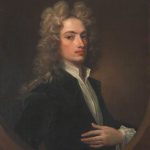
Alexander Pope (1688 – 1744) was a a post-Restoration English poet and satirist. He is a poet of the (British) Augustan period and one of its greatest artistic exponents.