
LOVE in her sunny eyes does basking play;
Love walks the pleasant mazes of her hair;
Love does on both her lips for ever stray
And sows and reaps a thousand kisses there.
In all her outward parts Love’s always seen;
But, oh, He never went within.
Within Love’s foes, his greatest foes abide,
Malice, Inconstance, and Pride.
So the Earth’s face, trees, herbs, and flowers do dress,
With other beauties numberless;
But at the center, darkness is, and Hell;
There wicked spirits, and there the Damned dwell.
With me alas, quite contrary it fares;
Darkness and death lies in my weeping eyes,
Despair and paleness in my face appears,
And grief, and fear, Love’s greatest enemies;
But, like the Persian tyrant, Love within
Keeps his proud court, and ne’re is seen.
Oh take my heart, and by that means you’ll prove
Within, too stor’d enough of Love;
Give me but yours, I’ll by that change so thrive,
That Love in all my parts shall live.
So powerful is this change, it render can,
My outside woman, and your inside man.

A few random poems:
- A Song. by Walt Whitman
- Absence poem – Amy Lowell poems | Poems and Poetry
- The Comforters by Rudyard Kipling
- The Window
- WATER LILLIES AND ADVICE by PEGGY AYLSWORTH
- Villon by Siegfried Sassoon
- Владимир Маяковский – О патриархе Тихоне
- A Woman Unconscious by Ted Hughes
- My Eyes in the Time of Apparition by Rachel McKibbens
- Dungeon by Rabindranath Tagore
- Epitaph On Mr. Chester Of Chicheley by William Cowper
- The Last Rhyme of True Thomas by Rudyard Kipling
- Огюст Барбье – Леонардо да Винчи
- Robert Burns: My Lord A-Hunting:
- In Honour Of St. Alphonsus Rodriguez poem – Gerard Manley Hopkins poems
External links
Bat’s Poetry Page – more poetry by Fledermaus
Talking Writing Monster’s Page –
Batty Writing – the bat’s idle chatter, thoughts, ideas and observations, all original, all fresh
Poems in English
- The Stwonèn Pworch by William Barnes
- The Stage Coach by William Barnes
- The Sparrow Club by William Barnes
- The Slantèn Light O’ Fall by William Barnes
- The Sky A-Clearen by William Barnes
- The Shy Man by William Barnes
- The Shepherd O’ The Farm by William Barnes
- The Settle An’ The Girt Wood Vire by William Barnes
- The Scud by William Barnes
- The Rwose In The Dark by William Barnes
- The Railroad by William Barnes
- The Poplars by William Barnes
- The Pleäce Our Own Ageän by William Barnes
- The Pleäce A Teäle’s A-Twold O’ by William Barnes
- The Pillar’d Geäte by William Barnes
- The Peasant’s Return by William Barnes
- The New House A-Gettèn’ Wold by William Barnes
- The Neäme Letters by William Barnes
- The Music O’ The Dead by William Barnes
- The Motherless Child by William Barnes
More external links (open in a new tab):
Doska or the Board – write anything
Search engines:
Yandex – the best search engine for searches in Russian (and the best overall image search engine, in any language, anywhere)
Qwant – the best search engine for searches in French, German as well as Romance and Germanic languages.
Ecosia – a search engine that supposedly… plants trees
Duckduckgo – the real alternative and a search engine that actually works. Without much censorship or partisan politics.
Yahoo– yes, it’s still around, amazingly, miraculously, incredibly, but now it seems to be powered by Bing.
Parallel Translations of Poetry
The Poetry Repository – an online library of poems, poetry, verse and poetic works
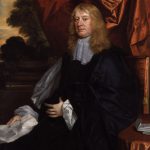
Abraham Cowley (1618 – 1667), the Royalist Poet.Poet and essayist Abraham Cowley was born in London, England, in 1618. He displayed early talent as a poet, publishing his first collection of poetry, Poetical Blossoms (1633), at the age of 15. Cowley studied at Cambridge University but was stripped of his Cambridge fellowship during the English Civil War and expelled for refusing to sign the Solemn League and Covenant of 1644. In turn, he accompanied Queen Henrietta Maria to France, where he spent 12 years in exile, serving as her secretary. During this time, Cowley completed The Mistress (1647). Arguably his most famous work, the collection exemplifies Cowley’s metaphysical style of love poetry. After the Restoration, Cowley returned to England, where he was reinstated as a Cambridge fellow and earned his MD before finally retiring to the English countryside. He is buried at Westminster Abbey alongside Geoffrey Chaucer and Edmund Spenser. Cowley is a wonderful poet and an outstanding representative of the English baroque.