
A poem by Aeschylus (c. 525 – c. 456 Before Christ )
PROMETHEUS (alone)
O holy Aether, and swift-winged Winds,
And River-wells, and laughter innumerous
Of yon Sea-waves! Earth, mother of us all,
And all-viewing cyclic Sun, I cry on you,–
Behold me a god, what I endure from gods!
Behold, with throe on throe,
How, wasted by this woe,
I wrestle down the myriad years of Time!
Behold, how fast around me
The new King of the happy ones sublime
Has flung the chain he forged, has shamed and bound me!
Woe, woe! to-day’s woe and the coming morrow’s
I cover with one groan. And where is found me
A limit to these sorrows?
And yet what word do I say? I have foreknown
Clearly all things that should be; nothing done
Comes sudden to my soul–and I must bear
What is ordained with patience, being aware
Necessity doth front the universe
With an invincible gesture. Yet this curse
Which strikes me now, I find it hard to brave
In silence or in speech. Because I gave
Honor to mortals, I have yoked my soul
To this compelling fate. Because I stole
The secret fount of fire, whose bubbles went
Over the ferrule’s brim, and manward sent
Art’s mighty means and perfect rudiment,
That sin I expiate in this agony,
Hung here in fetters, ‘neath the blanching sky.
Ah, ah me! what a sound,
What a fragrance sweeps up from a pinion unseen
Of a god, or a mortal, or nature between,
Sweeping up to this rock where the earth has her bound,
To have sight of my pangs, or some guerdon obtain–
Lo, a god in the anguish, a god in the chain!
The god Zeus hateth sore,
And his gods hate again,
As many as tread on his glorified floor,
Because I loved mortals too much evermore.
Alas me! what a murmur and motion I hear,
As of birds flying near!
And the air undersings
The light stroke of their wings–
And all life that approaches I wait for in fear.

A few random poems:
- To the Lady Margaret Ley poem – John Milton poems
- The Shrike by Sylvia Plath
- Where The Mind Is Without Fear by Rabindranath Tagore
- Revelation poem – Aldous Huxley poems | Poetry Monster
- Sonnet 78: So oft have I invoked thee for my Muse by William Shakespeare
- “Advance – Come Forth From Thy Tyrolean Ground” by William Wordsworth
- The Harvest Bow by Seamus Heaney
- Numb by Stephenie Tucker
- Владимир Бенедиктов – Дева за клавесином
- Иван Козлов – Умирающая Эрменгарда
- que-sera-sera.html
- Вероника Тушнова – Яблоки
- On An Ugly Fellow (From The Greek) by William Cowper
- The Wrath of Love by Shawn Ervin
- The Flower-School by Rabindranath Tagore
External links
Bat’s Poetry Page – more poetry by Fledermaus
Talking Writing Monster’s Page –
Batty Writing – the bat’s idle chatter, thoughts, ideas and observations, all original, all fresh
Poems in English
- Wind on the Hill by AA Milne
- us_two_by_a_a_milne.html
- twinkletoes.html
- the_morning_walk.html
- the_kings_breakfast.html
- the_dormouse_and_the_doctor.html
- the_christening.html
- rice_pudding.html
- politeness.html
- missing.html
- market_square.html
- lines_and_squares.html
- if_i_were_king.html
- hoppity.html
- happiness.html
- come_out_with_me.html
- buckingham_palace.html
- brownie.html
- at_the_zoo.html
- Water Strider by Aaron Baker
More external links (open in a new tab):
Doska or the Board – write anything
Search engines:
Yandex – the best search engine for searches in Russian (and the best overall image search engine, in any language, anywhere)
Qwant – the best search engine for searches in French, German as well as Romance and Germanic languages.
Ecosia – a search engine that supposedly… plants trees
Duckduckgo – the real alternative and a search engine that actually works. Without much censorship or partisan politics.
Yahoo– yes, it’s still around, amazingly, miraculously, incredibly, but now it seems to be powered by Bing.
Parallel Translations of Poetry
The Poetry Repository – an online library of poems, poetry, verse and poetic works
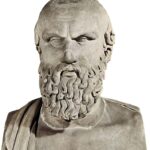
Aeschylus (525 Before Christ to 456 B.C.) was an ancient Greek author of Greek tragedy, and is often described as the father of tragedy. Academics’ knowledge of the genre begins with his work, and understanding of earlier Greek tragedy is largely based on inferences made from reading his surviving plays. According to Aristotle, he expanded the number of characters in the theatre and allowed conflict among them.