
A poem by Aeschylus (c. 525 – c. 456 Before Christ )
Hear ye my statute, men of Attica–
Ye who of bloodshed judge this primal cause;
Yea, and in future age shall Aegeus’s host
Revere this court of jurors. This the hill
Of Ares, seat of Amazons, their tent,
What time ‘gainst Theseus, breathing hate, they came,
Waging fierce battle, and their towers upreared,
A counter-fortress to Acropolis;–
To Ares they did sacrifice, and hence
This rock is titled Areopagus.
Here then shall sacred Awe, to Fear allied,
By day and night my lieges hold from wrong,
Save if themselves do innovate my laws,
If thou with mud, or influx base, bedim
The sparkling water, nought thou’lt find to drink.
Nor Anarchy, nor Tyrant’s lawless rule
Commend I to my people’s reverence;–
Nor let them banish from their city Fear;
For who ‘mong men, uncurbed by fear, is just?
Thus holding Awe in seemly reverence,
A bulwark for your State shall ye possess,
A safeguard to protect your city walls,
Such as no mortals otherwhere can boast,
Neither in Scythia, nor in Pelops’s realm.
Behold! This Court august, untouched by bribes,
Sharp to avenge, wakeful for those who sleep,
Establish I, a bulwark to this land.
This charge, extending to all future time,
I give my lieges. Meet it as ye rise,
Assume the pebbles, and decide the cause,
Your oath revering. All hath now been said.

A few random poems:
- I have been tricked by flying too close by Jalal ad-Din Muhammad Rumi
- Владимир Маяковский – Россия — единое советское хозяйство (РОСТА № 280)
- My Spouse Nancy by Robert Burns
- I have fallen into unconsciousness by Jalal ad-Din Muhammad Rumi
- Bitterness by Philip Levine
- A Grace after Dinner by Robert Burns
- Teddy Bear
- Николай Языков – В. А. Елагину (Светло блестит на глади неба ясной)
- The Survivor by Primo Levi
- Adoration
- The Past is the Present by Marianne Moore
- The Amaranth by Vachel Lindsay
- Владимир Высоцкий – Марш студентов-физиков
- The Poet And Imagination
- Hart-Leap Well by William Wordsworth
External links
Bat’s Poetry Page – more poetry by Fledermaus
Talking Writing Monster’s Page –
Batty Writing – the bat’s idle chatter, thoughts, ideas and observations, all original, all fresh
Poems in English
- Epitaph on my Ever Honoured Father by Robert Burns
- Epitaph on John Rankine by Robert Burns
- Epitaph on John Dove, Innkeeper by Robert Burns
- Epitaph on John Busby, Esq., Tinwald Downs by Robert Burns
- Epitaph on James Grieve by Robert Burns
- Epitaph on Holy Willie by Robert Burns
- Epitaph on Captain Lascelles by Robert Burns
- Epitaph on a noted coxcomb by Robert Burns
- Epitaph on a Noisy Polemic by Robert Burns
- Epitaph on a Henpecked Squire by Robert Burns
- Epitaph for William Nicol, High School, Edinburgh by Robert Burns
- Epitaph for Mr. William Michie, Schoolmaster by Robert Burns
- Epitaph for Mr. Walter Riddell by Robert Burns
- Epitaph for Mr. W. Cruickshank by Robert Burns
- Epitaph for Mr. Gabriel Richardson, Brewer by Robert Burns
- Epitaph for James Smith by Robert Burns
- Epitaph for Gavin Hamilton, Esq. by Robert Burns
- Epistle to William Simson by Robert Burns
- Epistle to the Rev. John M’Math by Robert Burns
- Epistle to Robert Graham, Esq., of Fintry by Robert Burns
More external links (open in a new tab):
Doska or the Board – write anything
Search engines:
Yandex – the best search engine for searches in Russian (and the best overall image search engine, in any language, anywhere)
Qwant – the best search engine for searches in French, German as well as Romance and Germanic languages.
Ecosia – a search engine that supposedly… plants trees
Duckduckgo – the real alternative and a search engine that actually works. Without much censorship or partisan politics.
Yahoo– yes, it’s still around, amazingly, miraculously, incredibly, but now it seems to be powered by Bing.
Parallel Translations of Poetry
The Poetry Repository – an online library of poems, poetry, verse and poetic works
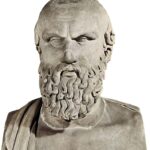
Aeschylus (525 Before Christ to 456 B.C.) was an ancient Greek author of Greek tragedy, and is often described as the father of tragedy. Academics’ knowledge of the genre begins with his work, and understanding of earlier Greek tragedy is largely based on inferences made from reading his surviving plays. According to Aristotle, he expanded the number of characters in the theatre and allowed conflict among them.