
FILL the bowl with rosy wine,
Around our temples roses twine.
And let us cheerfully awhile,
Like the wine and roses smile.
Crown’d with roses we contemn
Gyge’s wealthy diadem.
Today is ours; what do we fear?
Today is ours; we have it here.
Let’s treat it kindly, that it may
Wish, at least, with us to stay.
Let’s banish business, banish sorrow;
To the Gods belongs tomorrow.

A few random poems:
- Heredity by Tony Harrison
- Two Hundred Years After by Siegfried Sassoon
- Remorse by Siegfried Sassoon
- The Match poem – Andrew Marvell poems
- Across the Street from the Whitmore Home for Girls, 1949 by Rachel McKibbens
- The Holy Mountain of Hope by Thomas Ziemer
- The rainy Pleiads wester poem – A. E. Housman
- An Argument by Thomas Moore
- Song—O Tibbie, I hae seen the day by Robert Burns
- Константин Бальмонт – Можно жить с закрытыми глазами
- Гавриил Державин – Послание Мурзы Багрима к царевне Доброславе
- Lines On Seeing A Lock Of Milton’s Hair poem – John Keats poems
- Colloquy by Weldon Kees
- Константин Бальмонт – Народные поверья
- Upon Appleton House, to My Lord Fairfax poem – Andrew Marvell poems
External links
Bat’s Poetry Page – more poetry by Fledermaus
Talking Writing Monster’s Page –
Batty Writing – the bat’s idle chatter, thoughts, ideas and observations, all original, all fresh
Poems in English
- The Seven Sisters by William Wordsworth
- The Sailor’s Mother by William Wordsworth
- The Russian Fugitive by William Wordsworth
- The Reverie of Poor Susan by William Wordsworth
- The Redbreast Chasing The Butterfly by William Wordsworth
- The Prioress’s Tale [from Chaucer] by William Wordsworth
- The Primrose of the Rock by William Wordsworth
- The Power of Armies is a Visible Thing by William Wordsworth
- The Pet-Lamb by William Wordsworth
- The Passing of the Elder Bards by William Wordsworth
- The Old Cumberland Beggar by William Wordsworth
- The Oak Of Guernica Supposed Address To The Same by William Wordsworth
- The Morning Of The Day Appointed For A General Thanksgiving. January 18, 1816 by William Wordsworth
- The King Of Sweden by William Wordsworth
- The Idle Shepherd Boys by William Wordsworth
- The Horn Of Egremont Castle by William Wordsworth
- The Highland Broach by William Wordsworth
- The Happy Warrior by William Wordsworth
- The Green Linnet by William Wordsworth
- The Germans On The Heighs Of Hochheim by William Wordsworth
More external links (open in a new tab):
Doska or the Board – write anything
Search engines:
Yandex – the best search engine for searches in Russian (and the best overall image search engine, in any language, anywhere)
Qwant – the best search engine for searches in French, German as well as Romance and Germanic languages.
Ecosia – a search engine that supposedly… plants trees
Duckduckgo – the real alternative and a search engine that actually works. Without much censorship or partisan politics.
Yahoo– yes, it’s still around, amazingly, miraculously, incredibly, but now it seems to be powered by Bing.
Parallel Translations of Poetry
The Poetry Repository – an online library of poems, poetry, verse and poetic works
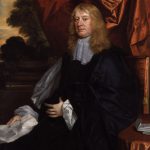
Abraham Cowley (1618 – 1667), the Royalist Poet.Poet and essayist Abraham Cowley was born in London, England, in 1618. He displayed early talent as a poet, publishing his first collection of poetry, Poetical Blossoms (1633), at the age of 15. Cowley studied at Cambridge University but was stripped of his Cambridge fellowship during the English Civil War and expelled for refusing to sign the Solemn League and Covenant of 1644. In turn, he accompanied Queen Henrietta Maria to France, where he spent 12 years in exile, serving as her secretary. During this time, Cowley completed The Mistress (1647). Arguably his most famous work, the collection exemplifies Cowley’s metaphysical style of love poetry. After the Restoration, Cowley returned to England, where he was reinstated as a Cambridge fellow and earned his MD before finally retiring to the English countryside. He is buried at Westminster Abbey alongside Geoffrey Chaucer and Edmund Spenser. Cowley is a wonderful poet and an outstanding representative of the English baroque.