
FILL the bowl with rosy wine,
Around our temples roses twine.
And let us cheerfully awhile,
Like the wine and roses smile.
Crown’d with roses we contemn
Gyge’s wealthy diadem.
Today is ours; what do we fear?
Today is ours; we have it here.
Let’s treat it kindly, that it may
Wish, at least, with us to stay.
Let’s banish business, banish sorrow;
To the Gods belongs tomorrow.

A few random poems:
- Robert Burns: Composed In Spring:
- Владимир Высоцкий – Вот, главный вход
- Sonnet To George Keats: Written In Sickness poem – John Keats poems
- Владимир Маяковский – Венера Милосская и Вячеслав Полонский
- The Turnstile by William Barnes
- The Cloud by Sara Teasdale
- The Toucan by Shel Silverstein
- 对于女权主义者
- Of the Visage of Things. by Walt Whitman
- Reply to a Trimming Epistle, received from a Tailor by Robert Burns
- Валерий Брюсов – Гесперидовы сады
- Владимир Высоцкий – Водой наполненные горсти
- Epistle to John Rankine by Robert Burns
- Владимир Британишский – Смерть Крылова
- The Dandelion by Vachel Lindsay
External links
Bat’s Poetry Page – more poetry by Fledermaus
Talking Writing Monster’s Page –
Batty Writing – the bat’s idle chatter, thoughts, ideas and observations, all original, all fresh
Poems in English
- Memorials of A Tour In Scotland, 1803 I. Departure From The Vale Of Grasmere, August 1803 by William Wordsworth
- Matthew by William Wordsworth
- Maternal Grief by William Wordsworth
- Mark The Concentrated Hazels That Enclose by William Wordsworth
- Lucy by William Wordsworth
- Lucy Gray [or Solitude] by William Wordsworth
- Louisa: After Accompanying Her On A Mountain Excursion by William Wordsworth
- Look Now On That Adventurer Who Hath Paid by William Wordsworth
- London, 1802 by William Wordsworth
- Lines Written On A Blank Leaf In A Copy Of The Author’s Poem “The Excursion,” by William Wordsworth
- Lines Written In Early Spring by William Wordsworth
- Lines Written As A School Exercise At Hawkshead, Anno Aetatis 14 by William Wordsworth
- Lines On The Expected Invasion, 1803 by William Wordsworth
- Lines Left Upon The Seat Of A Yew-Tree, by William Wordsworth
- Lines Composed a Few Miles above Tintern Abbey by William Wordsworth
- Laodamia by William Wordsworth
- Lament Of Mary Queen Of Scots by William Wordsworth
- It was an April morning: fresh and clear by William Wordsworth
- It Is No Spirit Who From Heaven Hath Flown by William Wordsworth
- It Is a Beauteous Evening by William Wordsworth
More external links (open in a new tab):
Doska or the Board – write anything
Search engines:
Yandex – the best search engine for searches in Russian (and the best overall image search engine, in any language, anywhere)
Qwant – the best search engine for searches in French, German as well as Romance and Germanic languages.
Ecosia – a search engine that supposedly… plants trees
Duckduckgo – the real alternative and a search engine that actually works. Without much censorship or partisan politics.
Yahoo– yes, it’s still around, amazingly, miraculously, incredibly, but now it seems to be powered by Bing.
Parallel Translations of Poetry
The Poetry Repository – an online library of poems, poetry, verse and poetic works
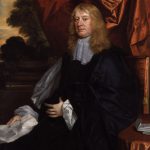
Abraham Cowley (1618 – 1667), the Royalist Poet.Poet and essayist Abraham Cowley was born in London, England, in 1618. He displayed early talent as a poet, publishing his first collection of poetry, Poetical Blossoms (1633), at the age of 15. Cowley studied at Cambridge University but was stripped of his Cambridge fellowship during the English Civil War and expelled for refusing to sign the Solemn League and Covenant of 1644. In turn, he accompanied Queen Henrietta Maria to France, where he spent 12 years in exile, serving as her secretary. During this time, Cowley completed The Mistress (1647). Arguably his most famous work, the collection exemplifies Cowley’s metaphysical style of love poetry. After the Restoration, Cowley returned to England, where he was reinstated as a Cambridge fellow and earned his MD before finally retiring to the English countryside. He is buried at Westminster Abbey alongside Geoffrey Chaucer and Edmund Spenser. Cowley is a wonderful poet and an outstanding representative of the English baroque.