
It gave a piteous groan, and so it broke;
In vain it something would have spoke:
The love within too strong for ‘t was,
Like poison put into a Venice-glass.
I thought that this some remedy might prove;
But oh, the mighty serpent Love,
Cut by this chance in pieces small,
In all still liv’d, and still it stung in all.
And now, alas! each little broken part
Feels the whole pain of all my heart;
And every smallest corner still
Lives with that torment which the whole did kill.
Even so rude armies, when the field they quit,
And into several quarters get;
Each troop does spoil and ruin more
Than all join’d in one body did before.
How many Loves reign in my bosom now!
How many loves, yet all of you!
Thus have I chang’d with evil fate
My Monarch-love into a Tyrant-state.

A few random poems:
- To Youth by Robert Herrick
- Moony Affair by Satish Verma
- A Different September by Steve Sant
- Sometimes….Life’s A Beach by Stevens Cadet
- Teaken In Apples by William Barnes
- Subject to Change by Marilyn L. Taylor
- Miracles by Paul Hostovsky
- Song—Anna, thy Charms by Robert Burns
- Out from Behind this Mask. by Walt Whitman
- Ode on Solitude poem – Alexander Pope
- Robert Burns: Winter: A Dirge:
- Love’s Fitfulness poem – Alfred Austin
- Robert Burns: Address Of Beelzebub: To the Right Honourable the Earl of Breadalbane, President of the Right Honourable and Honourable the Highland Society, which met on the 23rd of May last at the Shakespeare, Covent Garden, to concert ways and means to frustrate the designs of five hundred Highlanders, who, as the Society were informed by Mr. M’Kenzie of Applecross, were so audacious as to attempt an escape from their lawful lords and masters whose property they were, by emigrating from the lands of Mr. Macdonald of Glengary to the wilds of Canada, in search of that fantastic thing-Liberty.
- Comus poem – John Milton poems
- Sonnet 130: My mistress’ eyes are nothing like the sun by William Shakespeare
External links
Bat’s Poetry Page – more poetry by Fledermaus
Talking Writing Monster’s Page –
Batty Writing – the bat’s idle chatter, thoughts, ideas and observations, all original, all fresh
Poems in English
- Robert Burns: Anna, Thy Charms:
- Robert Burns: To Alex. Cunningham, ESQ., Writer: Ellisland, Nithsdale, July 27th, 1788.
- Robert Burns: Lines Written In Friars’-Carse Hermitage:
- Robert Burns: I Hae a Wife O’ My Ain:
- Robert Burns: Of A’ The Airts The Wind Can Blaw:
- Robert Burns: Epistle To Hugh Parker:
- Robert Burns: The Chevalier’s Lament:
- Robert Burns: Verses To Clarinda: Sent with a Pair of Wine-Glasses.
- Robert Burns: The Bonie Lad That’s Far Awa:
- Robert Burns: The Winter It Is Past:
- Robert Burns: To Daunton Me:
- Robert Burns: Talk Of Him That’s Far Awa:
- Robert Burns: The Lad They Ca’Jumpin John:
- Robert Burns: Duncan Davison :
- Robert Burns: Hey, The Dusty Miller:
- Robert Burns: How Long And Dreary Is The Night :
- Robert Burns: Up In The Morning Early:
- Robert Burns: Up In The Morning Early:
- Robert Burns: Verses To Clarinda: Sent with a Pair of Wine-Glasses.
- Robert Burns: The Bonie Lad That’s Far Awa:
More external links (open in a new tab):
Doska or the Board – write anything
Search engines:
Yandex – the best search engine for searches in Russian (and the best overall image search engine, in any language, anywhere)
Qwant – the best search engine for searches in French, German as well as Romance and Germanic languages.
Ecosia – a search engine that supposedly… plants trees
Duckduckgo – the real alternative and a search engine that actually works. Without much censorship or partisan politics.
Yahoo– yes, it’s still around, amazingly, miraculously, incredibly, but now it seems to be powered by Bing.
Parallel Translations of Poetry
The Poetry Repository – an online library of poems, poetry, verse and poetic works
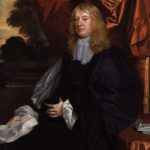
Abraham Cowley (1618 – 1667), the Royalist Poet.Poet and essayist Abraham Cowley was born in London, England, in 1618. He displayed early talent as a poet, publishing his first collection of poetry, Poetical Blossoms (1633), at the age of 15. Cowley studied at Cambridge University but was stripped of his Cambridge fellowship during the English Civil War and expelled for refusing to sign the Solemn League and Covenant of 1644. In turn, he accompanied Queen Henrietta Maria to France, where he spent 12 years in exile, serving as her secretary. During this time, Cowley completed The Mistress (1647). Arguably his most famous work, the collection exemplifies Cowley’s metaphysical style of love poetry. After the Restoration, Cowley returned to England, where he was reinstated as a Cambridge fellow and earned his MD before finally retiring to the English countryside. He is buried at Westminster Abbey alongside Geoffrey Chaucer and Edmund Spenser. Cowley is a wonderful poet and an outstanding representative of the English baroque.