
A poem by Aeschylus (c. 525 – c. 456 Before Christ )
NURSE
Our mistress bids me with all speed to call
Aegisthus to the strangers, that he come
And hear more clearly, as a man from man,
This newly brought report. Before her slaves,
Under set eyes of melancholy cast,
She hid her inner chuckle at the events
That have been brought to pass–too well for her,
But for this house and hearth most miserably,–
As in the tale the strangers clearly told.
He, when he hears and learns the story’s gist,
Will joy, I trow, in heart. Ah, wretched me!
How those old troubles, of all sorts made up,
Most hard to bear, in Atreus’s palace-halls
Have made my heart full heavy in my breast!
But never have I known a woe like this.
For other ills I bore full patiently,
But as for dear Orestes, my sweet charge,
Whom from his mother I received and nursed . . .
And then the shrill cries rousing me o’ nights,
And many and unprofitable toils
For me who bore them. For one needs must rear
The heedless infant like an animal,
(How can it else be?) as his humor serve
For while a child is yet in swaddling clothes,
It speaketh not, if either hunger comes,
Or passing thirst, or lower calls of need;
And children’s stomach works its own content.
And I, though I foresaw this, call to mind,
How I was cheated, washing swaddling clothes,
And nurse and laundress did the selfsame work.
I then with these my double handicrafts,
Brought up Orestes for his father dear;
And now, woe’s me! I learn that he is dead,
And go to fetch the man that mars this house;
And gladly will he hear these words of mine.

A few random poems:
- xai_kou.html
- Sound and Spirit by Oladele Hussein
- I am Ireland by Patrick Pearse
- If It Were Beginning by Sriparna Bandyopadhyay
- A Conceited Mistake by Vasko Popa
- Nicotine poem – Ezra Pound poems
- Степан Щипачев – Голос
- Николай Карамзин – Часто здесь в юдоли мрачной
- Wind by Ted Hughes
- Николай Языков – А. Н. Очкину (Было время, мой приятель)
- Answering Vice-Prefect Zhang by Wang Wei
- Day’s Work A-Done by William Barnes
- The Family Monkey by Russell Edson
- Pride and Fury by Mahmoud Darwish
- A turn of events by Ross D Tyler
External links
Bat’s Poetry Page – more poetry by Fledermaus
Talking Writing Monster’s Page –
Batty Writing – the bat’s idle chatter, thoughts, ideas and observations, all original, all fresh
Poems in English
- Piera Chen – Piera Chen
- IN VINCULUM by PEGGY AYLSWORTH
- I threaded a garland with the memories of a spring… by Preeth Nambiar
- Hoppleroopleoopledook by Pornika Ganguly
- Greece Madum…! by Perugu Ramakrishna
- Frozen by Priyanka Tungana
- From Another Sky by Pierre Reverdy
- Forgotten by Priya Prithviraj
- Forbidden Silence by Preeth Nambiar
- For The Moment by Pierre Reverdy
- For The Moment by Pierre Reverdy
- Elijah by Peter Bardsley
- Eating a Wampee by Piera Chen
- Dying Love!!! by Praveen Parasar
- Diving Deep by Pawan Kumar
- Dead On Arrival by Preethi Saravanakumar
- Creators by Pawan Kumar
- Composition by Peter Cooley
- Coconut by Paul Hostovsky
- Childhood Memories by Preethi Saravanakumar
More external links (open in a new tab):
Doska or the Board – write anything
Search engines:
Yandex – the best search engine for searches in Russian (and the best overall image search engine, in any language, anywhere)
Qwant – the best search engine for searches in French, German as well as Romance and Germanic languages.
Ecosia – a search engine that supposedly… plants trees
Duckduckgo – the real alternative and a search engine that actually works. Without much censorship or partisan politics.
Yahoo– yes, it’s still around, amazingly, miraculously, incredibly, but now it seems to be powered by Bing.
Parallel Translations of Poetry
The Poetry Repository – an online library of poems, poetry, verse and poetic works
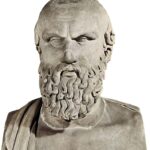
Aeschylus (525 Before Christ to 456 B.C.) was an ancient Greek author of Greek tragedy, and is often described as the father of tragedy. Academics’ knowledge of the genre begins with his work, and understanding of earlier Greek tragedy is largely based on inferences made from reading his surviving plays. According to Aristotle, he expanded the number of characters in the theatre and allowed conflict among them.