
A poem by Violet Nicolson, Lawrence Hope, Adela Florence Cory Nicolson (1865 – 1904)
The Rice was under water, and the land was scourged with rain,
The nights were desolation, and the day was born in pain.
Ah, the famine and the fever and the cruel, swollen streams,
I had died, except for Krishna, who consoled me–in my dreams!
The Burning-Ghats were smoking, and the jewels melted down,
The Temples lay deserted, for the people left the town.
Yet I was more than happy, though passing strange it seems,
For I spent my nights with Krishna, who loved me–in my dreams!

A few random poems:
- By Moschus by William Cowper
- Constancy To An Ideal Object by Samuel Coleridge
- Stir in Stillness by Shruti Talnikar
- Are You the New person, drawn toward Me? by Walt Whitman
- To a friend by Vinko Kalinić
- The gypsy song by Sunil Sharma
- Ante Aram by Rupert Brooke
- The Old House poem – Amy Levy poems | Poems and Poetry
- Doomes-Day: The Eighth Houre by William Alexander
- If Thou Could’st Empty All Thyself Of Self by Thomas Edward Brown
- Mr. William Smellie: A Sketch by Robert Burns
- Bishop Blougram’s Apology by Robert Browning
- Animal Tranquility And Decay by William Wordsworth
- Юлия Жадовская – Лучший перл таится
- When Trust Fails… by Olaniyi Beloved Abimbola
External links
Bat’s Poetry Page – more poetry by Fledermaus
Talking Writing Monster’s Page –
Batty Writing – the bat’s idle chatter, thoughts, ideas and observations, all original, all fresh
Poems in English
- Sonnet 94: They that have power to hurt and will do none by William Shakespeare
- Sonnet 93: So shall I live, supposing thou art true by William Shakespeare
- Sonnet 92: But do thy worst to steal thy self away by William Shakespeare
- Sonnet 91: Some glory in their birth, some in their skill by William Shakespeare
- Sonnet 90: Then hate me when thou wilt; if ever, now by William Shakespeare
- Sonnet 8: Music to hear, why hear’st thou music sadly? by William Shakespeare
- Sonnet 89: Say that thou didst forsake me for some fault by William Shakespeare
- Sonnet 88: When thou shalt be disposed to set me light by William Shakespeare
- Sonnet 87: Farewell! Thou art too dear for my possessing by William Shakespeare
- Sonnet 86: Was it the proud full sail of his great verse by William Shakespeare
- Sonnet 85: My tongue-tied Muse in manners holds her still by William Shakespeare
- Sonnet 84: Who is it that says most, which can say more by William Shakespeare
- Sonnet 83: I never saw that you did painting need by William Shakespeare
- Sonnet 82: I grant thou wert not married to my Muse by William Shakespeare
- Sonnet 81: Or I shall live your epitaph to make by William Shakespeare
- Sonnet 80: O, how I faint when I of you do write by William Shakespeare
- Sonnet 7: Lo, in the orient when the gracious light by William Shakespeare
- Sonnet 79: Whilst I alone did call upon thy aid by William Shakespeare
- Sonnet 78: So oft have I invoked thee for my Muse by William Shakespeare
- Sonnet 77: Thy glass will show thee how thy beauties wear by William Shakespeare
More external links (open in a new tab):
Doska or the Board – write anything
Search engines:
Yandex – the best search engine for searches in Russian (and the best overall image search engine, in any language, anywhere)
Qwant – the best search engine for searches in French, German as well as Romance and Germanic languages.
Ecosia – a search engine that supposedly… plants trees
Duckduckgo – the real alternative and a search engine that actually works. Without much censorship or partisan politics.
Yahoo– yes, it’s still around, amazingly, miraculously, incredibly, but now it seems to be powered by Bing.
Parallel Translations of Poetry
The Poetry Repository – an online library of poems, poetry, verse and poetic works
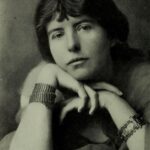
Violet Nicolson ( 1865 – 1904); otherwise known as Adela Florence Nicolson (née Cory), was an English poetess who wrote under the pseudonym of Laurence Hope, however she became known as Violet Nicolson. In the early 1900s, she became a best-selling author. She committed suicide and is buried in Madras, now Chennai, India.