
I came, I saw, and was undone;
Lightning did through my bones and marrow run;
A pointed pain pierc’d deep my heart;
A swift cold trembling seiz’d on every part;
My head turn’d round, nor could it bear
The poison that was enter’d there.
So a destroying angel’s breath
Blows-in the plague, and with it hasty death;
Such was the pain, did so begin,
To the poor wretch, when Legion enter’d in.
“Forgive me, God!” I cry’d; for I
Flatter’d myself I was to die.
But quickly to my cost I found,
‘T was cruel Love, not Death, had made the wound;
Death a more generous rage does use;
Quarter to all he conquers does refuse:
Whilst Love with barbarous mercy saves
The vanquish’d lives, to make them slaves.
I am thy slave then; let me know,
Hard master! the great task I have to do:
Who pride and scorn do undergo.
In tempests and rough seas thy galleys row;
They pant, and groan, and sigh; but find
Their sighs increase the angry wind.
Like an Egyptian tyrant, some
Thou weariest out in building but a tomb;
Others, with sad and tedious art,
Labour i’ th’ quarries of a stony heart:
Of all the works thou dost assign
To all the several slaves of thine,
Employ me, mighty Love! to dig the mine.

A few random poems:
- WHAT ENDING by Satish Verma
- Владимир Степанов – Эскимос (Буква Э)
- The Child-Angel by Rabindranath Tagore
- Alba poem – Ezra Pound poems
- Василий Лебедев-Кумач – Водовоз
- Arcades poem – John Milton poems
- Владимир Набоков – Поэт
- Федор Тютчев – Князю Суворову
- Константин Батюшков – Мщение
- Hymn To Apollo poem – John Keats poems
- Postures by Martina Reisz Newberry
- How Do You Know when Someone is in Love with You?
- Николай Огарев – Отцу
- I Want, I Want by Sylvia Plath
- On the Burning of Lord Mansfield’s Library by William Cowper
External links
Bat’s Poetry Page – more poetry by Fledermaus
Talking Writing Monster’s Page –
Batty Writing – the bat’s idle chatter, thoughts, ideas and observations, all original, all fresh
Poems in English
- Robinson by Weldon Kees
- The End Of The Library by Weldon Kees
- Late Evening Song by Weldon Kees
- La Vita Nuova by Weldon Kees
- Interregnum by Weldon Kees
- Dead March by Weldon Kees
- Covering Two Years by Weldon Kees
- Colloquy by Weldon Kees
- A Pastiche For Eve by Weldon Kees
- A Musician’s Wife by Weldon Kees
- 1926 by Weldon Kees
- Woods by Wendell Berry
- What We Need Is Here by Wendell Berry
- Water by Wendell Berry
- The Wish to be Generous by Wendell Berry
- The Silence by Wendell Berry
- The Real Work by Wendell Berry
- The peace of wild things by Wendell Berry
- The Man Born to Farming by Wendell Berry
- The Lilies by Wendell Berry
More external links (open in a new tab):
Doska or the Board – write anything
Search engines:
Yandex – the best search engine for searches in Russian (and the best overall image search engine, in any language, anywhere)
Qwant – the best search engine for searches in French, German as well as Romance and Germanic languages.
Ecosia – a search engine that supposedly… plants trees
Duckduckgo – the real alternative and a search engine that actually works. Without much censorship or partisan politics.
Yahoo– yes, it’s still around, amazingly, miraculously, incredibly, but now it seems to be powered by Bing.
Parallel Translations of Poetry
The Poetry Repository – an online library of poems, poetry, verse and poetic works
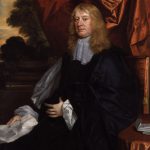
Abraham Cowley (1618 – 1667), the Royalist Poet.Poet and essayist Abraham Cowley was born in London, England, in 1618. He displayed early talent as a poet, publishing his first collection of poetry, Poetical Blossoms (1633), at the age of 15. Cowley studied at Cambridge University but was stripped of his Cambridge fellowship during the English Civil War and expelled for refusing to sign the Solemn League and Covenant of 1644. In turn, he accompanied Queen Henrietta Maria to France, where he spent 12 years in exile, serving as her secretary. During this time, Cowley completed The Mistress (1647). Arguably his most famous work, the collection exemplifies Cowley’s metaphysical style of love poetry. After the Restoration, Cowley returned to England, where he was reinstated as a Cambridge fellow and earned his MD before finally retiring to the English countryside. He is buried at Westminster Abbey alongside Geoffrey Chaucer and Edmund Spenser. Cowley is a wonderful poet and an outstanding representative of the English baroque.