
Why should we court the storms that rave and rend,
Safe at our household hearth?
Why, starved and naked, without home or friend,
Unknowing whence we came or where we wend,
Follow from no beginning to no end
An uncrowned martyr’s path?
Is it worth while to waste our all in vain?
To seek, and not to know?
To strive for something we can never gain,
To labour blindly for a wage of pain,
And crack our heartstrings with the stress and strain,
And reap no field we sow?
What does it matter whether love or hate,
Or praise or blame, be theirs
Who pass like shadows, with no time to wait
For understanding of the ways of fate,
Which makes the hopeless desert blossom late,
And kills good wheat with tares?
Why do we choose to suffer, when we might
Lie down to sleep and dream?
Is praise for men who try to do the right?
Is blame for him who shirks the deadly fight?
And whose the friendship that is heart’s delight?
And whose the love supreme?
Wide do we set our sanctuary door
That fairest guest to greet,
And find too late, when we have shown our store,
The sacred places rudely trampled o’er,
Bereaved, profaned, and soiled for evermore
With tread of vulgar feet.
And nothing left to solace us but this,
At such a frightful cost-
A taste, a glimpse, the memory of a kiss;
Only a sense of what diviner bliss,
That might have been, we have contrived to miss;
Only what love has lost.
And brother-bond-the loyal comradeship
That comes to every call-
What worth the smiling eye, the warm hand-grip,
The benediction of the kindly lip?
Sickness, old age or poverty can strip
The value from them all.
And faith, embalmed in immemorial creed-
Once our supreme support,
Our staff and beacon to uphold and lead-
A light extinguished and a broken reed!
And where, O where, in bitter time of need,
Shall substitute be sought?
Wherefore this anguish of desire to see
That which concerns us not-
The evolution of the life to be,
The distant course, the final destiny
Of worlds and men-the ages wherein we
Shall have no part or lot?
Why not shut eyes of spirit and of brain
That can torment us thus?
Why not take something to assuage the pain,
And shut the doors and go to sleep again?
The Search may be successful or in vain,
What matters it to us?
Is it worth while, when house and home are here,
And we can dwell at ease,
To go forth, lonely, and in mortal fear,
To travel roads that lead not anywhere,
As bare of lamp or signpost, far or near,
And full of thorns, as these?
To leave the Good whereof we are possest,
To seek, in senseless grief,
For some divine but ever unknown Best,
And see no goal and find no place of rest-
Is it worth while, on such a fruitless quest
To waste a life so brief?
We must not ask-we must not ask again.
We have to wait and see.
Press on, poor soul, along the path of pain
That is the one thing absolutely plain.
The last assessment of the loss and gain
Is not a task for thee.

A few random poems:
- A Dream Or No by Thomas Hardy
- Владимир Высоцкий – Мы просто куклы
- Rosalie by Washington Allston
- An Essay On Criticism poem – Alexander Pope
- acts_of_love.html
- The Second Voyage by Rudyard Kipling
- To Mr. Thomas Southern, on his Birth-Day poem – Alexander Pope
- Copywriting Agency Foundation For Prosperous Business
- Владимир Маяковский – Подлиза
- Leaving and Leaving You by Sophie Hannah
- A Necklace by William Strode
- Enough by Sara Teasdale
- In Memoriam A. HIn Memoriam A. H. H.: 56. So careful of the type? but no.: 55. The wish, that of the living whol poem – Lord Alfred Tennyson poems
- At The Abbey Theatre by William Butler Yeats
- Sad-Eyed and Soft and Grey by William Morris
External links
Bat’s Poetry Page – more poetry by Fledermaus
Talking Writing Monster’s Page –
Batty Writing – the bat’s idle chatter, thoughts, ideas and observations, all original, all fresh
Poems in English
- Sonnet 48: How careful was I, when I took my way by William Shakespeare
- Sonnet 47: Betwixt mine eye and heart a league is took by William Shakespeare
- Sonnet 46: Mine eye and heart are at a mortal war by William Shakespeare
- Sonnet 45: The other two, slight air and purging fire by William Shakespeare
- Sonnet 44: If the dull substance of my flesh were thought by William Shakespeare
- Sonnet 43: When most I wink, then do mine eyes best see by William Shakespeare
- Sonnet 42: That thou hast her, it is not all my grief by William Shakespeare
- Sonnet 41: Those pretty wrongs that liberty commits by William Shakespeare
- Sonnet 40: Take all my loves, my love, yea, take them all by William Shakespeare
- Sonnet 3: Look in thy glass, and tell the face thou viewest by William Shakespeare
- Sonnet 39: O, how thy worth with manners may I sing by William Shakespeare
- Sonnet 38: How can my Muse want subject to invent by William Shakespeare
- Sonnet 37: As a decrepit father takes delight by William Shakespeare
- Sonnet 36: Let me confess that we two must be twain by William Shakespeare
- Sonnet 35: No more be grieved at that which thou hast done by William Shakespeare
- Sonnet 34: Why didst thou promise such a beauteous day by William Shakespeare
- Sonnet 33: Full many a glorious morning have I seen by William Shakespeare
- Sonnet 74: But be contented when that fell arrest by William Shakespeare
- Sonnet 73: That time of year thou mayst in me behold by William Shakespeare
- Sonnet 72: O, lest the world should task you to recite by William Shakespeare
More external links (open in a new tab):
Doska or the Board – write anything
Search engines:
Yandex – the best search engine for searches in Russian (and the best overall image search engine, in any language, anywhere)
Qwant – the best search engine for searches in French, German as well as Romance and Germanic languages.
Ecosia – a search engine that supposedly… plants trees
Duckduckgo – the real alternative and a search engine that actually works. Without much censorship or partisan politics.
Yahoo– yes, it’s still around, amazingly, miraculously, incredibly, but now it seems to be powered by Bing.
Parallel Translations of Poetry
The Poetry Repository – an online library of poems, poetry, verse and poetic works
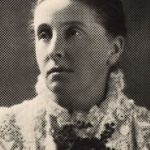
Ada Cambridge (1844 – 1926), also known as Ada Cross, was an English-born Australian author and poetess. She wrote more than 25 works of fiction, three volumes of poetry and two autobiographical works.